False Positive Alarm Rates and Vendor Accountability Standards
Vendors must disclose false alarm rates and commit to verified-threat response times.
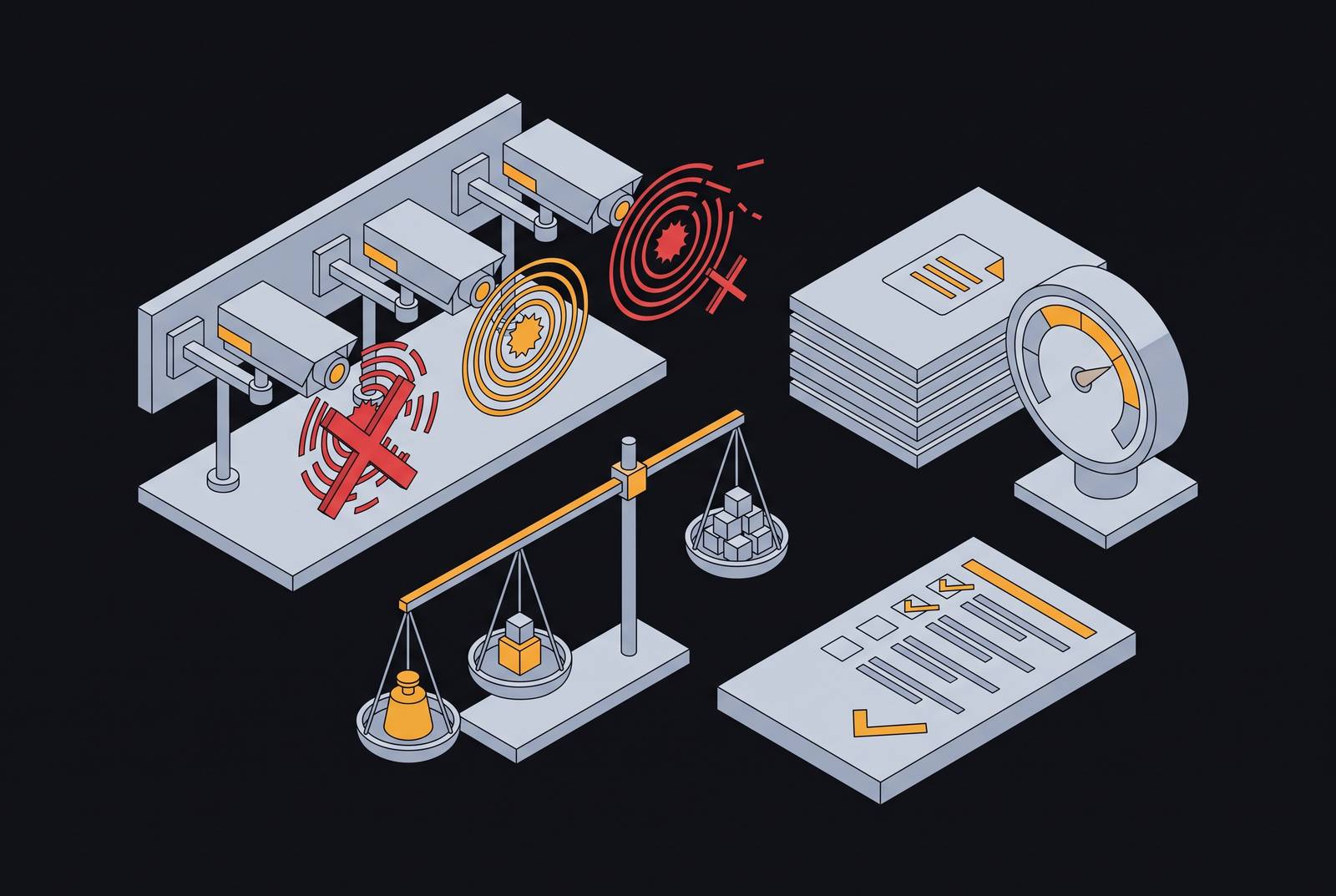
Muting noisy cameras is not a monitoring solution because it removes notifications from those cameras rather than distinguishing routine activity from threats. Buyers need to weigh false positive alarm rates alongside the standards they hold vendors to. Buyers should demand evidence-based filtering, false alarm rates they can see, and verified-threat response times they can measure, even when alert counts fall.
Why the false alarm rate is an accountability problem, not just a performance metric
ASU Center for Problem-Oriented Policing research, compiled for the DOJ, places the vast majority of police responses to burglar alarms in the false alarm category, with the LAPD and Chicago PD at the high end. These jurisdictional examples illustrate what the relay model produces at scale. A sensor trips, a signal travels, an operator calls, and police respond. The workflow moves an activation toward dispatch without first establishing that a threat exists. Confirmation becomes the police department’s problem.
Vendors charge to transmit alarms, while property owners usually pay city fines and bear the costs of dispatch when it was not needed. Chicago charges businesses a set fee per false alarm, while people with home alarms get warnings before they face fines. Many cities impose escalating fines, but monitoring vendors are not typically penalized for forwarding the unverified signals that produce them. Most vendor contracts also contain no obligation tied to verified-threat response time.
The model was designed before verification was technically feasible at scale, so its origins do not require a theory of deliberate neglect. The model’s persistence after better verification became feasible creates an accountability problem. Verified-response policies show where that model falls short, but few places have adopted them, so buyers cannot count on cities to set the same standard. Procurement must therefore address the gap directly. Buyers must determine what to hold vendors accountable for and how to measure those obligations.
Why muting noisy cameras cannot solve the system-level causes of false alarms
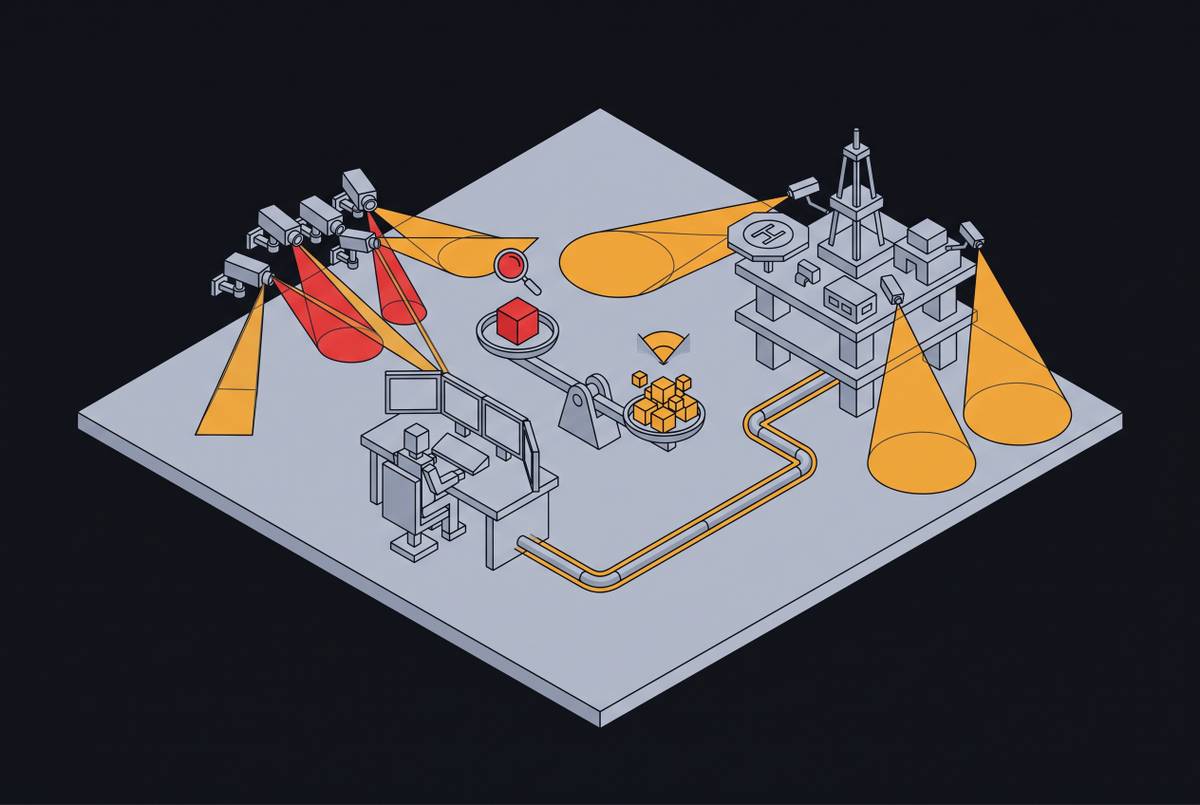
A camera with basic motion detection sees movement but not meaning. Wind, rain, shifting sunlight, animals, equipment faults, and user error can all produce activations without a threat. Modern IP cameras carry that problem into video monitoring when headlights sweeping a parking lot or trees moving in wind trigger alerts that the system cannot distinguish from intrusion. The detector identifies a change, but the monitoring task requires an assessment of what that change means. Passing every activation to a person leaves that distinction unresolved until human review.
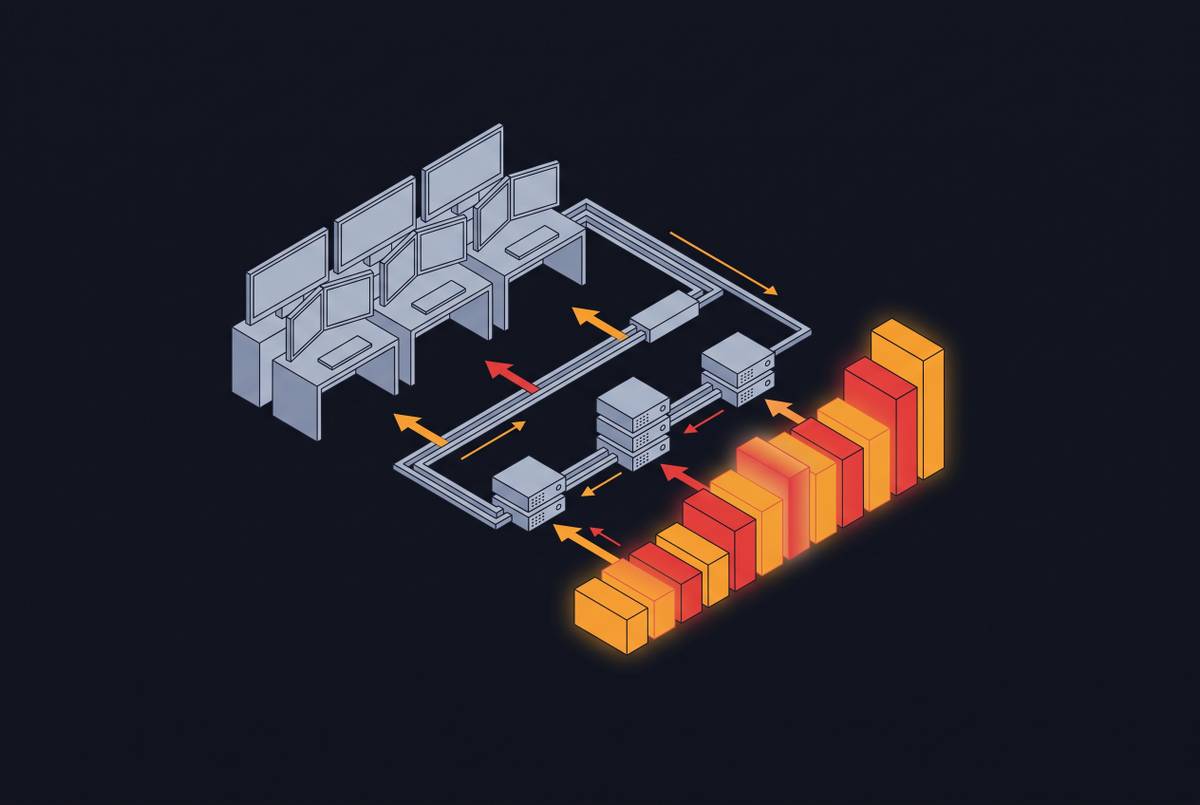
Human attention cannot absorb unlimited undifferentiated signals. Research on alarm fatigue in hospital ICUs shows the same cognitive pattern, with repeated false alarms eroding trust, slowing response, and encouraging dismissal without investigation. In security monitoring, a genuine threat entering behind dozens of environmental triggers waits in the same queue. More staffing does not change the underlying rule that every routine activation becomes another demand on attention. The bottleneck is architectural.
Muting the cameras that send the most alerts can make that bottleneck look smaller without improving the signal. It does not establish that the suppressed activity is harmless. Instead, it removes the notification path through which activity from those cameras would have reached review. Buyers must demand a way to assess events before they take up an operator’s attention.
What the verification tiers actually mean and why Tier 1 is still the default
Verification describes different levels of evidence. In Tier 1, a raw sensor activation goes straight to a monitoring center without confirmation. It produces the highest false alarm rates and remains the baseline for most reactive monitoring contracts. Tier 2 adds multi-trip detection or enhanced call verification, which helps clear up doubt but does not confirm a crime in progress. That additional confirmation may still be insufficient for priority police response.
Buyers should demand Tier 3, which uses audio verification, video verification, or both so a monitoring professional has real-time or near-real-time evidence of unauthorized activity. Yet a vendor’s use of “verification” may describe an automated acknowledgment, a call to the premises, or human review of live video. Each action gives different evidence, so a contract needs a separate definition for each. Because video-verification is still not widely used, what vendors call verification can be far from what their systems can do.
Even Tier 3 depends on site context. A person in a lobby at 3 a.m. presents a different question from the same person at 10 a.m., and video alone does not supply the access rules or schedule needed to answer it. Operators need that context to distinguish authorized activity from a threat. Services combining AI filtering with human verification, including Verdun, use that division of work to make Tier 3 part of the normal workflow.
The standards framework that exists and where it stops short
UL 827, the Standard for Central-Station Alarm Services, establishes meaningful requirements for monitoring facilities and their operations. It covers physical hardening, receiver and power redundancy, minimum staffing, operator training, signal-handling time, and record-keeping. UL conducts an annual audit to assess continued compliance. These controls matter because a monitoring service must stay available and follow set steps when it handles signals. They do not, however, establish the complete performance obligation a buyer needs for verified threats.
Other frameworks improve confirmation, coordination, and transmission. Enhanced Call Verification calls for a second call before dispatch, while the Partnership for Priority Verified Alarm Response works with law enforcement on priority response. ANSI/TMA AVS-01, approved in January 2023 and updated in 2024, provides an Alarm Validation Scoring Standard. The TMA’s ASAP protocol removes the phone relay to reduce dispatch time. Faster transmission is useful, but a faster-transmitted false alarm remains a false alarm.
The remaining gap concerns both disclosure and the response clock. These frameworks do not require vendors to disclose their false positive rate or commit to a verified-threat response time. A contract may count automated acknowledgment, first analyst review, or completed escalation as a response, though each happens at a different stage of the service. In AI-augmented monitoring, Mean Time to Acknowledge can approach zero because review begins when the alert fires, making acknowledgment alone a weak benchmark. Buyers need written commitments that measure end-to-end time from alarm fire to a human operator’s verified-threat decision rather than treating certification as a substitute for that obligation.
What buyers should actually hold vendors accountable for
A vendor-accountability checklist begins with ongoing, site-specific false positive disclosure. Buyers should require the verified false alarm rate to be tracked as the service runs, beyond the figure shown when they buy it. That reporting makes the quality of the service’s output visible after deployment. That reporting also keeps the focus on whether alerts point to threats, even when the total number of notifications falls. A reduction achieved by muting cameras is not evidence of improved verification.
The contract should then name the verification tier and specify the evidence required before escalation, including audio, video, or both. Each response metric should name the exact event that starts its clock and the one that stops it. Alarm fire, completed AI triage, the beginning of human review, and verified escalation to dispatch are distinct milestones. Buyers should not accept a single response-time figure that can be satisfied by an automated acknowledgment. A useful commitment makes clear what has happened when the promised time expires.
Written site protocols should set out what activity is allowed in each camera zone, based on schedules, access permissions, and normal traffic patterns. The escalation path should state how many review steps separate an alarm from dispatch, who performs them, and what evidence triggers each handoff. These requirements apply to any vendor and need not make the conversation adversarial. Keeping track of context across thousands of sites takes work, but that context feeds AI triage as well as helping operators with their tasks.
How AI-first monitoring architecture makes these standards achievable
The lab-to-field gap is the first qualification buyers should apply to AI performance claims. Controlled-dataset accuracy does not establish performance amid rain, infrared imagery, PTZ panning, shadow banding, or a building’s particular activity patterns. That gap is a reason to require site-specific calibration and ongoing performance reporting. The relevant test is whether the deployed system can separate routine activity from threats under the conditions it actually encounters. A demonstration cannot replace that operational evidence.
AI-first architecture changes the queue by reviewing every alarm when it fires. Verdun deploys AI agents to review alarms and dismiss environmental noise before trained operators engage, addressing the queue that creates alarm fatigue. In this pattern, object detection, tracking, behavior analysis, and anomaly scoring turn an undifferentiated signal into structured metadata, including person, location, time, and confidence. That structure gives the human reviewer an event to assess. It also provides defined stages against which response obligations can be written.
Learning at each site gives the system context that generic motion thresholds lack. Per-hour and per-day-of-week learned distributions encode each camera’s operational rhythm, so activity is evaluated against what is normal at that location and time. Human operators then retain responsibility for consequential decisions and escalation. For example, Verdun’s stated standard brings verified threats to a trained operator in under 90 seconds, which is a more specific commitment than alarm forwarding but must still be distinguished from a completed human decision or dispatch.
What a vendor accountability conversation should look like in practice
An RFP can ask the vendor to state its verified false alarm rate at sites comparable to the buyer’s and describe how that rate will be reported for each deployed site. It can then require the vendor to name its verification tier and identify the evidence that qualifies an event for escalation. These requests establish whether “verified” has an operational definition. They also prevent a general claim about AI from standing in for an explanation of the service.
Ask the vendor to identify the starting and stopping events for each response clock, distinguishing automated acknowledgment, human review, a verified-threat decision, and escalation to dispatch. Ask it to specify what AI decides, what a human decides, and who can authorize escalation. A claim that verified threats reach an operator quickly is not the same as a claim that the operator completes a decision within that interval. Both can be useful, but only if the contract preserves the distinction.
Finally, ask the vendor to write camera-zone protocols within the onboarding window and explain how conditions at the site shape verification. Require it to distinguish environmental-noise filtering from notification suppression, so a quieter dashboard does not conceal reduced review coverage. These are requests for an accountable service. The goal is a contract whose performance definitions and operational transparency make verified response enforceable. A monitoring service that accepts responsibility only for forwarding alarms remains a relay business, however sophisticated its description of the technology.