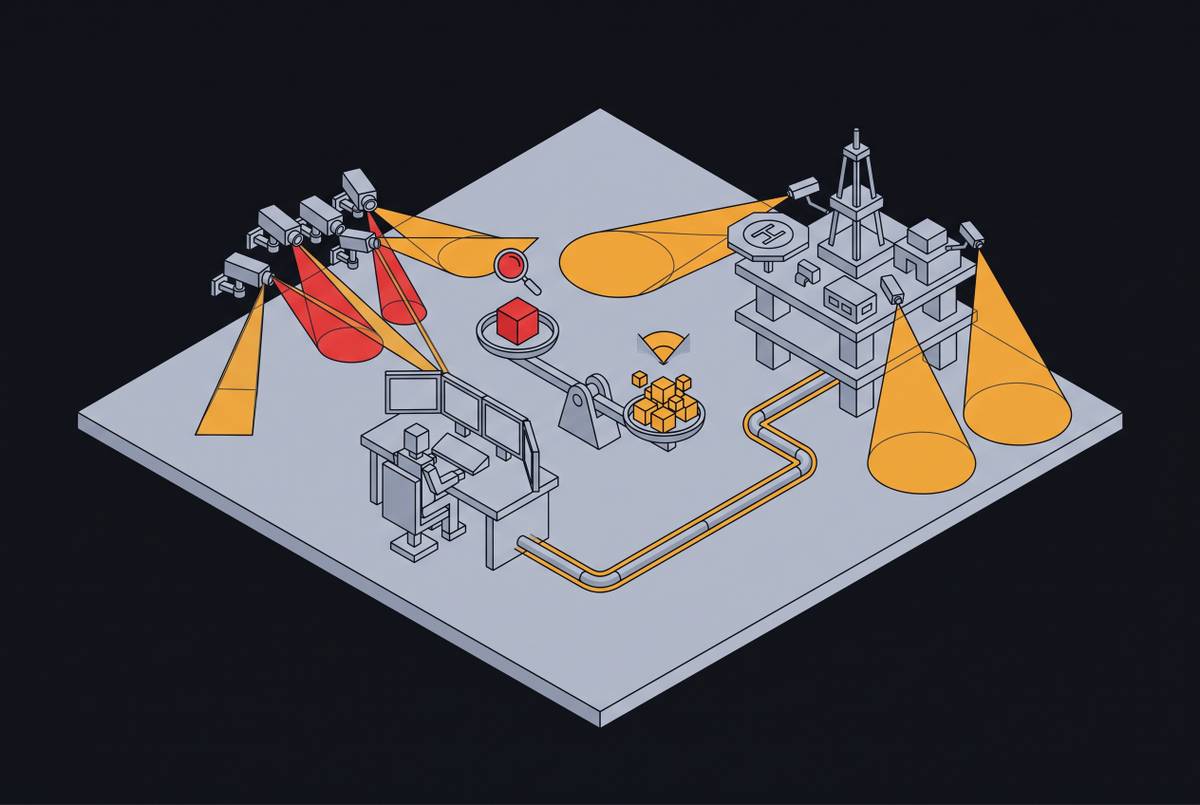
How Monitoring Centers Handle Peak Alarm Volume Surges
Sequential processing leaves real threats buried behind noise during peak alarm surges.
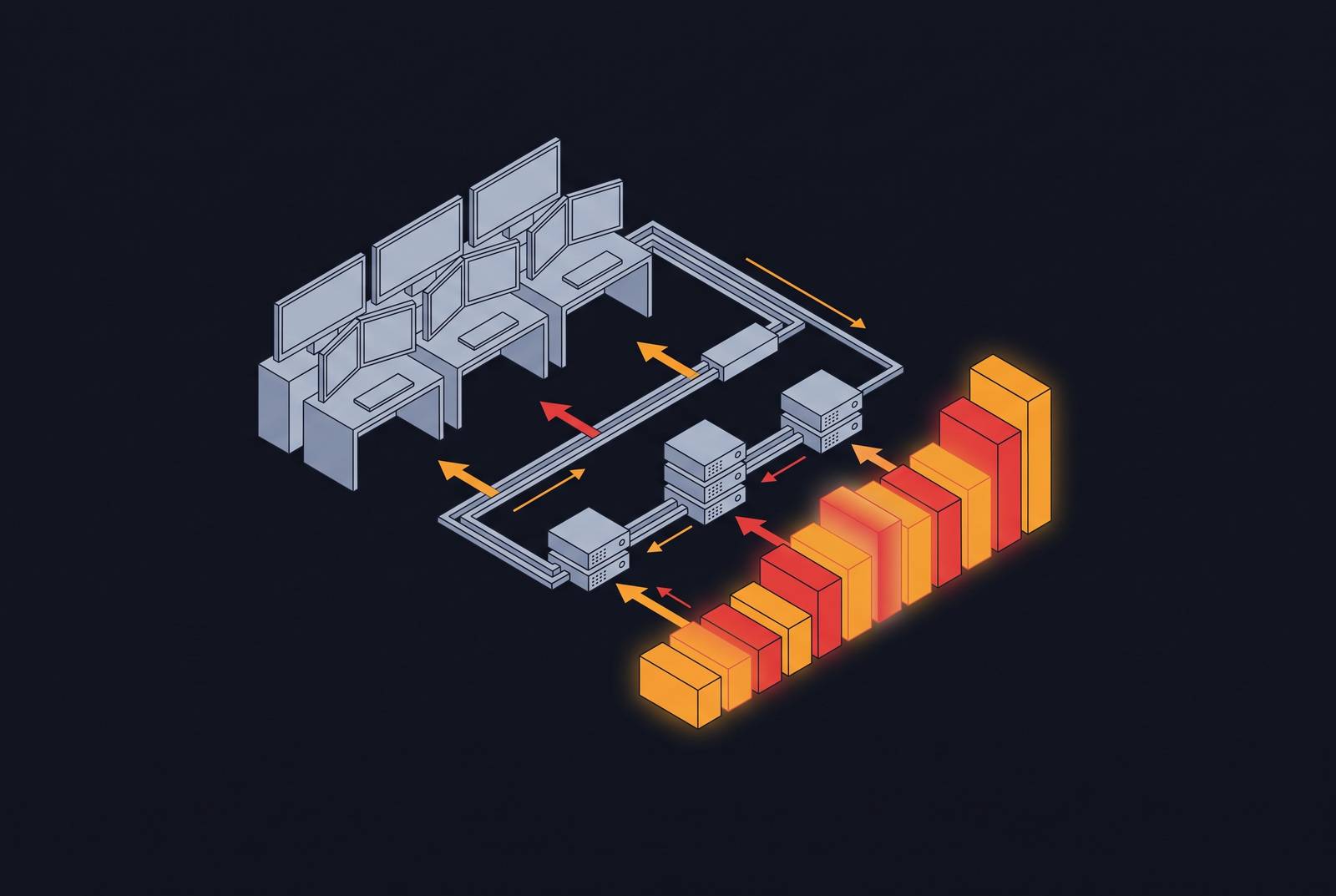
Monitoring centers fail at peak alarm volume because operators process alarms one at a time, in sequence. When a surge arrives, every alarm waits behind the one before it, and a real threat sits in the same line as noise. The fix is not more operators but an architecture that removes the sequential queue as the governing constraint.
Why alarm queues fail at peak volume
The mechanics are simple to state and brutal in practice. An operator finishes alarm A before alarm B, so B waits whether it is a verified intrusion or a wind-blown branch. Nothing in the legacy model changes that ordering. It does not matter how skilled the operator is, how many screens the center runs, or how committed the staffing plan looks on paper. The queue is the architecture, and the architecture is sequential.
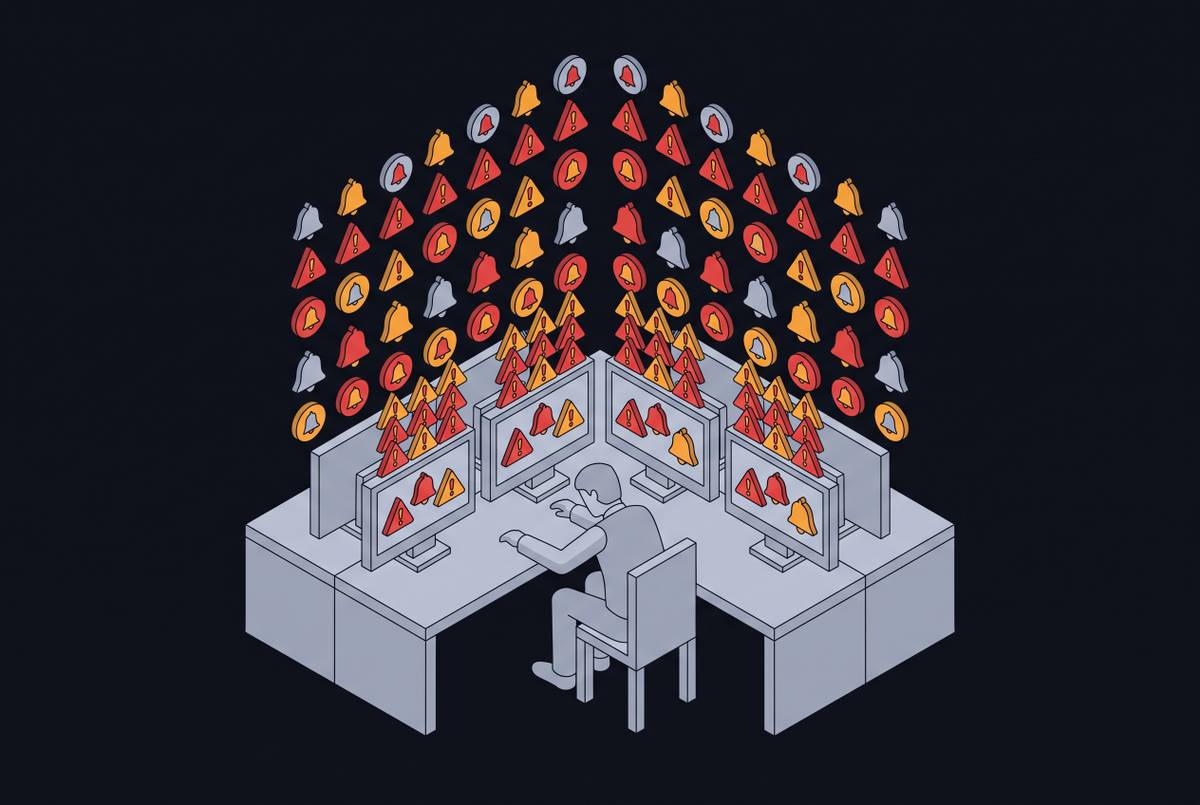
Research published in International Transactions on Electrical Energy Systems in July 2026 gave this failure mode a specific name: alarm flooding. The paper describes operators overwhelmed by volume to the point of stalling in inquiry and making mistakes. That is not a staffing failure. It is what happens when a sequential system meets a parallel world. A monitoring center gets intrusion trips, video events, panic buttons, and environmental sensors faster than any operator can triage them by hand. The volume problem is not new, but its severity compounds as connected devices multiply across commercial, multifamily, and industrial sites.
The claim worth holding onto is that surge conditions expose a flaw built into the queue itself. Adding headcount does not remove the flaw. It multiplies the number of sequential queues, each still processing one alarm at a time. The structural issue remains untouched.
What drives surge conditions in commercial and multifamily monitoring
Peak volume is not evenly distributed. It concentrates at predictable moments: shift changes, after-hours closings, weather events, high-activity retail periods. These are exactly the windows when threat probability is highest, and they are exactly the windows when the queue turns from manageable to flooded.
Commercial sites illustrate the pattern clearly. Retail close, employee lot clearance, and overnight intrusion windows all produce simultaneous alarm signals across multiple zones at the same time. A single store can generate a burst of events in a fifteen-minute window that would normally spread across an entire shift.
Multifamily properties have their own surge signature. Package room and garage activity spikes in evening hours, when one property can produce a sustained run of video events from legitimate resident traffic intermixed with actual unauthorized access. The operator sorting through this has to distinguish the two without any structural help.
Industrial sites add a third pattern. A weather event or equipment trigger can cascade environmental and perimeter alarms across an entire campus simultaneously, arriving as a burst rather than a trickle. The queue does not gradually fill. It floods all at once, and everything behind the flood waits.
The three ways legacy centers cope with surge, and why each makes the queue problem worse
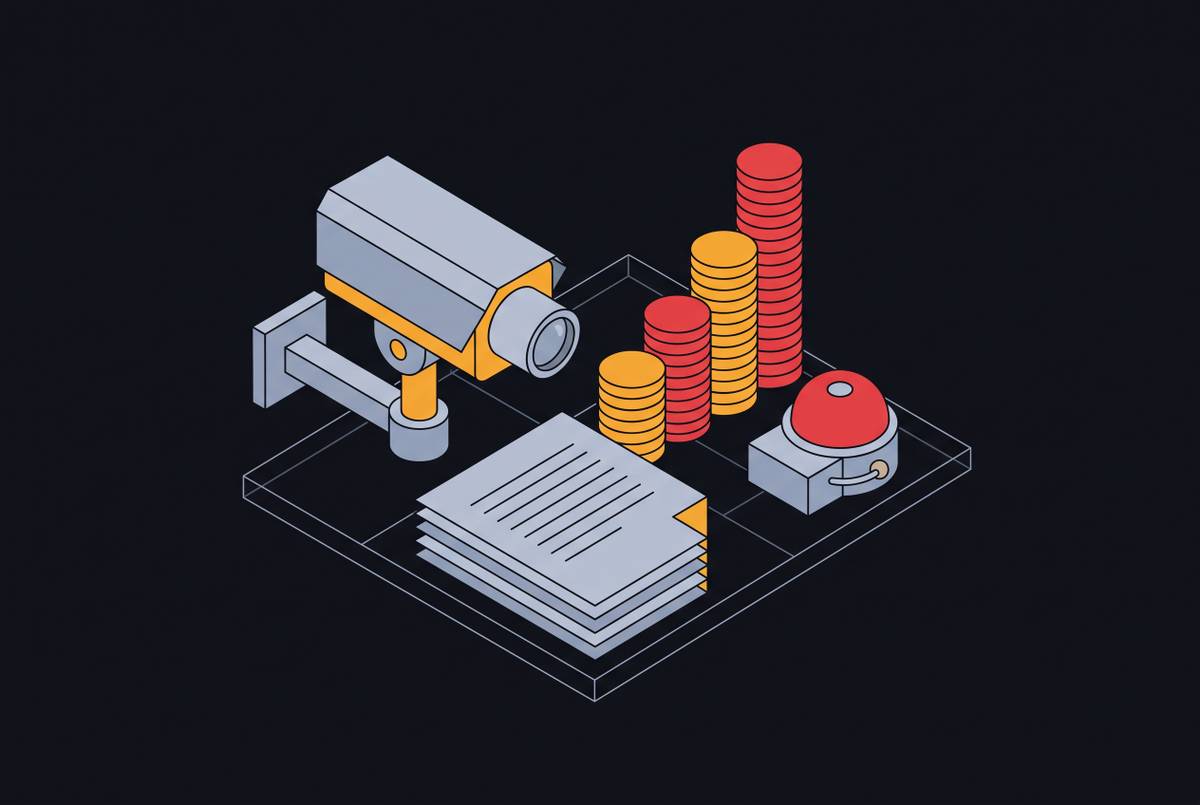
The argument needs to be stated plainly: every common response to surge conditions treats a symptom of the queue without changing the architecture that produces it. Muting noisy cameras, adding offshore operators, and charging overage fees are all rational responses to an impossible situation. None of them touches the sequential queue at its root.
Muting or suppressing noisy cameras follows a straightforward logic. If a camera sends too many false alarms during peak periods, the center deprioritizes or silences it, so the operator load drops. The camera continues recording. The client believes it is being monitored. A real event at that camera goes unreviewed, and the coverage gap remains invisible to the client until after a loss. This is not a deliberate failure. It is a rational response to an impossible queue, but rational responses to architectural problems still produce bad outcomes.
Adding offshore operators works by labor arbitrage. It lowers the cost of adding headcount, so centers can staff more operators per shift without raising price. But more operators means more parallel queue workers, and the queue itself is still sequential per operator. Surge conditions still stack up. Offshore operators review alarms slowly and less accurately because they have no site-specific context for the sites they handle. Cost drops while the structural flaw remains.
Charging overage fees prices surge-period alarms as a variable cost so the center can justify the operator headcount to handle them. The client pays more for degraded service during the exact window when threat probability is highest. The fee does not add operators fast enough to prevent queuing. From the buyer's perspective, this means paying a premium for slower response during after-hours events, which is the opposite of the service promise.
A 2026 analysis of mission-critical operations centers puts this dynamic precisely. Most control rooms already have the screens. What they are missing is the layer that decides what goes on them and escalates automatically. Adding more screens does not solve operator fatigue, and none of the three coping mechanisms addresses that missing layer.
What the queue delay actually means when a real threat arrives during a surge
A real threat that joins the back of a surge queue does not just wait. It waits while the conditions that make it dangerous continue to develop, and by the time an operator reaches it, the window for intervention may have closed. The queue is first-in, first-out in most legacy implementations. A verified intrusion that fires at minute three of a surge sits behind every alarm that fired in minutes one and two, regardless of threat level. Priority does not exist inside the queue. Position is everything, and position is determined by arrival time, not by danger.
Response time is the compounding variable. The longer the queue, the later the dispatch. The later the dispatch, the longer law enforcement transit time applies to an already-elapsed incident window. For commercial theft, the relevant window is the time an actor needs to remove merchandise and leave the site. Surge-period delays routinely exceed that window.
For a multifamily garage or package room, voice-down deterrence is the primary tool for stopping an incident before it escalates. It requires the operator to reach the event while the actor is still present. A queued delay eliminates that option entirely. By the time the operator sees the event, the moment for intervention has passed.
A 2026 analysis of security operations centers quantifies the baseline problem: initial acknowledgment alone takes thirty to sixty minutes before any investigation even begins, even before surge conditions apply. The problem is not that operators work slowly. No operator working sequentially can compress a queue fast enough during a surge to preserve the intervention window for every real event in it.
Why AI agents change the queue math rather than just accelerating it
An AI agent that reviews every alarm before a human sees it does not make the queue faster. It removes the queue as the governing constraint on how quickly a real threat reaches a human operator. The sequential queue exists because each alarm requires a human decision before the next one can be addressed. AI agents that run in parallel across all incoming alarms break the one-at-a-time constraint. The July 2026 multimodal AI framework research addresses alarm flooding directly. The hierarchical approach it describes applies filtering and prioritization before any human is engaged, so the human sees a structured, ranked set of events rather than a raw flood.
The four downstream stages, filtering, prioritization, correlation, and augmentation, reduce what reaches the human operator to events that have already been assessed, not just received. This is architecturally different from adding operators. More operators still process one alarm at a time each. AI agents process all alarms simultaneously, so a surge does not make a real threat wait longer for a human. It extends only the time before noise is dismissed.
The framing that matters is that AI handles the volume problem while humans handle the judgment problem. They are not competing roles but complementary layers, each doing what the other cannot. The 2026 NOC analysis describes the needed layer as one that decides what goes on the screens and escalates automatically. That is exactly the AI filtering role, and it is distinct from the human response role. Services like Verdun insert this filtering layer before the queue, not to replace operators but to ensure that only verified threats reach the sequential human queue.
Why site-specific context determines whether AI filtering actually works
An AI agent needs site-specific context before it can tell noise from threat. Schedules, authorized activity, and protocol rules are the difference between an accurate filter and a guess. Without them, the AI either floods the human queue with false positives or suppresses events it cannot classify, reproducing the muting problem in automated form.
A loading dock camera at 11 p.m. looks identical to a loading dock camera at 11 a.m. unless the AI knows that after-hours dock access is unauthorized and daytime access follows a schedule. Authorized vendor patterns, employee arrival windows, seasonal operating changes, and site-specific alarm thresholds are not embedded in camera feeds. They must be configured into the AI's decision logic.
Without that configuration, the AI's filtering decision is essentially a guess. It may cut the volume, but it cannot reliably surface the right events. Site protocol coverage is not a feature add-on but a prerequisite. The alarm-review quality of an AI-augmented system is bounded by the accuracy of its site context, not by the sophistication of its underlying model. For commercial and multifamily operators, the onboarding process, capturing schedules, authorized activity, and escalation rules, is the mechanism that makes AI filtering trustworthy rather than merely fast.
What a structurally sound monitoring architecture looks like
A monitoring architecture that handles surge volume without degrading coverage or response time combines three elements: parallel AI alarm review, site-specific protocol configuration, and human operators whose attention is reserved for verified threats. That combination requires a structural commitment, not a feature upgrade to a legacy center. For retail and commercial sites, AI review of after-hours access, loitering, and perimeter breach events removes the noise that floods the operator queue during closing windows. Humans respond to verified events with full context, not by reviewing raw alarms.
For multifamily properties, garage and package room monitoring requires high review frequency during evening surge windows. That is exactly the condition where legacy centers mute or deprioritize cameras. AI filtering preserves coverage across all cameras simultaneously, which is precisely the alternative to muting that the problem demands. Most control rooms already have the screens and the operators. What they lack is an automated layer that decides what deserves human attention and escalates it immediately rather than forcing every alarm into the same sequential queue, and that layer is what a service like Verdun provides. For industrial and truck yards, multi-site coverage from a single operations center is only viable if AI pre-filters feeds so human monitors are not overwhelmed by simultaneous alerts from multiple facilities. The architecture enables the portfolio model that legacy per-site staffing cannot. The buyer's question is not whether to add AI features to an existing monitoring contract. It is whether the monitoring architecture itself eliminates the queue as the governing constraint on surge-period response.
Sources
- A Hierarchical Multimodal AI Framework for Intelligent Alarm Handling in Smart Power Grid Monitoring Systems - Li - 2026 - International Transactions on Electrical Energy Systems - Wiley Online Library
- Defining the Modern Network Operations Center (NOC) in 2026
- Alert Fatigue in Security Operations Centres: Research Challenges and Opportunities