Offshore Monitoring Operator Quality and Coverage Tradeoffs
Offshore operators inherit the same queue-math failures domestic centers already face.
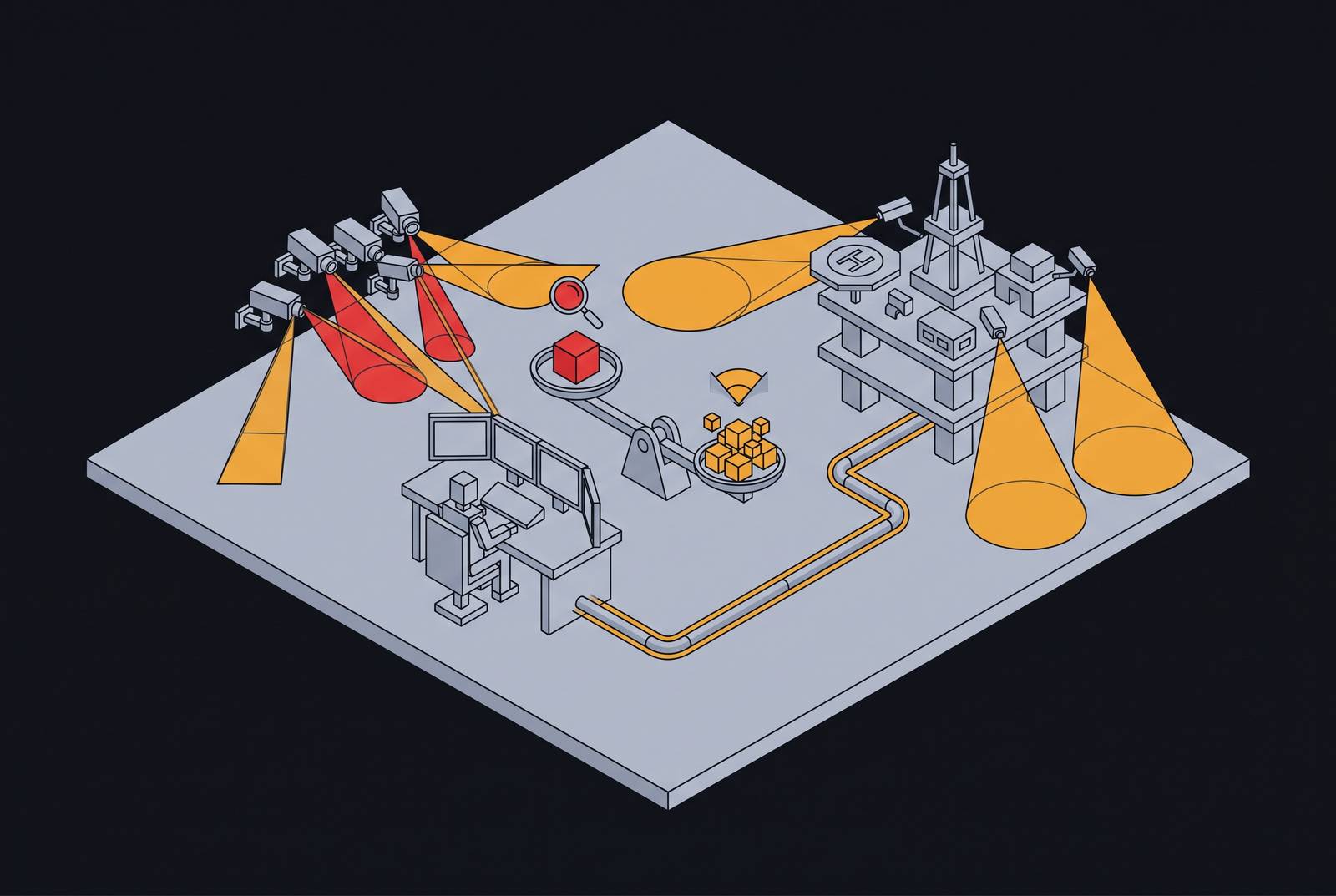
Offshoring monitoring operators gets evaluated as a line-item decision: lower the hourly rate, keep the same coverage promise, bank the savings. That framing misses what actually changes in the arrangement, because the monitoring architecture itself stays exactly the same. Every alarm still has to route through a human operator who looks at it, judges it, and decides whether to act. Moving that operator to a lower-cost labor market doesn't touch the queue math, the attention limits, or the escalation chain that already shape how well the system performs. It relocates a person inside a structure that has its own built-in weaknesses, and those weaknesses travel with the arrangement wherever it goes. What looks like a staffing decision is really a bet on an architecture, and the rest of this piece is about what that bet actually costs.
The attention ceiling every monitoring operator hits, regardless of where they sit
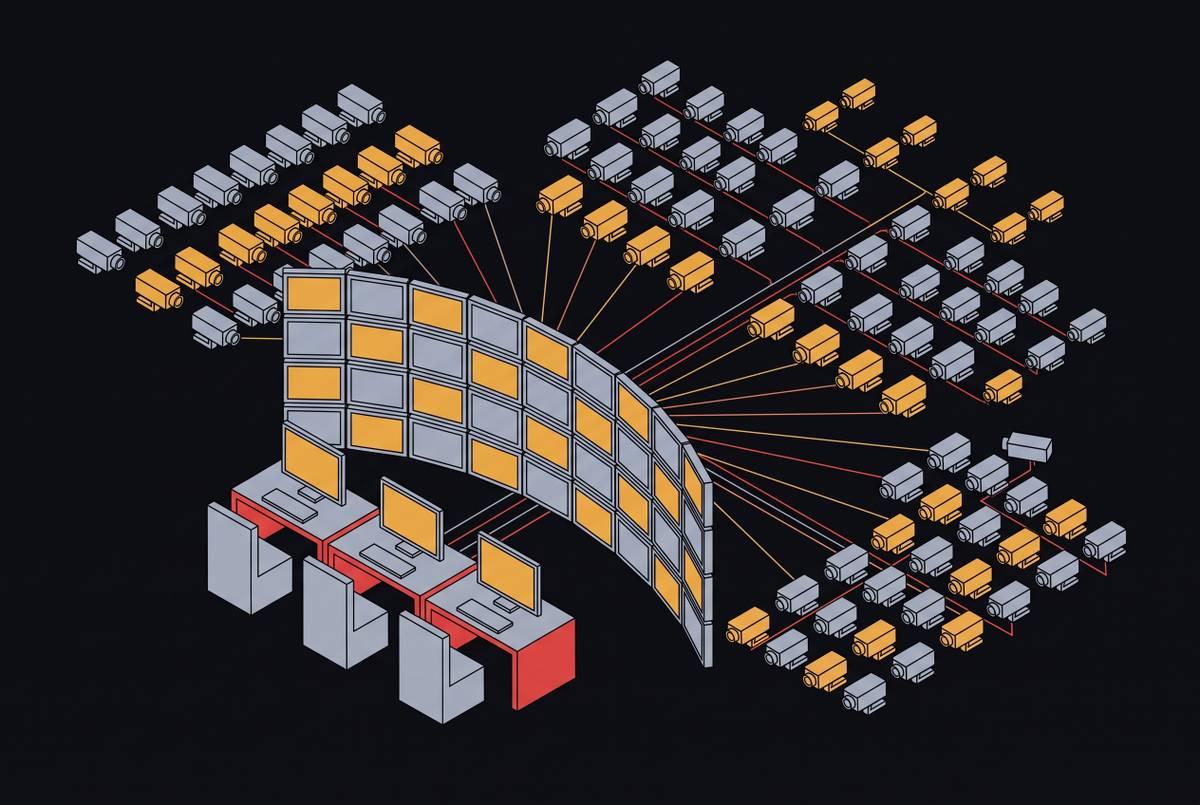
Every human operator watching live video feeds runs into the same physical limit, and no amount of training, pay, or location can change it. A person assigned to watch dozens of camera feeds at once, for hours on end, under conditions where most of what shows up on screen is nothing (wind, shadows, a stray cat, an employee walking to a car) is not failing at a skill. The person is running into a limit on how much attention a human visual system can sustain across a shift. A 2025 survey on security alert screening, posted to arXiv under the identifier 2605.08316, defines alert fatigue formally: it sets in when the volume of unverified incident reports or the false-positive rate crosses a site-specific tolerance, and the paper notes that severe cases often involve several of these thresholds being crossed at once. That's a measurable description of a capacity problem, not a motivation problem.
This matters before any discussion of offshoring specifically, because it establishes where the baseline already sits. Domestic monitoring centers built on human-only review already operate close to the edge of what an operator can reliably track. Moving the operator overseas doesn't push that edge back. The offshore model starts from the same compromised foundation and has no mechanism built into it to raise the ceiling.
Alarm volume and the queue failure behind the attention ceiling
Once alarm volume outpaces what an operator can meaningfully evaluate, the failure stops belonging to any one person's mistake and instead becomes a property of the queue itself. If most of what arrives in that queue is noise, operators learn, correctly, to treat every new alert with a little less urgency than the last. That's a rational adaptation to a system that keeps crying wolf. Response times slow down as a result, and a real threat sitting in that queue looks, on the surface, identical to the ninety-nine false alarms that came before it.
The downstream effects appear in how security operations centers handle anything marked "possible but unconfirmed. Without the context to settle the question quickly, a human-reviewed queue tends to go one of two ways: overreact and burn response resources on something benign, or underreact and file the event as unverified. The second failure mode is the quieter one: a restricted-zone breach that happened days earlier gets flagged in a compliance review with a record that nobody fully pieced together at the time. Investigations stall for a specific, documented reason: the evidence attached to the alert lacks a clean timestamp, a camera ID, or a location tag, and that gap is a routine operational failure built into high-volume, human-reviewed queues.
False alarms carry a cost even without a breach. The volume of false dispatches has gotten so bad that it strains the emergency-response relationship behind the signal, so municipalities have started fining alarm users for excessive false dispatches. None of this is specific to offshore centers. It happens anywhere alarm volume is reviewed by humans in sequence, and that is why it matters so much once offshore-specific conditions get layered on top.
How offshore staffing makes queue failures worse
Offshoring doesn't change the human-review architecture that produces these queue failures. It keeps that architecture exactly as it is, moves the operator to a different time zone and labor market, and then adds new sources of friction on top of a system that was already strained.
Take the handoff. A verified threat has to travel from an offshore operator's decision to a local responder on the ground, and that path usually runs through phone trees, escalation steps adjusted for time-zone differences, and language or protocol formalities that add seconds, sometimes minutes, at the exact moment speed is what matters most. None of that friction is about operator skill. It's a structural property of distance and handoff design.
Turnover compounds it. If a control room cycles through operators every eight months, it never builds up the site knowledge that lets someone catch an anomaly a camera configuration was never set up to flag. Offshore centers built around cost competition face this problem more acutely than domestic ones, for a simple reason: the same wage arbitrage that makes the labor cheap also makes it harder to hold onto workers once local labor markets tighten and better-paying alternatives open up.
Accountability structures vary too, and buyers rarely check for the gap. Domestic monitoring centers operating under established certification standards, including those tied to UL-listed central station requirements, follow documented rules on record-keeping, personnel qualifications, and response protocols. Offshore arrangements may or may not carry equivalent requirements, and that gap sits unexamined in most contracts because nobody asked the question before signing.
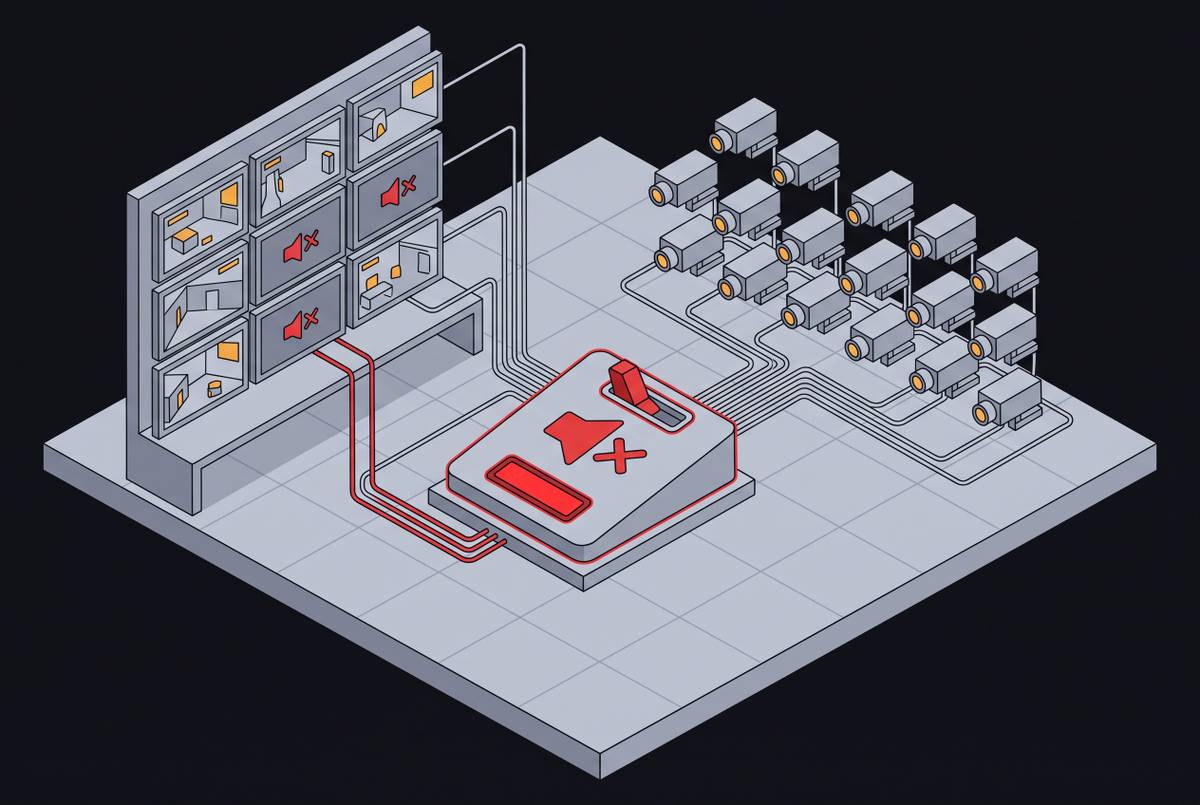
And when offshore operators hit the same queue math described above, they reach for the same shortcuts domestic operators do: raising alert thresholds, muting cameras that generate a lot of noise, or closing out unverified events without a second look. Muting a noisy camera does not solve a false-alarm problem. It trades a false positive for a false negative. The alert volume on the dashboard drops, which looks like progress, but what actually happened is that a sensor got turned into a blind spot. A missed theft, a missed intrusion, a missed safety event at a muted camera no longer registers as a false alarm; it appears later as a compliance gap or an audit finding, after the coverage promise has already failed. Silencing a noisy camera to cut down on false alarms transfers risk from the monitoring dashboard to the property itself, and the property owner is usually the last to find out.
Why more operators, training, and SLAs fall short
Each of the usual remedies for offshore monitoring quality problems treats a symptom and leaves the underlying queue-math failure in place.
Adding headcount scales the bill in a straight line without touching the architecture behind it. If a center doubles its offshore operators, it still routes every alarm through sequential human review, so peak-hour volume still produces a queue that a real threat has to wait behind, just with more people standing in that same line.
Better training runs into the same wall described earlier: the attention ceiling is a physiological limit, not a knowledge gap, so no training curriculum closes it. Training can nudge error rates down at the margins. It does not change what a human visual system can sustain, hour after hour, across an eight- or twelve-hour shift.
Muting cameras and raising alert thresholds, already covered above, swap one failure mode for a worse one: visible false positives for invisible false negatives. The alert count drops. Coverage doesn't improve; it just stops being measured.
Surge staffing and overage billing treat the busiest hours as a pricing event, not a design flaw. Buyers pay more exactly when risk is highest, and what they get for the extra cost is more operators entering the same overloaded queue, not a faster path from alarm to verified response.
None of these fixes change the sequence an alarm travels through. They adjust its cost or its margin of error instead of solving the structural problem that produces the error.
What a monitoring architecture without these tradeoffs looks like
The tradeoffs described above aren't an inherent cost of monitoring cameras remotely. They come from one specific design choice, routing every alarm through sequential human review before anyone, or anything, filters it, and changing that one decision means most of what's been described in this piece stops applying.
The shift that matters is moving from human-first review to AI-first filtering. In that model, AI agents review every alarm first and separate environmental noise, authorized activity, and genuine threats against a site's specific protocol, before a human operator ever sees the queue. Vision-language models built for this task can tell a person apart from an animal, a vehicle on its normal route apart from someone loitering near a restricted area, and routine movement apart from behavior that actually calls for attention, doing it in milliseconds rather than during the third hour of a fatigued operator's shift.
What makes this filtering useful rather than just mechanical is that it's tuned to the specific site: a car dealership lot, a truck yard's operating hours, a multifamily property's list of authorized residents and vehicles. The system makes judgment calls in context, the way an operator who had worked that exact site for a year would, minus the attention ceiling and minus the turnover risk that comes with offshore staffing.
Human operators don't disappear from this picture; their job changes shape. Instead of reviewing every clip in sequence as it arrives, they receive only the alarms that have already been verified as real threats, each one arriving with footage, a timestamp, a camera ID, and location context already attached. An alert that shows up as a short clip with an exact time and place is a fundamentally different object to work with than a raw feed buried in a queue of look-alikes. It's something an operator can act on immediately.
Verdun, a monitoring service built on this model, runs AI agents that review every alarm first, dismiss environmental noise and authorized activity, and escalate only verified threats to trained human operators. The goal of that design is specific: a real threat reaches a human without waiting behind routine activity in a shared queue, which is the exact failure mode described earlier in this piece. The attention ceiling that every human operator runs into doesn't go away under this model, but it stops being the constraint that decides whether a threat gets caught in time. When an operator looks at a small number of pre-verified, fully contextualized alerts, they can apply real judgment to each one instead of rationing attention across a queue that's mostly noise. And because AI agents can watch every camera continuously without running out of attention when activity spikes, a busy hour doesn't produce a backlog the way it does under human-only review, which also means overage pricing for surge volume stops being something a buyer has to plan for as a structural feature of the contract.
What to check before signing a monitoring contract
A buyer who understands how human-only review fails can evaluate any monitoring contract, offshore or domestic, by asking a handful of questions that most SLA language is written to avoid answering directly.
Start with where the SLA clock actually starts. Acknowledging that a signal came in is not the same thing as dispatching a response to a verified threat, so ask what the commitment covers: time from signal receipt to a human operator acting on a confirmed event, not time to a first log entry sitting in a database.
Ask what happens to alarms during the busiest hour of the day. If the answer involves a queue, ask for the average and worst-case position an alarm sits in during peak volume. That number, not the headline SLA figure, is what actually governs how fast a real threat gets a response.
Ask how site-specific context gets built into the system. Find out whether the monitoring setup reflects the property's actual operating hours, its list of authorized people and vehicles, and its escalation protocol, or whether operators are making verification calls against a generic standard that has nothing to do with the site in question.
Operator retention and handoff practices matter because a control room that cycles through operators every eight months never builds up the site knowledge that catches an anomaly a camera's configuration was never designed to flag.
Ask directly whether alarm review is AI-first or human-first. If every clip still gets reviewed by a person before any filtering happens, the arrangement is still governed by the same queue math described throughout this piece, no matter how the contract describes the process.
Finally, ask to see a sample event record, not a policy document describing what records are supposed to look like. Investigations stall when the evidence attached to an alert is missing a clean timestamp, a camera ID, or a location tag. A real sample shows whether that gap exists before a buyer needs it to hold up in an actual case.
Sources
- AI-Driven Security Alert Screening and Alert Fatigue Mitigation in Security Operations Centers: A Survey
- How to Provide Video Monitoring Without Added Labor and Reduce False Alarm Penalties
- Alert Fatigue in Security Operations Centres: Research Challenges and Opportunities
- Operator fatigue monitoring system
- Predicting operators reliability for control room alarm management using knowledge-based Bayesian networks - ScienceDirect
- SigmaMedStat: Temporal Signal Modeling for ICU False Alarm Reduction