Site-Specific Protocol Coverage in Monitoring Vendor Contracts
Context gaps in vendor contracts often determine whether monitoring actually works when it matters.

Most monitoring arrangements fail somewhere other than the camera and somewhere other than the operator's desk. They fail in the contract, in the gap between what the vendor agreed to install and what the vendor agreed to know. This article is written for buyers who have already decided to purchase monitoring and now need to understand what the agreement itself should require, not for buyers still weighing whether monitoring is worth the cost.
Why the monitoring contract is where site-specific coverage actually breaks down
A vendor can field good cameras, hire trained operators, and still respond to every alarm with no idea what the site's schedule looks like, who is authorized to be on the loading dock at 11 PM, or which door the night cleaning crew actually uses. None of that is a technology shortfall or a hiring shortfall. It happens because nothing in the contract required the vendor to hold that information in the first place. A monitoring agreement can be fully performed, every clause honored, every alarm logged, and the buyer can still end up with a service that cannot tell a scheduled delivery from a break-in.
This gap stays hidden for a long time because the system looks like it's working. Alarms get processed. Tickets close. Reports go out on schedule. None of that tells a buyer whether the vendor was evaluating threats or just moving signals through a queue. The difference appears when something real happens and the response depends on context the vendor never had.
The contract is the one place a buyer has real leverage to close that gap, and it has to happen before signing. Once the relationship is running, a buyer who wants the vendor to start tracking shift schedules or maintaining an authorized-vehicle list is asking for a favor, not enforcing an obligation. Verbal assurances during the sales process don't survive a dispute. What the document says is what the buyer can hold the vendor to, and what it leaves out is what the vendor has no duty to provide.
How the alarm queue problem makes site-specific context even more urgent, not less
Operators working a live alarm queue don't have the luxury of research. When context wasn't loaded in advance, a high-volume queue doesn't produce careful investigation of each unfamiliar alarm, it produces fast pattern-matching, and pattern-matching defaults to whichever outcome is statistically more common, which is nearly always a false positive. That bias is what happens when a trained person has to make dozens of judgment calls an hour with incomplete information, not laziness.
The data on human performance under these conditions is blunt. In a study of working video monitoring operators, trained professionals caught only about half of the target behaviors during a 90-minute review task, and when they missed a detection, a false alarm often came with it. That combination points to a capacity limit, not a skills gap. The people doing the job were qualified. The task, as structured, asked for more than sustained human attention can reliably give.
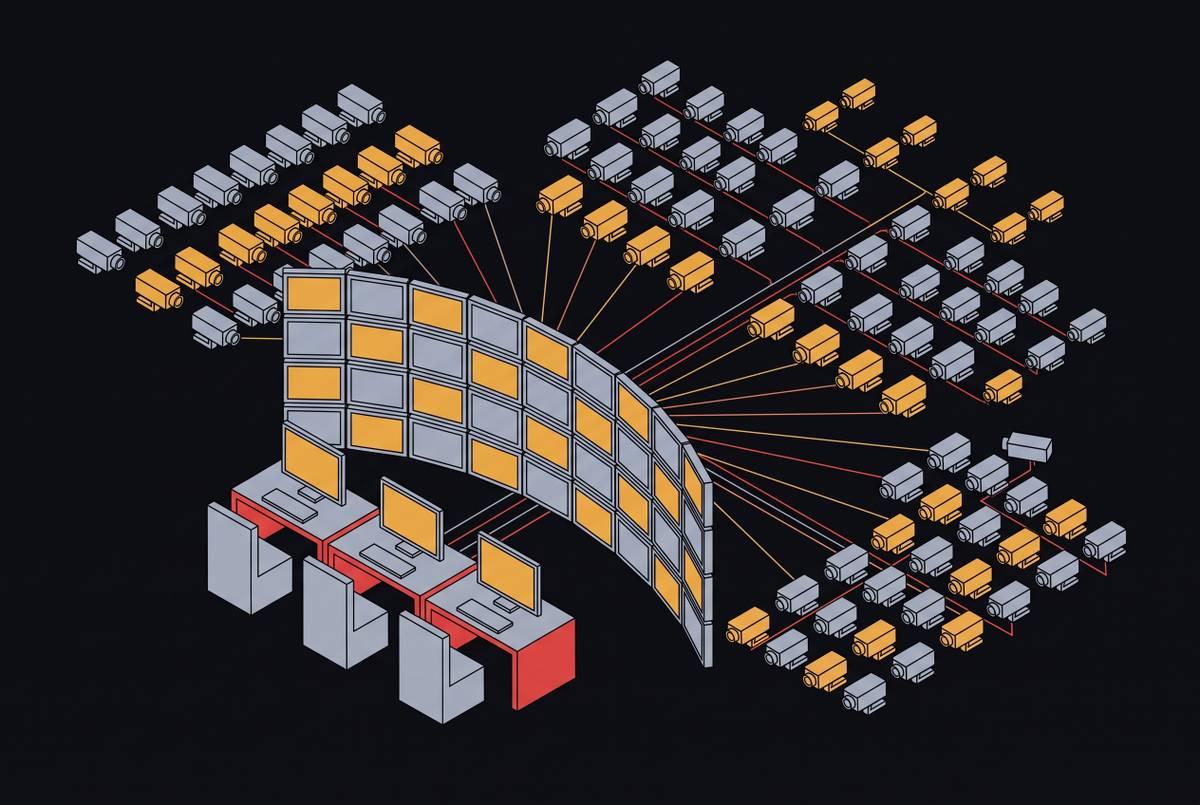
Activu Corporation's description of the traditional command center backs this up at the structural level: operators often work as a reactive warehouse for disconnected data, managing as many as 12 screens at once while fatigue erodes judgment over the course of a shift. That's a design problem built into how legacy command centers are staffed and equipped, not a reflection on the individuals doing the watching. A 2026 survey of AI-driven alert screening in security operations centers found that under sustained, mostly low-signal alert streams, analysts develop coping habits: blanket suppression rules, skimming by severity and leaning hard on whatever score a tool assigns. Each of those shortcuts creates its own blind spot, and all three show up because the volume of alerts has outpaced what a person can evaluate one at a time.
Site context is what makes speed and accuracy possible. An operator who already knows a janitorial crew is on-site tonight, which vehicles are cleared for the back lot, and which entrance staff typically use can resolve an ambiguous alarm in a matter of seconds. An operator without that information has two choices: investigate from a cold start, or dismiss the alarm and move to the next one. Under a full queue, investigation from scratch rarely wins. The contract's job is to make sure site context exists before the alarm fires, because once an operator is staring at a live queue, there's no time left to assemble it.
What AI Filtering Changes About the Operator's Job
AI agents that screen alarms before a human ever sees them solve high queue volume, but their accuracy is bounded by the site context they were given during configuration. An AI model with no site-specific information isn't performing meaningful verification; it's running generic pattern recognition and calling the result a judgment.
AI can flag an event, but it can also explain why the event matters, and that's a real difference. If a system checks scheduled activity, access logs, and camera position before it labels an alarm, the output is far more useful than one from a model trained only to spot generic movement or shape patterns. An AI agent configured with a site's shift schedules, its list of authorized vehicles, its entry protocols, and its history of known false-alarm sources can separate a credible intrusion from routine noise with real confidence. An AI agent without that configuration is doing something closer to guessing at scale, just faster than a tired operator would guess.
That changes what the contract has to pin down. AI augmentation doesn't make site-specific specification less important, it just moves the question to a different place in the workflow. The relevant question stops being "what does the operator know?" and becomes "what was the AI configured to know, and how is that configuration kept current?" A buyer who assumes AI filtering removes the need to specify context in the contract has the relationship backwards. AI makes the configuration step more consequential, because far more alarms now get decided by that configuration before a human ever weighs in.
What site-specific protocol coverage actually means as a contractual specification
Write site-specific protocol coverage as an enforceable contract term, not a marketed vendor feature, and it breaks into four separate obligations. A buyer evaluating a proposal, or drafting language for one, should expect the contract to address each one directly.
The first is a context inventory. The contract should list what site information the vendor holds: shift schedules, authorized personnel lists, vehicle access records, known sources of false alarms, escalation contacts, and the specific response protocol tied to each camera zone or entry point. A vague promise to "understand the site" is not a specification. A named list of data categories is.
The second is an update obligation. Context that goes stale becomes a liability, because a vendor acting on outdated information can make worse decisions than one acting on none. The contract should say who is responsible for pushing updates, whether that's the buyer or the vendor, how often the vendor's records get audited against current reality, and what happens procedurally when the two fall out of sync.
The third is an application standard. Holding the right information means nothing if it isn't actually used when an alarm fires. The contract should say whether the vendor's system or operator checks an alarm against the current shift schedule before it acts, and whether authorized-vehicle recognition is configured per site or left to generic training. These are workflow questions with yes-or-no answers, not capability claims a vendor can assert without proof.
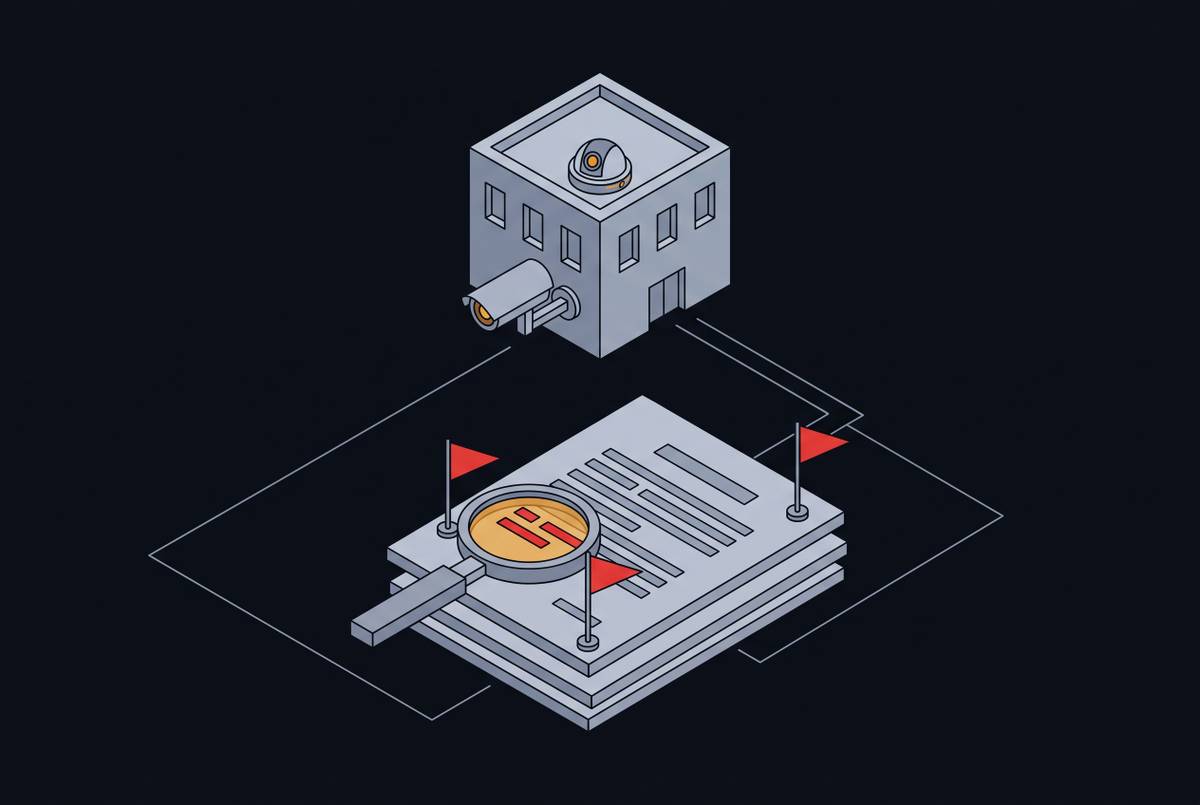
The fourth is verification rights. A buyer with no audit rights has no way to confirm that context is current or that it's being used at the moment of decision. The contract should grant the buyer access to alarm logs paired with the specific context that was available to whoever (or whatever) evaluated the alarm at that time. Without that access, the buyer is trusting the vendor's word on all three of the obligations above.
How the industry's alarm verification standards are formalizing what "verified threat" must mean on paper
The monitoring industry is shifting away from a flat alarm or no-alarm signal and toward a tiered model of verification, and contracts written before that shift tend to lock in a weaker standard than buyers can now reasonably demand. The relevant ANSI/TMA alarm verification standard lays out that tiered structure, and it gives buyers a reference point they didn't have before: a defined, external standard they can cite directly in negotiation instead of relying on a vendor's own description of what "verified" means.
That tier structure is directly useful on the page. A buyer can require a minimum verification tier before police dispatch is authorized, require that the tier assigned to a given alarm be logged along with the evidence that supports it, and hold the vendor to a standard set outside the vendor's own marketing. That's a meaningfully different position than accepting a vendor's self-reported claim that an alarm was "verified."
Vendors also satisfy response obligations in ways that create a related problem. Plenty of vendors meet a response SLA by sending an automated confirmation message, and a contract that doesn't define "acknowledgment" will treat that as compliant. The contract needs to state that acknowledgment means a qualified human reviewed the specific alarm and confirmed its scope, not that a ticket was opened or an email went out.
There's a gap in the standards landscape that buyers need to account for directly. Credentialing frameworks reward vendors for being a staffed central station right now, but they don't yet account for on-site AI detection that verifies a threat before any central station gets involved. No external credential currently covers that workflow end-to-end. Buyers working with AI-first vendors have to write their own evidence standards into the contract, because the industry's credentialing hasn't caught up to that architecture yet.
The SLA clauses that determine whether response speed is a real commitment or a paper metric
A response-time SLA that doesn't define what counts as a "response" can be fully satisfied by automated activity that never involves actual threat evaluation. The target time printed in the contract matters far less than the words used to define what has to happen within that window. That's where buyers lose protection without realizing it, because the number looks reassuring and the language around it does all the quiet work of weakening it.
Three pieces of language belong directly in the contract. Acknowledgment has to be defined as a qualified human reviewing the specific alarm and confirming its scope, not ticket creation, not an automated email, and not an AI classification standing alone on a verified threat without human confirmation. The escalation path has to be spelled out stage by stage: alarm trigger, AI filtering where that applies, human operator review, then dispatch or stand-down, each with its own time target. An end-to-end target alone lets a vendor hit the number with a fast automated first step and a slow, thin human step at the end, and the buyer would never see that from the summary metric.
The third piece is a false-positive rate obligation. A vendor whose SLA is defined purely by speed has no contractual reason to reduce false positives at all, because fast handling of a mostly-false alarm stream still satisfies a time-only metric. A monitoring service that responds quickly to alarms that are almost always noise is not delivering the coverage the buyer is paying for, and the contract should say so by attaching a measurable accountability clause to the false-positive rate itself, not just to the clock.
What a proof-of-concept period should verify before contract award
A proof-of-concept period is the only reliable way to confirm that a vendor's site-specific coverage actually works under real conditions at the buyer's own site. Vendor demonstrations and reference calls only describe how the system is supposed to behave. A POC shows how it behaves.
The POC needs to run across day, night, and adverse conditions, because a system that performs cleanly on a daytime walk-through can still produce a high false-positive rate overnight, when environmental noise patterns shift and the operator queue tends to be at its longest. A single clean demo during business hours proves very little about 2 AM.
Four things deserve direct measurement during that window. You need the false-positive rate against the site's actual operating conditions, not a lab benchmark or a number pulled from another customer's deployment. The time elapsed from alarm trigger to verified-threat escalation. You need the accuracy of AI filtering specifically when authorized activity occurs that the vendor's system was supposedly pre-configured to recognize. And the update workflow itself: does the site-context update process function when the buyer changes a shift schedule mid-POC, or does the system keep operating on stale data?
Whatever the POC finds should carry directly into the signed contract. The performance thresholds set during that period become the SLA baseline going forward, so if performance drops below those thresholds during the contract term, that should trigger remedies spelled out in advance. The POC also sets the starting point for a context audit: what the vendor knew about the site at the moment the contract was awarded becomes the benchmark against which the buyer later measures whether that knowledge has stayed current.
How the architecture of AI-first monitoring changes what contract terms are worth negotiating
A buyer negotiating with an AI-augmented monitoring vendor is negotiating a different set of obligations than a buyer negotiating with a legacy central-station vendor, and treating the two the same leaves real risk on the table. The terms that matter most move away from operator headcount and shift coverage and toward the quality of AI configuration, how well site context is maintained, and how fast human escalation happens once a threat is confirmed.
In the legacy model, where a human operator performs first-pass filtering, the risks that matter most sit around operator availability, how deep the queue gets during peak hours, and whether overage fees push a vendor toward delaying or dismissing alarms to control cost. Those terms still carry weight wherever a human is doing the first look.
In an AI-first model, where agents filter before any person sees an alarm, the risks move to three different places: the quality of what the AI was trained to recognize at this specific site, whether the AI's knowledge of current schedules and authorized activity stays up to date, and how fast and how well a human responds once the AI hands off a verified threat. None of those are capability claims a buyer can take on faith. Each one belongs in the contract as a specific, checkable obligation.
The human operator doesn't disappear from an AI-first workflow, the role just gets concentrated. An operator who only sees alarms the AI has already verified has to be capable of fast, high-quality decisions on genuinely consequential events, every time. So the contract should set operator qualification requirements and response-time commitments tied to escalated events specifically, not just to alarm intake generally.
The structural case for AI-first monitoring as a contractual upgrade comes down to where the dismissal happens. A vendor whose AI agents clear false positives before they ever reach a person is offering a different coverage architecture than one where a fatigued human clears them after the fact. A software agent doesn't get worn down by a long queue the way a person does. That means the site-specific context loaded into the system gets applied on every single alarm, not only on the fraction that happen to survive triage by exhaustion. That is the practical outcome a buyer is purchasing when a contract requires real site-specific protocol coverage: a monitoring relationship where the context exists on paper and gets used in practice, alarm after alarm, regardless of how full the queue gets that night.