Alarm Overage Fees in Video Monitoring Contracts
Hidden overage fees turn false alarms into unexpected monthly bills.
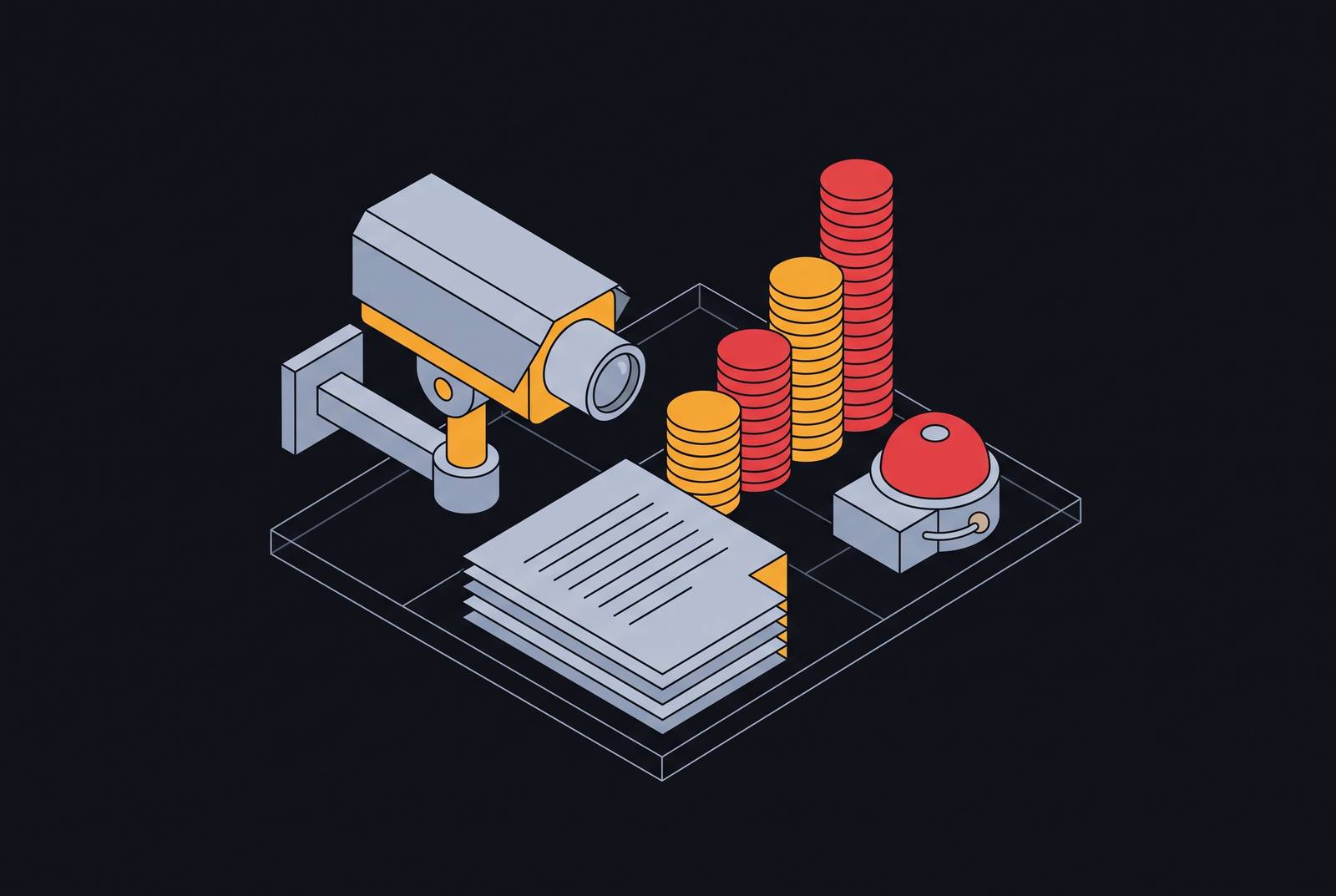
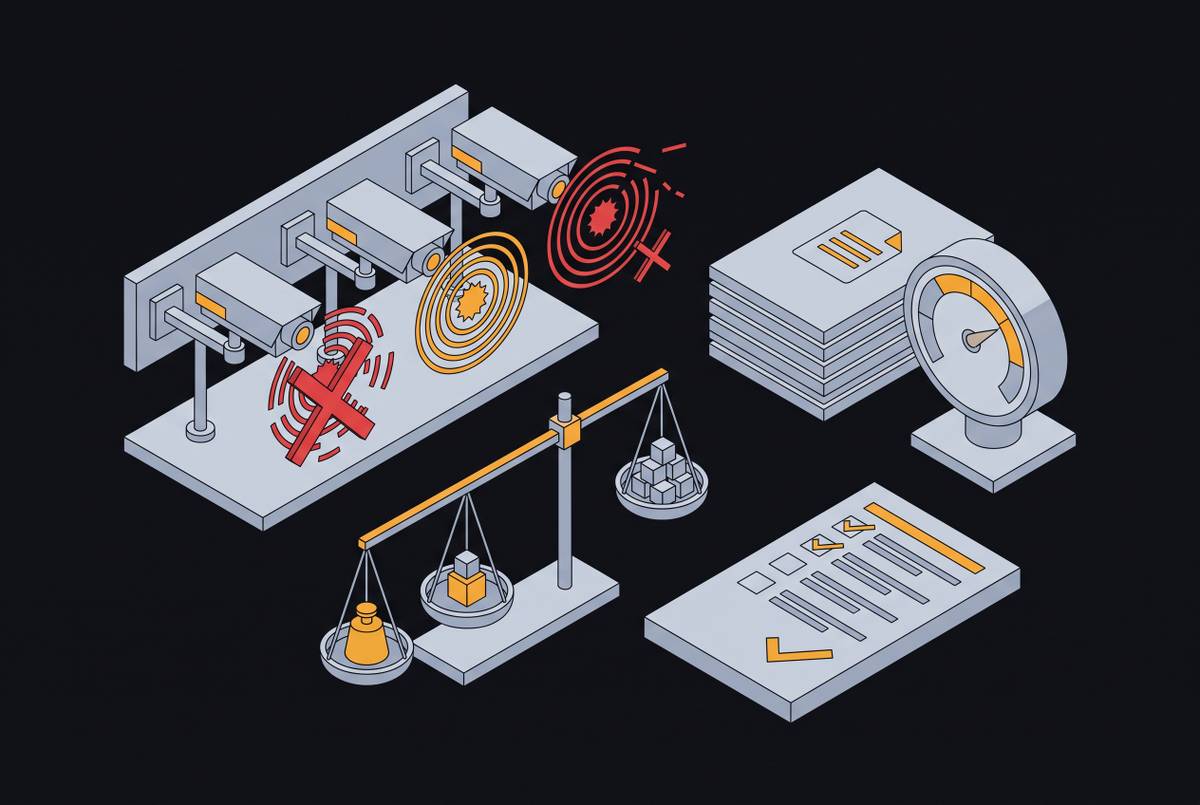
A facilities manager opens the monthly invoice and finds a line item that was not there in the proposal: an overage charge, applied because the site generated more alarm events than the contract's baseline allowed. The instinct is to call the provider and assume a billing error. It is not an error. Overage fees are the predictable result of pricing a flat-rate contract on top of a monitoring model that cannot tell a real threat from a gust of wind, a passing raccoon, or an employee walking to a car at 11pm. The contract assumes a certain volume of alarms. The site produces more. The fee is the gap between those two numbers, and that gap appears on the invoice every month at almost every commercial site busy enough to need monitoring.
Traditional monitoring contracts and where volume risk lands in the billing model
Commercial video monitoring is typically sold one of two ways: a flat per-camera monthly fee, or a per-event charge tied to alarm volume. Commercial video monitoring sells the per-camera fee on the sales sheet, while the per-event pricing underneath it is the quieter mechanism that actually produces overage charges. The Safe and Sound 2026 guide puts commercial monitoring at $40 to $120 per month depending on tier, but that range only covers the base camera-count fee; it says nothing about how many alarms the system actually generates. Buyers rarely see the second cost until it arrives on a bill.
A parallel cost compounds the exposure: permit fees, which the Safe and Sound 2026 guide puts at $30 to $110 per year per location. Most first quotes leave these out. Once a site exhausts its city's free-alarm allowance, false alarms start triggering municipal fines on top of whatever the monitoring contract itself charges in overage. Two separate billing systems, one from the monitoring provider and one from the city, both respond to the same underlying problem: too many alarms that turn out to mean nothing.
None of this is disclosed by the contract's marketing language. The structure transfers volume risk entirely to the customer. The provider is never on the hook for how many alarms a site generates; the customer is. The volume runs so far ahead of the contracted baseline because of specific, identifiable causes.
What drives alarm volume beyond the contracted baseline
Criminal activity is almost never the cause, and none of these signals get evaluated for context before they land in front of a human. Every single one enters the review queue just as a genuine intrusion would. The Safe and Sound 2026 guide puts the false-alarm rate at up to 98% of all activations. That means the vast majority of events generating overage exposure have nothing to do with actual security risk.
Industrial sites feel this hardest. In both cases, the site is not unusually dangerous or unusually chaotic. The monitoring model treats every signal the same no matter what's actually happening, so noise and threat end up sharing the same queue and the same billing meter.
This has a human cost that compounds the financial one. When operators spend their shifts clearing irrelevant alarms from the same site, they start to move faster through review and give each one less attention. That's alert fatigue, and it means the overage fees a site pays and the declining quality of the monitoring it receives are not separate problems. They arrive together, generated by the same unfiltered volume.
The queue, and why response time depends on volume, not urgency
Every alarm that reaches a monitoring center enters a queue, and that queue runs on a fixed sequence: a signal is received, it's placed in the queue, the customer's record is pulled, an operator becomes free, and the alarm gets reviewed. But priority only separates alarms that have already been classified, and the overwhelming majority entering the system haven't been classified. They are raw motion triggers, indistinguishable from a real intrusion until a person actually looks at the footage. That means a genuine break-in alarm can sit behind dozens of false triggers from the same site, each one as unclassified as the next, each one taking its slot in line.
None of this reflects operators doing their jobs poorly. It reflects a queue that is structurally incapable of knowing which alarm matters before a human reviews it. The industry's standard language, "24/7 monitoring," "rapid response," commits a provider to being available, not to a response time measured from the moment an alarm comes in. A buyer who negotiates a cap on overage fees without ever addressing how deep that queue runs has made the invoice smaller. The site remains a monitored location where a real threat can end up waiting in line behind noise that never should have reached a human.
Why muting, offshoring, and overage caps leave the underlying volume problem intact
Buyers who hit a painful overage bill tend to reach for one of three fixes: mute the cameras generating the most false alarms, move monitoring offshore to cut labor costs, or negotiate a cap on the overage rate itself. Each is a rational response to a real cost. None of them touches the volume of noise causing that cost, and each one makes the buyer give up something they still need.
Muting a high-false-alarm camera makes the line item disappear because it makes the coverage disappear. A negotiated overage cap protects the monthly total but leaves a question unanswered: what happens to the alarms generated above that cap? Each of these moves treats the overage fee as a pricing problem to be negotiated down rather than a signal about how the monitoring itself is built. A buyer who succeeds in shrinking the bill this way has made the invoice smaller and the coverage less reliable in the same move. That outcome is itself evidence for the underlying point: the fee was never the actual problem. The architecture generating the noise was, and none of these three fixes touches it.
What contract language reveals about a provider's monitoring architecture
Before you sign anything, you can read a provider's architecture directly off the contract, if you know which terms to press on. The first is how billing is triggered. A contract that bills per verified event gives the buyer a direct stake in how carefully the provider classifies alarms before counting one as billable, so you have to ask what process, if any, runs before an alarm becomes chargeable.
The second is verification itself. The Safe and Sound 2026 guide notes that more municipalities now require alarm verification before emergency dispatch, so verification has become a real factor in how buyers choose a provider. A contract that never defines what counts as a "verified" alarm before billing starts has quietly handed the customer all of the classification risk.
The third is response-time language. "24/7 monitoring" and "rapid response" are claims about availability, not promises about speed, so a buyer should ask for an actual measured benchmark from alarm receipt to operator review, and ask whether that number reflects average performance, peak-hour performance, or a contractual floor the provider is willing to be held to.
The fourth is the overage trigger itself: at what volume does the higher rate kick in, what counts toward that number, and do environmental false alarms get treated the same as verified threats when the meter runs. And the fifth is whether the provider can describe, concretely, how it tells authorized activity (a cleaning crew, a scheduled delivery, an employee working late) apart from something that actually warrants concern. If a provider can't answer that last question, its alarm volume at an active site will stay high indefinitely.
Services like Verdun reverse this logic: they deploy AI agents to review every alarm first and dismiss environmental noise before it reaches a human operator, so the baseline assumption built into the contract aligns with actual threat volume rather than total signal volume, and overage exposure never materializes.
How AI-agent filtering reduces alarm volume at its source
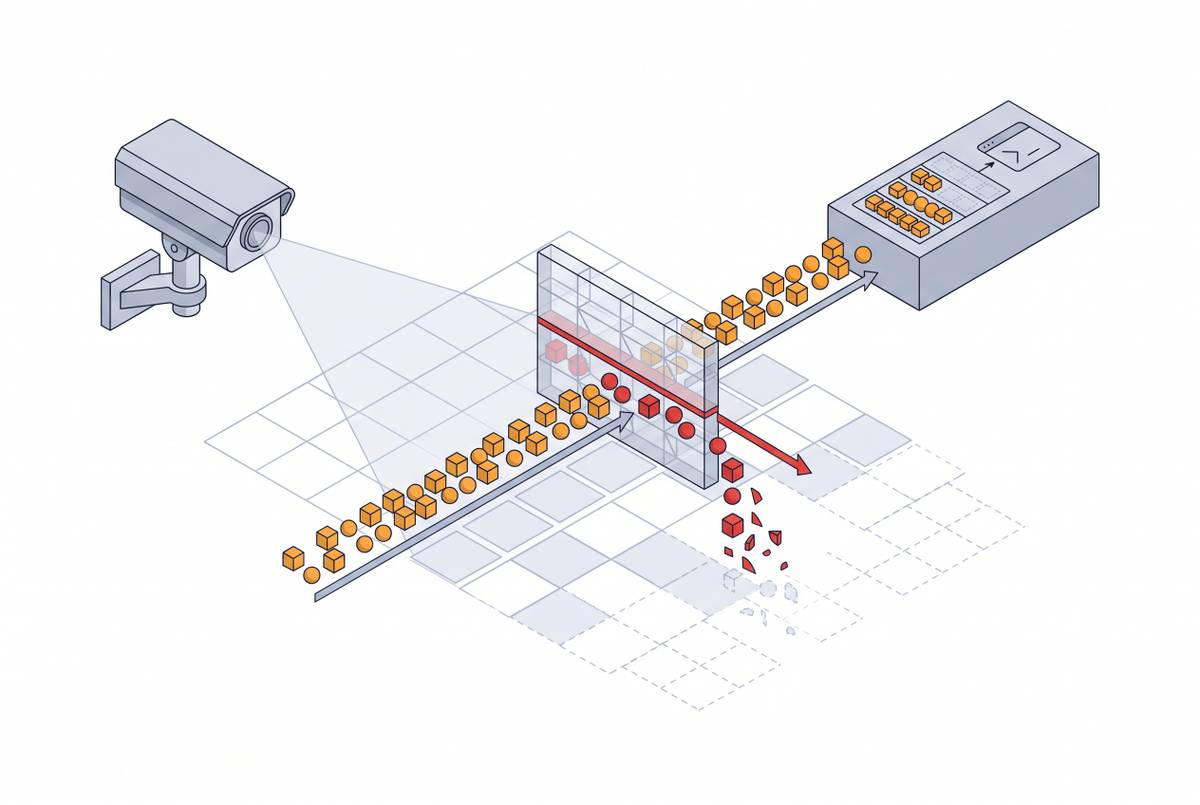
Placing an AI layer in front of the human queue solves both problems the earlier sections describe, because they are the same problem seen from two angles. When alarms are reviewed and filtered before they ever reach an operator, the volume that generates overage fees drops, and the queue that delays response to a genuine threat gets shorter, in the same motion.
This works because of a shift away from simple motion detection toward contextual evaluation. Instead of flagging that pixels changed on a sensor, the system asks whether the activity fits what you'd expect at that site, at that hour, under those conditions. That requires feeding the system site-specific information: schedules, lists of authorized personnel, rules tied to particular zones, and a baseline understanding of normal environmental variation. Those inputs let an AI agent recognize a cleaning crew moving through a lobby at 11pm as routine activity.
The challenge of separating noise from real threats at scale is why AI-powered filtering has become central to how modern monitoring works; an AI-agent-first approach handles motion triggers, lighting changes, and authorized activity at the system level, before any of those signals reach an operator queue or accumulate into a billable event. Alarms dismissed at this stage never become chargeable under per-event pricing, so the reduction in volume is a direct financial effect, not only an operational one. When the AI agent can't confidently resolve something, such as a genuinely ambiguous situation, a scenario it hasn't seen before, or behavior that looks deliberately evasive, it escalates to a human operator along with the reasoning it already worked through, giving the person reviewing it a pre-evaluated case built from that analysis. The two layers do different jobs, and the model depends on keeping that division intact rather than treating the AI layer as a replacement for the human one.
Overage-fee exposure across commercial, multifamily, and industrial sites
The mechanism behind overage fees is identical everywhere: unfiltered noise competing with real threats for the same queue and the same billing counter. What changes from one environment to the next is the volume that noise reaches, and therefore how exposed a given site actually is.
Commercial sites, retail storefronts, small offices, employee parking lots, cost $40 to $120 a month for monitoring before event volume is factored in, per the Safe and Sound 2026 guide. If the system has no schedule built in, every one of those routine events gets flagged as a possible intrusion.
Multifamily properties produce a different shape of problem. The difficulty there isn't intensity, it's frequency, and because authorization is spread across dozens or hundreds of residents rather than a fixed staff list, the system needs to judge whether someone has a right to be somewhere, not just whether something moved.
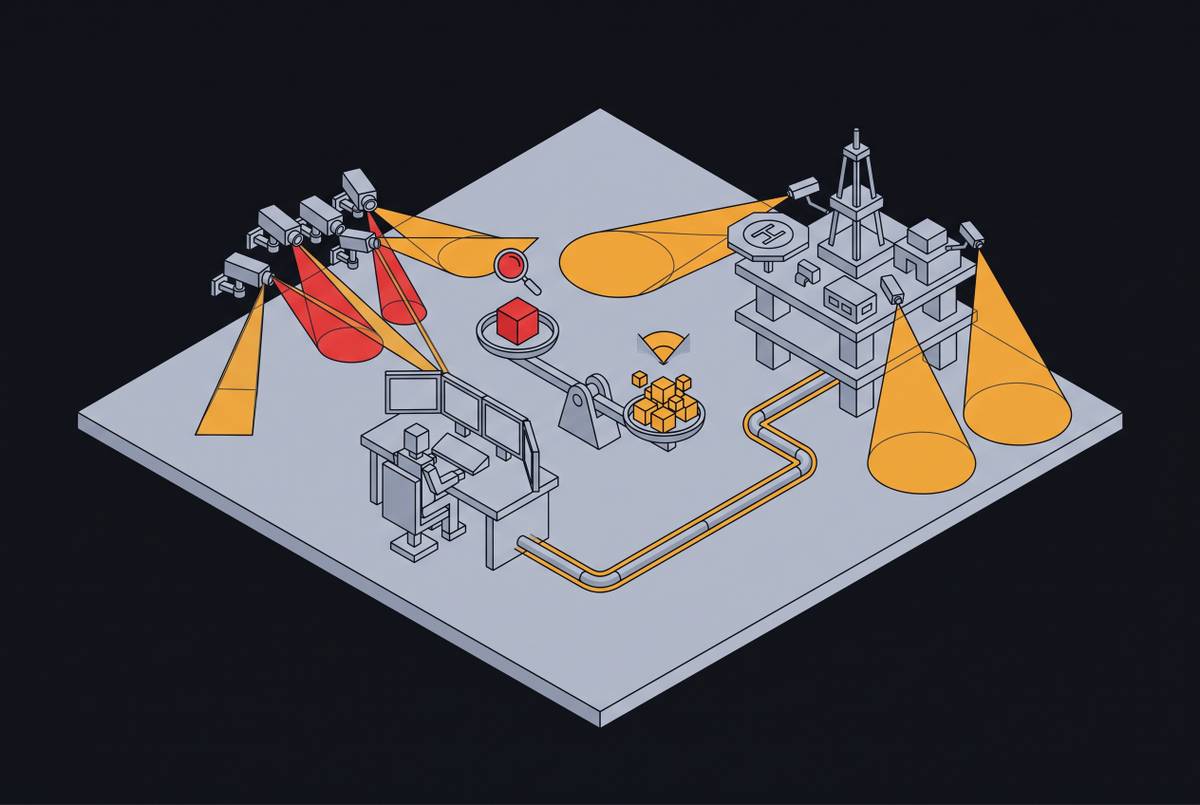
Industrial and construction sites carry the sharpest version of the problem. The Safe and Sound 2026 guide puts construction-site monitoring at $300 to $800 a month depending on camera count, but that range covers only the base fee, before you add in the alarm volume these sites typically generate. Construction sites add another layer of instability: equipment gets moved, perimeters shift, access points change, and protocol settings that were accurate a month ago go stale fast, which multiplies false positives from zones that were configured for a site that no longer exists in that form.
Questions buyers should ask before signing a video monitoring contract
A buyer who understands where overage fees come from can test any provider's contract with a short set of direct questions, and the answers reveal whether the architecture behind it filters noise before billing or simply prices around it. Start by asking what runs before an alarm becomes a billable event: the answer shows whether noise gets filtered upstream, through an AI layer or a video-verification step, or whether the provider just queues and bills everything a sensor trips. Ask how the system defines authorized activity at that specific site, since a provider unable to explain how it loads schedules, personnel lists, and zone-specific rules into its workflow will keep generating false alarms for normal operations. Ask for the measured response time from alarm receipt to operator review, and ask what conditions that number reflects, because a response time measured during a quiet overnight hour means little if what you care about is how the system performs during a Monday-morning rush. Ask what volume triggers the overage rate, and whether environmental false alarms count toward that threshold the same way a verified threat would, since the answer shows whether billing is tied to actual risk or just to raw signal count. Ask what happens to alarm volume above a negotiated cap, since throttled review, batch processing, and absorbed cost all carry consequences for how well a site is actually being watched, whatever the invoice says. And ask how the provider handles a site that runs persistently hot with alarms: whether the default is to mute cameras, adjust protocols, or filter upstream reveals which of the false solutions a provider reaches for by habit, and whether it has the architecture to do anything else.
Verdun's model is built to answer these questions directly: AI agents review every alarm before it reaches a human operator, site-specific protocols define what counts as authorized activity at setup, and the operator only ever sees verified, context-rich escalations, so there is nothing left for an overage fee to attach to. A provider that hedges, redirects, or can't give a specific answer to any of them is telling a buyer, in advance, what the invoice is going to look like in month four.