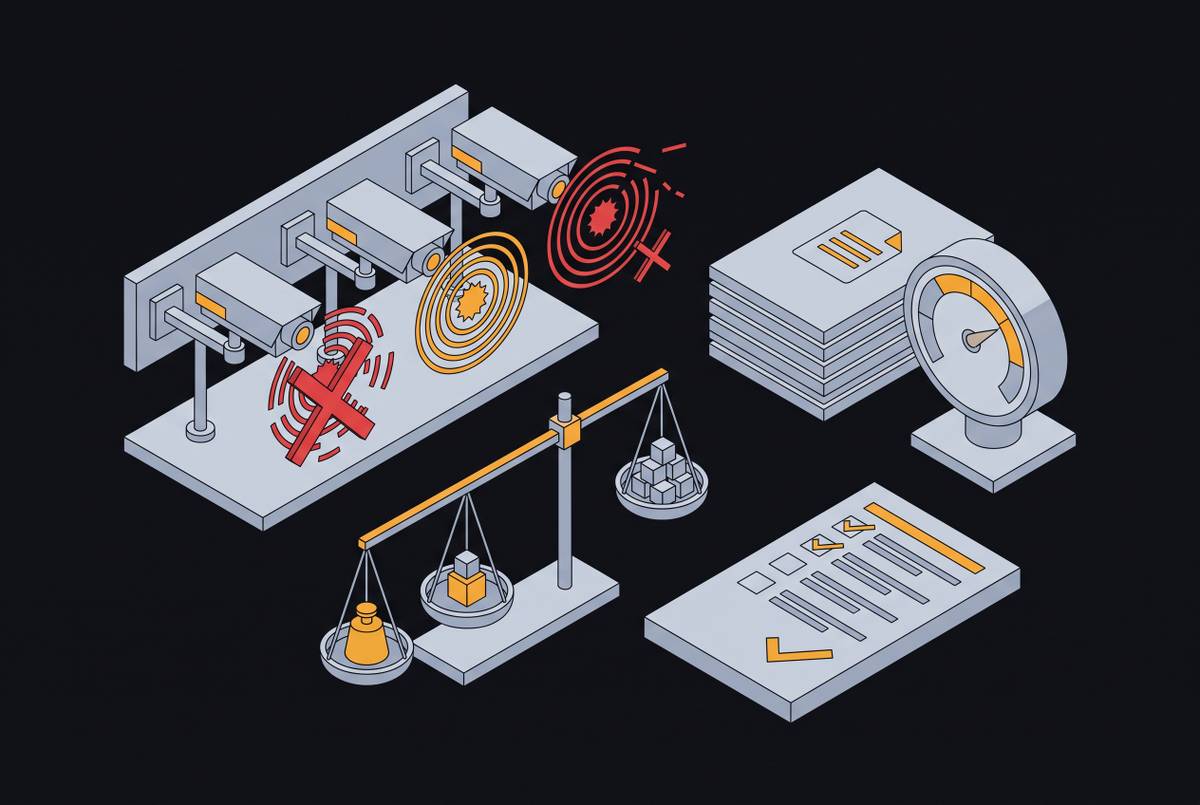
Alarm Threshold Filtering and What It Removes From Coverage
Suppressing low-signal events deletes real threats operators never get to review.
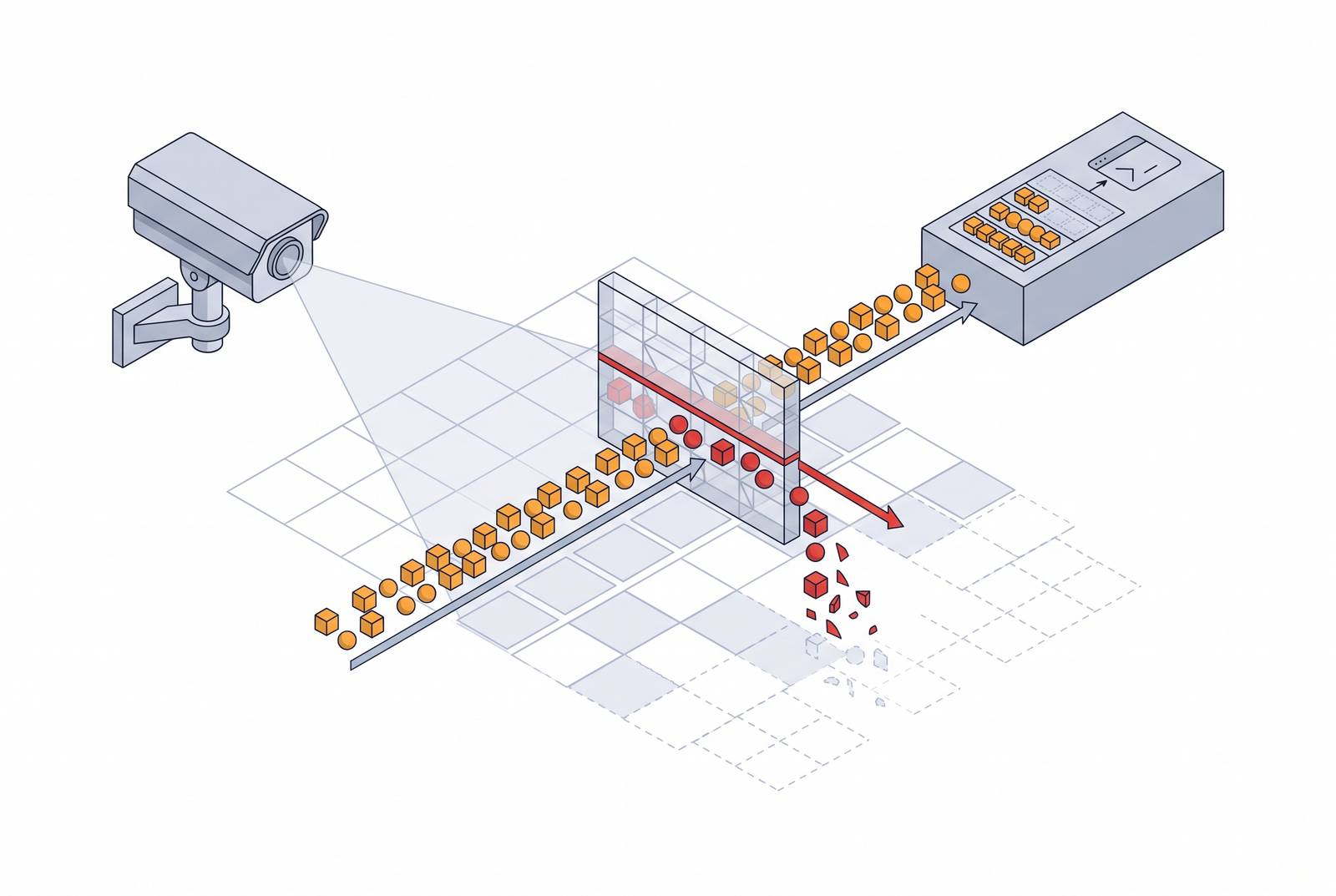
Alarm threshold filtering is marketed as a noise-reduction feature, but its mechanism is deletion: events below a configured sensitivity level never reach a human or an AI system for review. Muting a noisy camera to cut down on false alarms does not make a facility safer. It removes a slice of coverage permanently, because the events filtered out are never distinguished from genuine threats before they disappear, and some of them are genuine threats that simply look, at the signal level, like wind or shadow.
How Alarm Threshold Filtering Works
A threshold filter sits between the sensor and everything that comes after it. Motion or sensor-triggered events get measured against a configured sensitivity level, and if an event falls below that level, it is suppressed before it reaches an operator, a recording system, or an AI classifier. The event is removed from the pipeline entirely, as though it never occurred, rather than flagged, queued, or logged for later inspection.
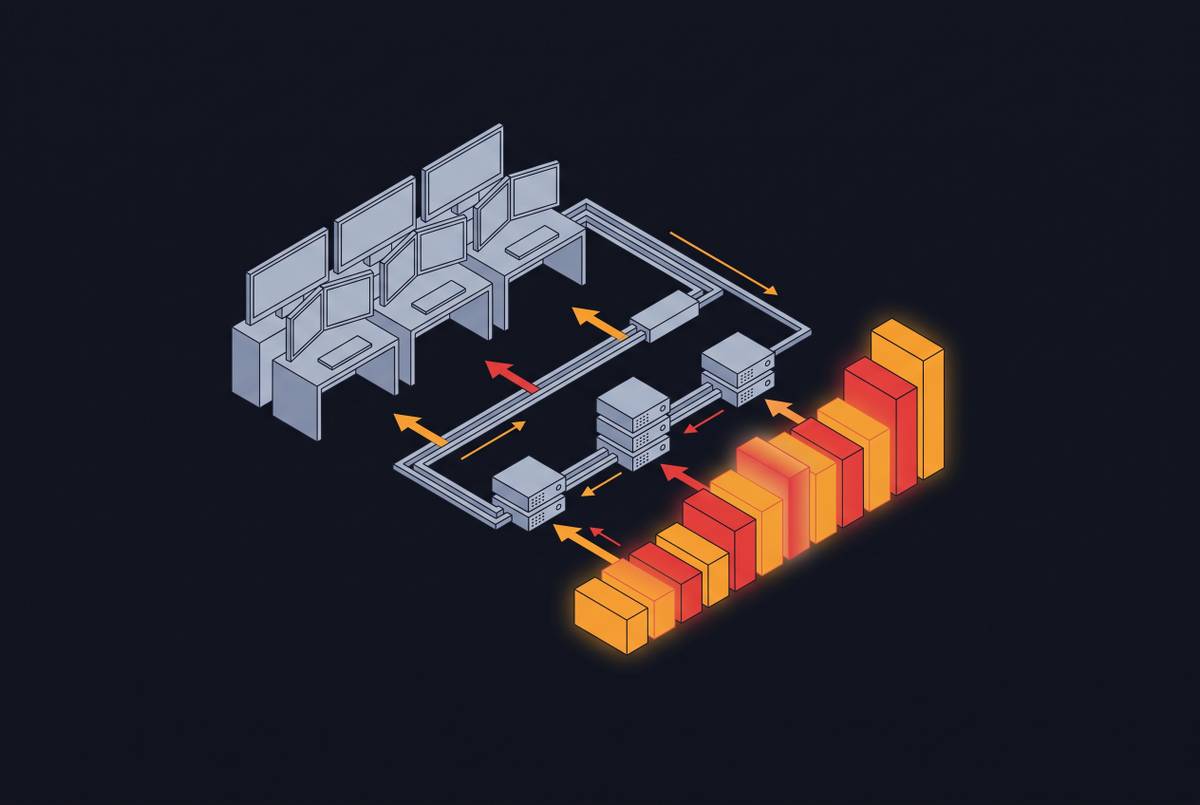
Operators and integrators turn to this approach because of the genuine volume problem of conventional motion-detection cameras overwhelming monitoring centers with alarms. Conventional motion-detection cameras generate an alarm for essentially anything that moves in frame, and that volume overwhelms monitoring centers. Safe4's analysis of alarm monitoring challenges says the false alarm epidemic is the single most critical pressure monitoring centers face today, and it names wasted emergency resources, frustrated customers, and municipal fines as the consequences. So when that pressure hits, raising a sensitivity threshold can look like a reasonable fix.
Vendors sell threshold filtering as a precision upgrade: raise the bar, and only the "real" events get through. That framing hides a basic limitation. The filter has no capacity to inspect what it discards. It measures signal magnitude or motion pixel count, nothing more, and at the boundary a brief intrusion, a partially obstructed figure, or a low-light approach produces a signal that is statistically indistinguishable from wind-blown foliage. The filter cannot tell them apart, so it treats them identically: both get deleted if both fall below the line.
The false alarm problem filtering tries to solve
The pressure driving threshold adoption is not imagined. Conventional motion-detection systems trigger on anything that moves in frame, full stop: ceiling fans, foliage, shifting shadows, and animals all generate alerts indistinguishable in kind from a genuine intrusion. Scylla AI's documentation on false alarm filtering says as much: motion-based cameras fire every time something moves, whether that something is a person or a houseplant. Any monitoring operation built on raw motion triggers will eventually drown in alerts that carry no operational meaning.
A clinical validation study on intensive care monitoring systems offers the clearest demonstration of where that volume leads. The study found that high false alarm rates desensitize staff, and that desensitization drags down the effective sensitivity of the whole alarm system. The response to constant false signals was not more careful filtering. The response was alarm limits set inadequately wide, or alarms disabled.
That same mechanism plays out in security monitoring. The terminal form of threshold-based thinking is an operator or administrator who, exhausted by irrelevant alerts, mutes the camera or disables the feed altogether, trading all future coverage for immediate relief from the noise. The structural problem that creates alarm volume also explains why blanket deletion is the wrong structural response to it. So volume should not be treated as the enemy of coverage; what needs to change is what review means, not how much gets reviewed. AI-powered monitoring services like Verdun deploy AI agents to review every alarm first, filtering for relevance and verified threats, so that human operators see only escalations that warrant their attention.
The coverage that disappears when threshold filtering removes an event
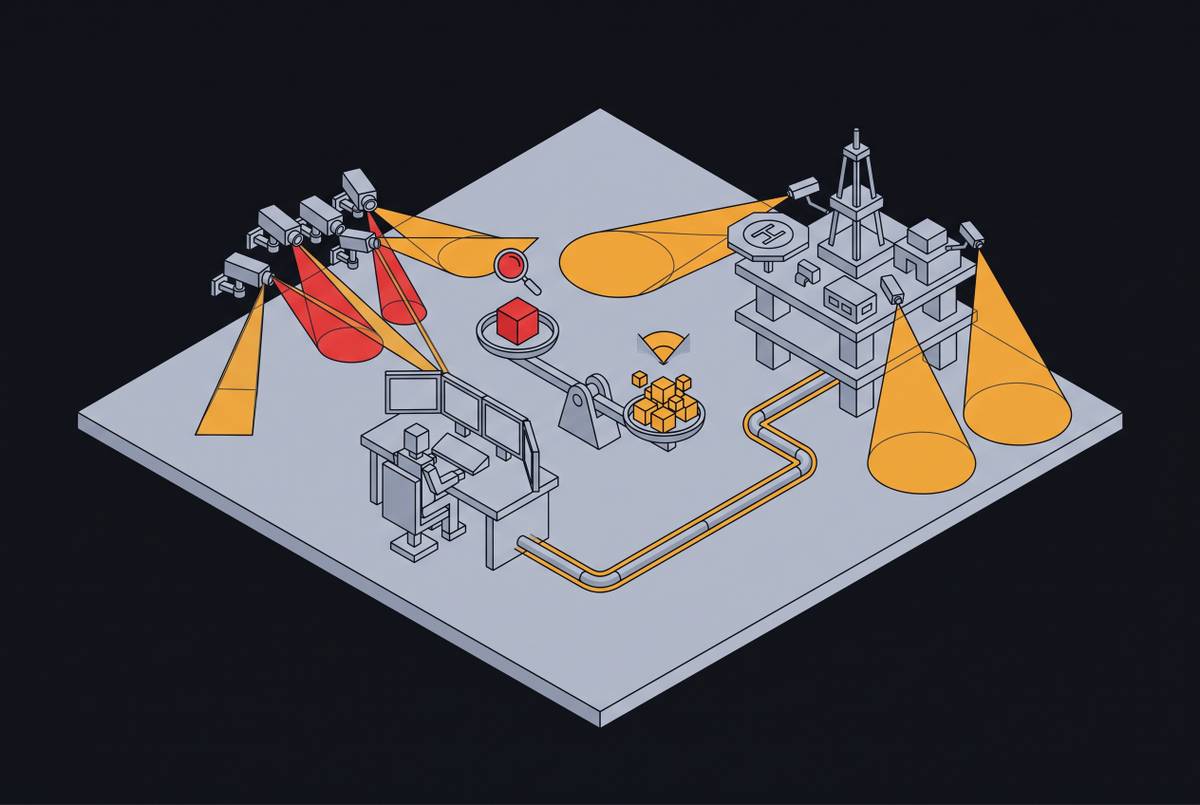
When a threshold filter suppresses an event, no human and no AI system ever sees it. The filter is doing precisely what it was set up to do, and the categories of legitimate activity caught in that deletion are varied enough to make the gap concrete.
A fast-moving intrusion is one such category. A person crossing a sensor zone quickly can generate fewer triggered pixels, or a shorter motion duration, than the threshold requires, and the event is over before any downstream system has a chance to classify it. Partial obstruction and low-light conditions form a second category: a figure at the edge of a camera's field of view, or in a dim corner of a site, produces a measurably weaker motion signal than the same figure would in full frame under good light. The threshold reads that weak signal as noise, with no regard for why the signal is weak.
Camera tamper events make up a third category, and the technical literature here is specific. Research on streaming camera tamper detection shows that lens occlusion and abrupt photometric transitions carry distinct sensor-fault signatures, but separating them from nuisance illumination changes, such as day-night switching, automatic exposure correction, or a room light being switched on, requires stateful, auditable detection logic. A threshold-only system cannot make that distinction. So it either fires constantly on routine lighting changes, or it is set so high that it misses real tampering.
Slow or stationary threats form a fourth category. A person loitering just outside a sensor zone, or moving slowly enough to stay under the motion threshold, produces a signal profile near or below the cutoff by design, and defeating the system this way takes no technical skill, only patience. The fifth category involves pose-based behavioral anomalies, the kind retail security systems are built to catch. Research on pose-based shoplifting detection shows that these anomaly detection systems output uncalibrated scores per frame, which makes threshold selection a genuinely difficult problem: filtering based on F1 scores ignores true negatives and does not directly control the false-positive rate, so an under-sensitive threshold leaves real events unseen while an over-sensitive one buries staff in alerts.
These five categories are representative, not exhaustive, and they share one trait: at the moment of filtering, none of these events look obviously different from noise. They only reveal themselves as real threats in retrospect, by which point the footage that was never retained is no longer there to review. Because threshold filtering acts on signal magnitude alone, it cannot separate a legitimate low-signal event, a figure in poor light, a partial intrusion, a slow approach, from genuine background noise, and once an event is deleted it stays invisible to every downstream system, including any AI agent built to classify threat patterns. So when you build an architecture around reviewing events rather than suppressing them, every event reaches some form of intelligent analysis before a human operator ever sees it.
The threshold trade-off filtering cannot avoid
No threshold setting can catch every real event while it suppresses all the noise, because real events and noise sit in the same signal space a threshold measures. It is a structural limit on what thresholds can do.
The calibration dilemma runs in both directions at once. If you lower the threshold, alarm volume climbs back toward the unmanageable rates that motivated filtering in the first place. Raising it widens the coverage gaps described above. An operator adjusting the threshold is not eliminating failure; they are choosing which failure mode to accept, and living with the consequences of that choice. The retail shoplifting detection research states this precisely: threshold selection is critical because the scores an anomaly detector outputs per frame are not probabilities, just uncalibrated numbers, so there is no objectively correct cutoff, only an operational trade between false-positive burden and false-negative coverage loss.
Site conditions compound the problem further. A threshold calibrated for a quiet storage yard will fire constantly on a dealership lot where something moves every twenty minutes. A threshold calibrated for the dealership lot will leave blind spots on the storage yard, where any movement at all is suspicious. Thresholds do not travel well between sites, and recalibrating them for each one requires exactly the ongoing human attention that filtering was supposed to eliminate.
The camera tamper case makes the limit unmistakable. Separating genuine occlusion from a nuisance photometric transition, such as a lighting change at dusk, requires a stateful decision rule with suppression logic that can be audited after the fact. A fixed signal-magnitude cutoff cannot perform that reasoning. It has no concept of state, no memory of context, and no way to ask what caused a given reading. The honest conclusion is that a threshold, as a mechanism, cannot do the job it is being asked to do.
What intelligent review does that threshold deletion cannot
Intelligent review preserves every event for inspection and applies contextual reasoning to decide which ones reach a human, rather than deleting a portion of events before anyone has the chance to look at them. That distinction is the whole difference between the two architectures.
An AI agent built for this kind of review classifies what caused the signal in the first place, instead of suppressing signals that fall below a magnitude cutoff. It distinguishes a delivery vehicle from an unauthorized approach, a cleaning crew from an after-hours intruder, a shadow from a person, using time of day, location in frame, behavior pattern, and site-specific context as its inputs. Scylla AI's documentation describes the operational contrast clearly: AI video analytics responds to the object of interest, so an alert fires when a person or vehicle is detected in frame. The filter here is configured by object class and detection zone, not by signal amplitude, and that single change is what lets context into the decision.
Context changes what an event means. A motion trigger at 2 a.m. in a zone with no scheduled activity is not the same event as identical motion at 9 a.m. during a known delivery window, yet a magnitude-based threshold treats both exactly alike because it has no way to know the difference. Contextual review does know the difference, because time, location, and expected activity are inputs to the classification.
Camera health belongs in this same framework. Research on streaming tamper detection treats camera integrity monitoring as its own sensor-health subsystem, separate from alarm logic, because a lens occlusion or a repositioned camera invalidates every alarm that camera produces afterward. So an intelligent monitoring architecture catches that tamper event as its own classified occurrence, and no one loses a sensor's coverage without noticing. Verdun's architecture is one working example of this model in practice: AI agents review every alarm, dismiss the ones explained by routine site activity, and escalate only verified threats to trained human operators. The role of the operator changes under this model. Instead of receiving every motion trigger and sorting noise from signal by hand, the operator receives events that have already been verified, each arriving with location, timestamp, and video context attached, so that human judgment is spent on the cases that actually need it. Safe4's 2025 analysis describes this as the direction the industry is heading: AI and machine learning systems that analyze complex data patterns in real time, cutting false positives while still ensuring a fast response to genuine breaches. The emphasis in that framing is on distinguishing events from one another, not on deleting the ones that look inconvenient.
Questions security buyers should ask before accepting threshold filtering
If you understand how threshold filtering creates blind spots, you can ask the questions that separate real coverage from a monitored-camera system that only looks like one. What happens to events that fall below the configured threshold is the first and most important question to put to any vendor, because if the answer is that those events are simply discarded, the system keeps no record of what it removed and offers no way to audit whether a real event was lost along with the noise.
How the threshold is calibrated for a given site, and how often that calibration gets revisited, matters just as much. A threshold set once at installation and never touched again drifts out of alignment as conditions change: seasonal light shifts, new equipment on the premises, altered schedules, all of these move the line between signal and noise without anyone adjusting for it. A buyer should also ask whether the system monitors camera health independently of alarm volume: the tamper detection research is clear that lens occlusion and repositioning silently invalidate everything a camera reports downstream, so a system with no independent check on sensor integrity cannot guarantee its coverage map matches its actual camera map.
It is worth asking, too, how a system handles events that resemble noise but occur in high-risk zones or during high-risk hours, because threshold filtering is context-blind by design: a brief motion event at 3 a.m. in a secure area gets treated exactly the same as identical motion at noon in a public corridor, even though the two carry entirely different risk. Finally, a buyer should ask what the verified threat response time actually is, and how that figure gets measured, since speed to a human who has seen and confirmed a real event is the metric that matters operationally. A fast alert on a signal nobody has verified is faster delivery of noise.
What these five questions test, together, is a single underlying principle: coverage is not measured by how many cameras are installed or how many alarms a system generates, but by what happens to a real event between the moment it enters a sensor's field of view and the moment a qualified human takes action on it. Threshold filtering shortens that chain because it deletes events out of it before anyone can look. The alternative is a system that looks at everything first and decides, with context, what deserves a human's attention.
Sources
- Clean-Reference Streaming Detection of Lens Occlusion and Photometric Transitions for Camera Tamper Monitoring
- From Offline to Periodic Adaptation for Pose-Based Shoplifting Detection in Real-world Retail Security
- Reducing False Alarms of Intensive Care Online-Monitoring Systems: An Evaluation of Two Signal Extraction Algorithms