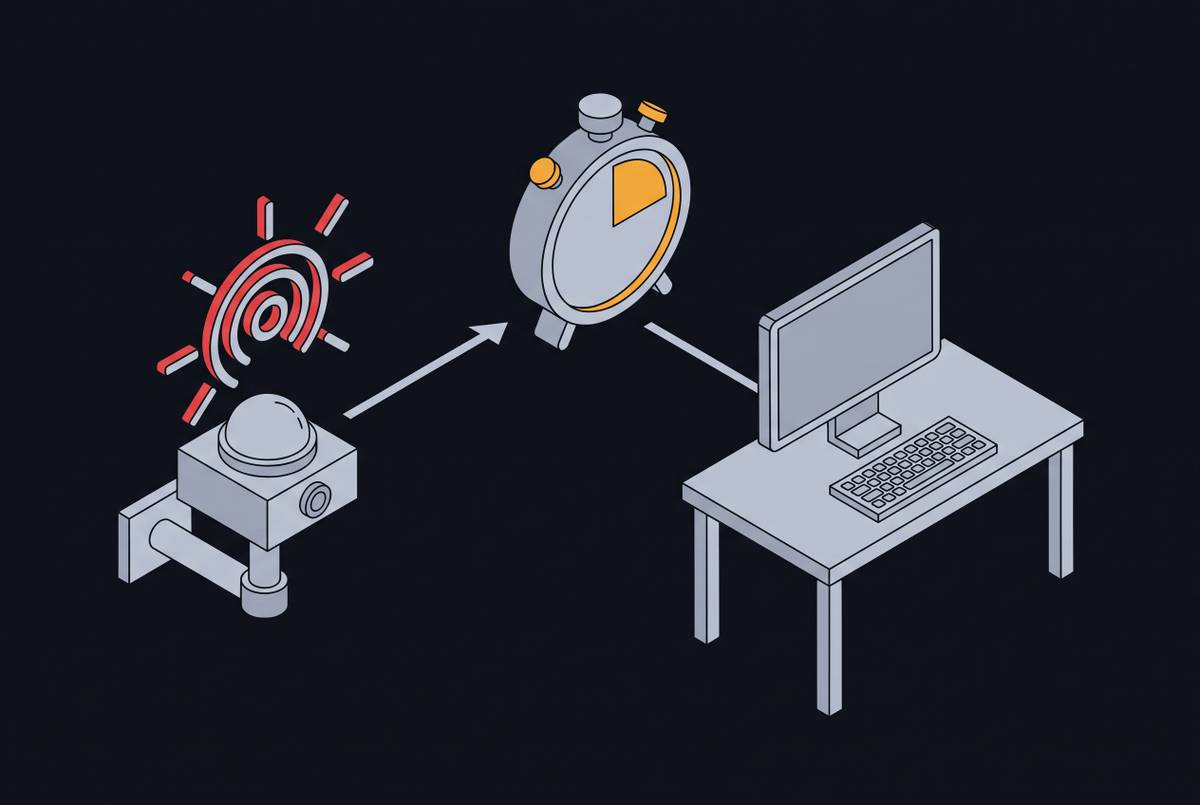
Operator Overload Thresholds and the Staffing Math Behind Alarm Response Failures
Sustained attention fails within 20-30 minutes, making operator overload a design flaw.
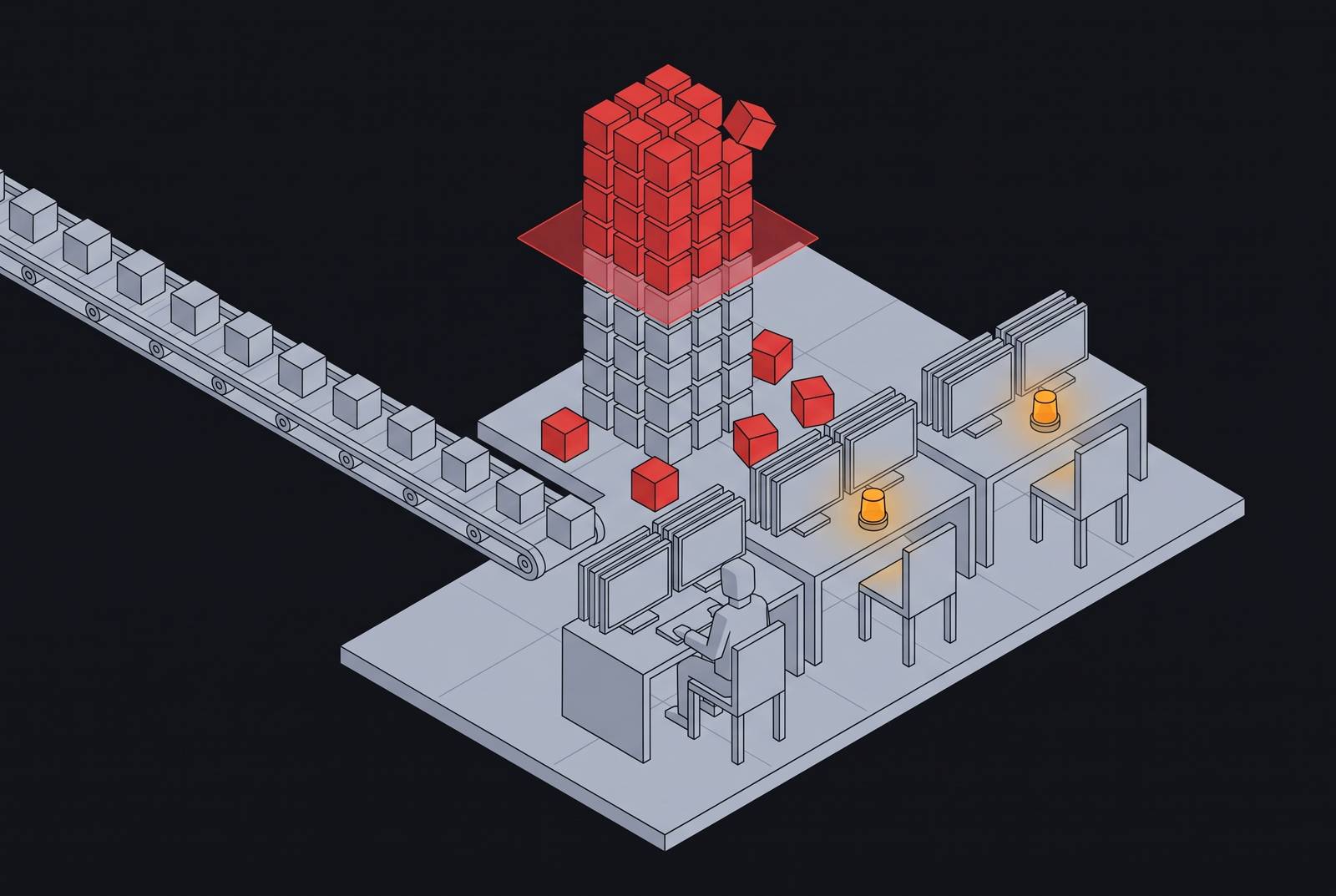
Alarm response time failure in traditional video monitoring centers is a structural problem. Limited human attention collides with continuous alarm volume, false positives, and fragmented workflows, so genuine threats can wait before anyone evaluates them. Systems must filter and contextualize alarms before they reach an operator.
Why operator overload in legacy monitoring centers is a structural outcome, not a staffing shortfall
Alarms keep coming in while one operator is responsible for dozens of video feeds. Each event can demand a review, a judgment about urgency, and a decision about escalation, even as other events compete for attention. The shift requires more than watching screens. It requires the operator to keep telling routine activity from possible threats, often using systems that leave them to piece together what they need to know before they act.
Legacy staffing models treat that work primarily as a coverage problem, with more operators providing more capacity. Additional people do provide more working time, but that arithmetic incorrectly assumes attention remains dependable throughout the time assigned. A staffed position is not the same as an uninterrupted supply of accurate perception, especially when each person must monitor continuously and handle an unfiltered stream of alerts.
That distinction changes how response failures should be interpreted. An operator who misses an event may be the final visible point of failure without being its underlying cause. If the workflow repeatedly demands more sustained attention than a person can supply, the failure is built into the assignment. For buyers, the relevant distinction is between inadequate staffing for a workable process and a process that consumes attention faster than staffing can reliably supply it.
The cognitive capacity limits that make sustained video monitoring unreliable by design
The UK National Protective Security Authority, formerly CPNI, places the onset of vigilance decrement after 20 to 30 minutes of continuous work, depending on the concentration required. This is the decline in sustained attention that makes prolonged monitoring less dependable. It is not a judgment about operator commitment. The constraint arises from human capacity, so experience and training cannot fully remove it.
Research on CCTV operators published in Applied Ergonomics found that trained professionals detected only roughly half of target behaviors during a 90-minute video review task, with a high rate of false alarms accompanying the misses. These were experienced operators rather than novices learning the work. Their performance shows why knowledge of a task cannot be treated as protection against its attentional demands. Knowing what to look for does not guarantee that a person will detect it throughout a prolonged review.
Watching dozens of feeds means keeping up that attention across scenes that compete for it. Night shifts, shift rotations, and the psychological weight of high-stakes missed detections further compound fatigue, so a staffing calculation cannot rest on how alert an operator seems at the start of a shift. Capacity must be treated as a constraint. A model that counts assigned hours without allowing for the drop in vigilance puts more trust in coverage than the human visual system can bear.
These limits become especially consequential when alarms arrive faster than operators can meaningfully evaluate them. Sustained attention then has to support both the current decision and an accumulating queue. That is where physiology meets the staffing math.
Why security monitoring centers fall behind on alerts before peak hours
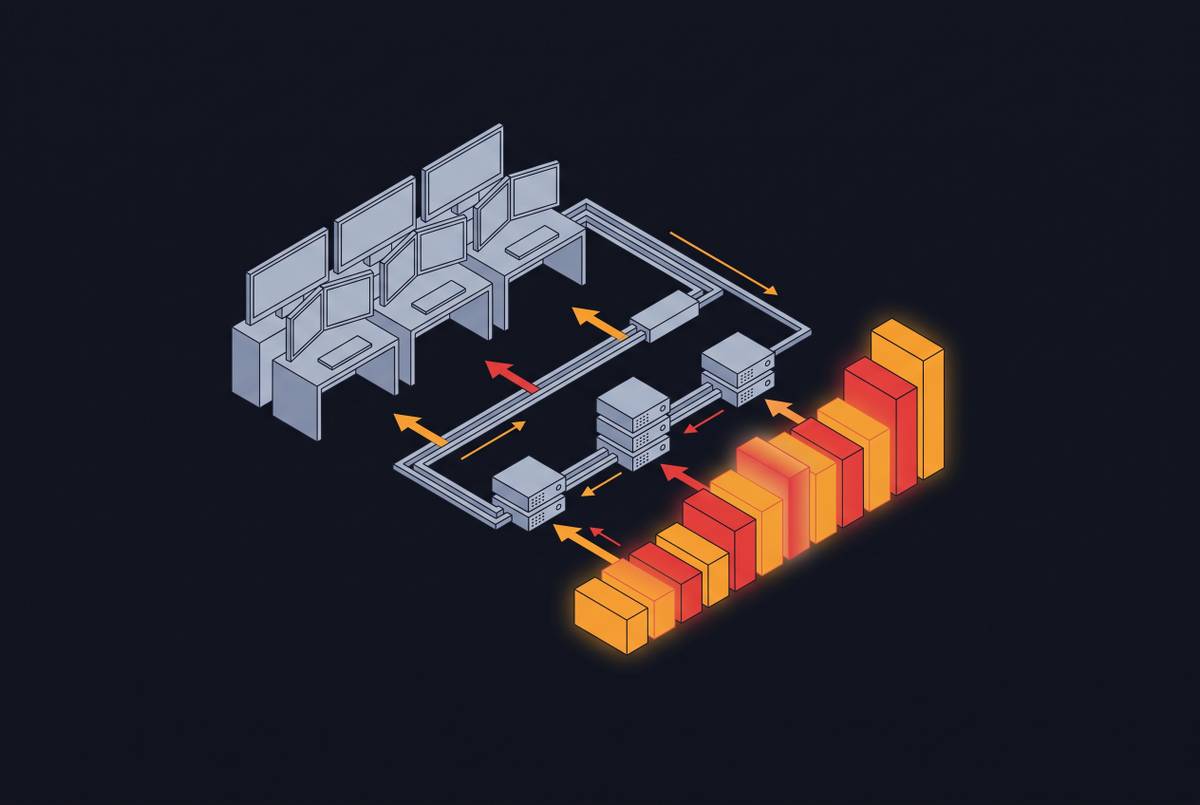
A cognitively fresh operator can still receive more work than the available review time permits. Once incoming alarms consistently require more attention than the team can provide, unfinished evaluations remain in the queue as new events arrive. Peak hours worsen a mismatch that may already exist during the ordinary flow of work.
The relevant comparison is between incoming review demand and meaningful evaluation capacity. A person assigned to an alarm must have time to assess it. If normal volume already exceeds that capacity, the likelihood of some alarms waiting approaches certainty. The center can be fully staffed against its roster and still be unable to keep pace with its workload.
Adding an operator reduces the share assigned to each person, but a reduction does not necessarily bring the workload into manageable territory. An overloaded center can remain overloaded after the addition. The staffing change alters the distribution of demand without changing the incoming stream or the work required to resolve each event. As volume grows, that distinction becomes decisive.
Operators slow decision-making, escalate inconsistently, and reduce attention during incidents that require careful assessment. A longer queue therefore cannot be understood solely as a waiting-time problem while assuming that every eventual review remains equally dependable. The same conditions delaying response also strain the judgment on which response depends, and false positives intensify that strain.
Why false alarm rates turn manageable volume into an attention-destroying signal environment
When the overwhelming majority of alarms are false positives, the queue teaches operators that an alert usually does not warrant action. Repetition changes the meaning of the signal. Reduced urgency becomes an understandable adaptation to the work presented, rather than evidence that operators have forgotten their training. False positives are therefore not just unnecessary tasks within an otherwise sound process. They condition the response to subsequent alarms, including genuine threats.
Traditional motion-based analytics reinforce that pattern because pixel-change triggers surface shadows, rain, tree branches, and animals with the same weight as genuine intrusions. More alerts do not necessarily provide more useful awareness. Where routine movement repeatedly prompts review, the system spends attention proving that nothing requires intervention.
An operator assessing footage must review the scene, identify patterns, confirm visibility, and decide whether escalation is justified, which takes longer than processing an audio-only signal. Adding video monitoring therefore increases the time required per alarm as well as the number of events that may need attention.
The combination produces an alarm fatigue feedback loop. Noise consumes review time, repeated irrelevant reviews weaken urgency, and weaker urgency makes dependable response harder to sustain when a real event appears. The effects also reach beyond how well each operator responds, as security leaders struggle to show that the technology they paid for is working and more people leave roles where burnout is already high. Hiring people to replace those who leave adds to staffing pressure while leaving the new operators with the same signals.
This leaves a center with two linked problems, namely too much work and a queue that undermines the attentiveness needed to perform it. Fragmented tools make each item in that queue more expensive to resolve.
How fragmented systems force operators to become the integration layer, multiplying cognitive cost per alarm
In a typical legacy environment, video sits on one screen, access control on another, environmental sensors on a third, and a legacy panel in its own interface. The operator must assemble the event from those disconnected sources. The person becomes the integration layer. An alarm therefore demands not only threat assessment but also the effort of finding and relating the information needed for that assessment.
Searching across windows and logins compounds the cost of the false-positive queue. Even an event that needs no response can take up attention while the operator gathers enough context to dismiss it. That work may not appear as a distinct burden on an operational dashboard, but it reduces the capacity available for other alarms. The same alarm count can represent very different workloads depending on how much manual assembly each event requires.
Fragmentation also makes prioritization another operator task when false alarms, routine signals, and genuine life-safety events enter the same queue with equal weight. Urgency has to be reconstructed by hand. Under load, this manual triage is a point where errors and inconsistent decisions become more likely, leaving a genuine threat waiting while attention goes to sorting.
Notifications, log updates, callbacks, and escalation tracking all need a share of the little attention the operator has left. Each step may be straightforward in isolation, yet repetition across hundreds of alarms creates a significant drain and additional opportunities for error as fatigue builds. Better training cannot eliminate that switching cost. Skilled operators may navigate the applications more fluently, but they still have to perform work that a connected workflow would not leave entirely to them.
The staffing calculation must therefore account for more than detection and review. It must also allow for the time spent gathering context, sorting priorities, and repeating administrative steps as vigilance drops and the queue keeps filling.
Why adding operators or offshoring the work relocates the overload without resolving it
Adding headcount buys more capacity to absorb a fragmented, unprioritized, high-noise workflow, but leaves the source of that demand intact as volume grows. Offshoring lowers per-operator labor cost without changing human cognitive limits or the signal environment, while introducing coordination overhead, language considerations, and site-context gaps. Moving work does not redesign the work. Both approaches can extend capacity, but neither changes what an operator must evaluate or how much effort each evaluation consumes.
Muting noisy cameras or suppressing alarm categories reduces the visible queue by accepting coverage gaps rather than improving the distinction between irrelevant activity and threats. Those gaps can persist across shifts, leaving the workload looking more manageable because part of the monitoring obligation has become invisible. This differs fundamentally from assessing an event and determining that it does not warrant human attention.
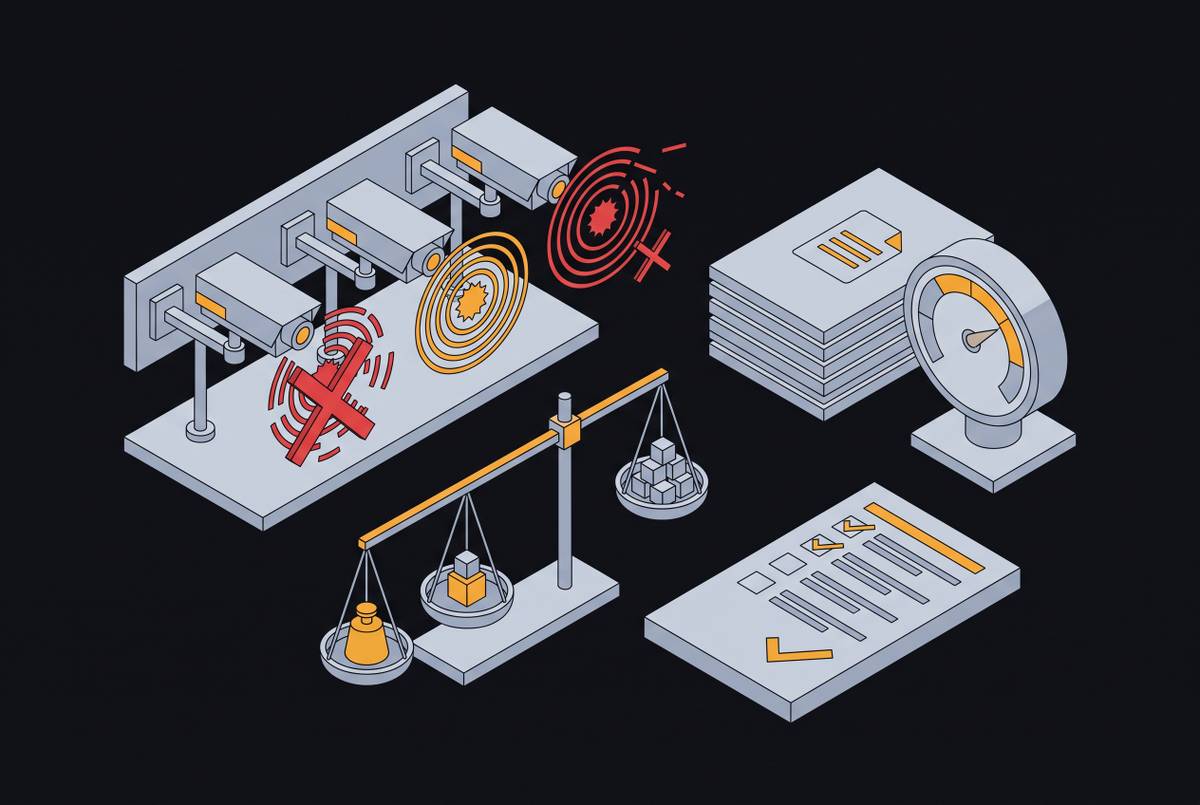
Commercial terms can relocate the consequences as well. Overage pricing distributes the cost of excess demand to the customer, while “best effort response” language leaves the underlying response delay unresolved. Most monitoring SLAs guarantee uptime without promising how quickly operators will act, so keeping a system available and having people respond in time are different promises. A service can be available while an alarm waits.
Meanwhile, capable operators who feel the workflow’s drag most sharply can leave, perpetuating training costs.
What the threshold analysis points to — filter before the operator, not around the operator
The architectural requirement is to reduce volume and noise before human review, while supplying the context needed to judge the remaining events. Human attention becomes the resource the system protects. This changes the operator’s assignment from absorbing raw detection output to assessing exceptions that have already passed a relevance filter. It also addresses the workload itself rather than relying on people to maintain greater effort against an unchanged queue.
Deep-learning video analytics can classify objects and analyze behavior instead of treating pixel changes as sufficient grounds for an alert. That distinction allows a system to separate a person from an animal and assess activity such as a vehicle on an authorized route or someone loitering near a restricted area. Motion alone is not the decision criterion. The purpose is to distinguish routine activity from behavior that warrants human attention before another review task enters the queue.
Site-specific context makes that distinction more useful. Normal delivery schedules, patterns of activity among authorized personnel, and sources of environmental noise give an AI agent information that a generic detection model does not have. Rules and schedules shape what it can conclude about an event before escalating it, incorporating context that a new human operator can take months to internalize.
AI agents filter alarms, while humans assess verified threats, judge whether to escalate, and coordinate dispatch as they decide whether to respond. A real threat can then reach a reviewer sooner because less irrelevant work stands ahead of it. That is the operational distinction between reducing the queue’s burden and increasing the pressure on the people serving it.
Buyers should ask vendors what the system does before an alarm reaches an operator, rather than treating operator count as the principal evidence of response capability. Its answer should explain how the workflow separates noise from threats and preserves human judgment for the decisions that require it.