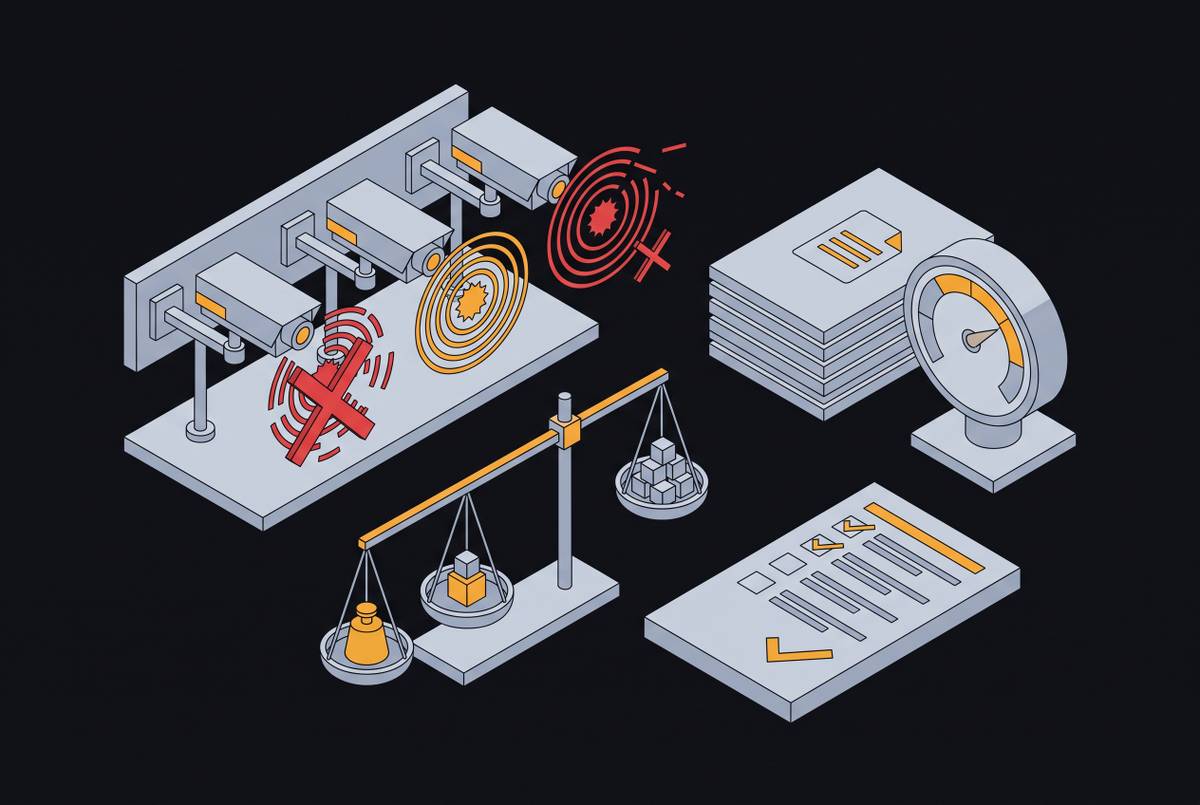
Muted Camera Zones and the Liability Gap They Create for Commercial Properties
Muted camera zones leave property owners liable for security they think they have but don't.
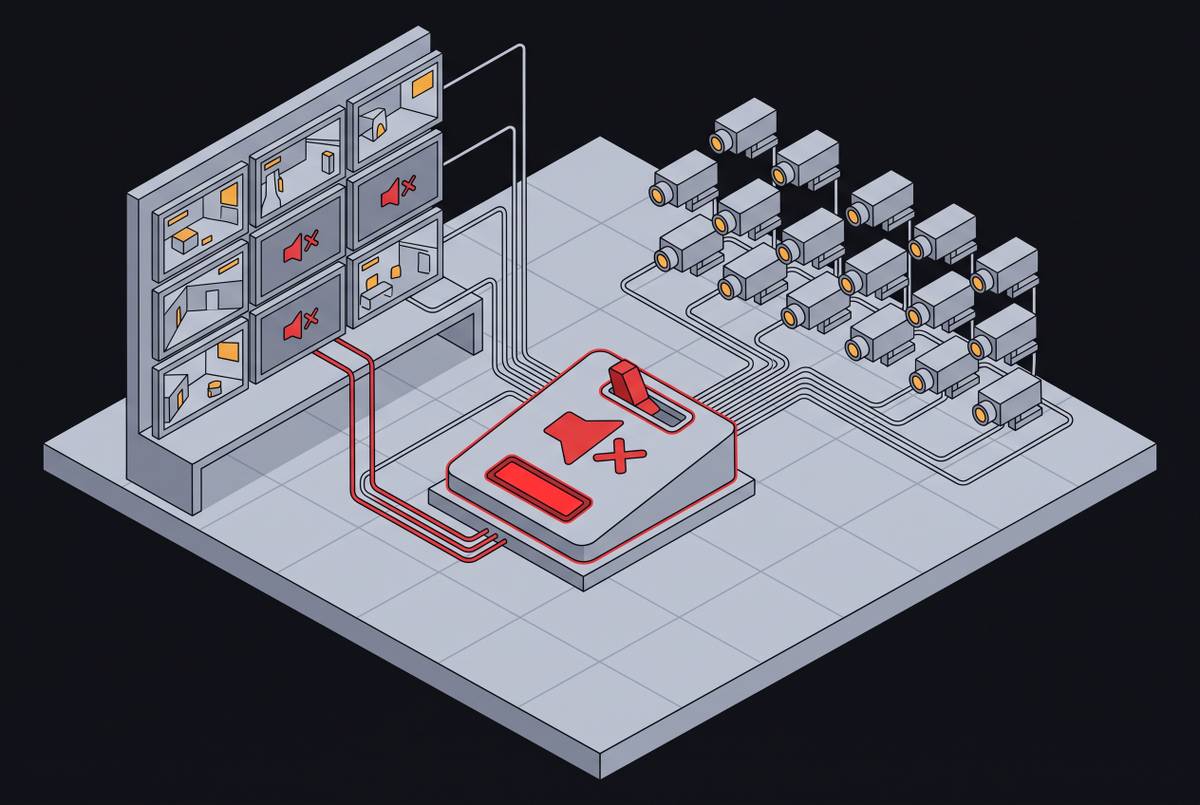
Muting noisy cameras reduces alarm volume by removing zones from active surveillance, leaving false alarms undistinguished from threats. Cameras may keep recording, but footage cannot take the place of someone stepping in. For commercial property owners, that quiet shift from protection to documentation creates a liability gap between the security they believe they have and the service actually being delivered.
Why cameras that record everything can still protect nothing
A property manager looking at a large camera array can reasonably assume that each covered area is also a watched area. The property has cameras at its entrances, parking areas, and loading docks, and a monitoring contract supports the installation. Yet cameras and a monitoring contract do not prove that someone is watching every zone. A camera can still record a zone even when its alarms are kept out of the stream that prompts an operator to respond.
That distinction separates two different functions of surveillance. A camera that records an incident provides evidence for later investigation, while a camera connected to an active response process can enable intervention before or during the incident. Both functions have value, but they are not interchangeable. The distinction also affects how an owner demonstrates reasonable care for people on the property. When a monitoring center mutes a zone to manage alarm volume, the service can shift from one function to the other without any corresponding change to the equipment, contract, or owner's understanding.
How alarm volume pushes monitoring centers to mute camera zones
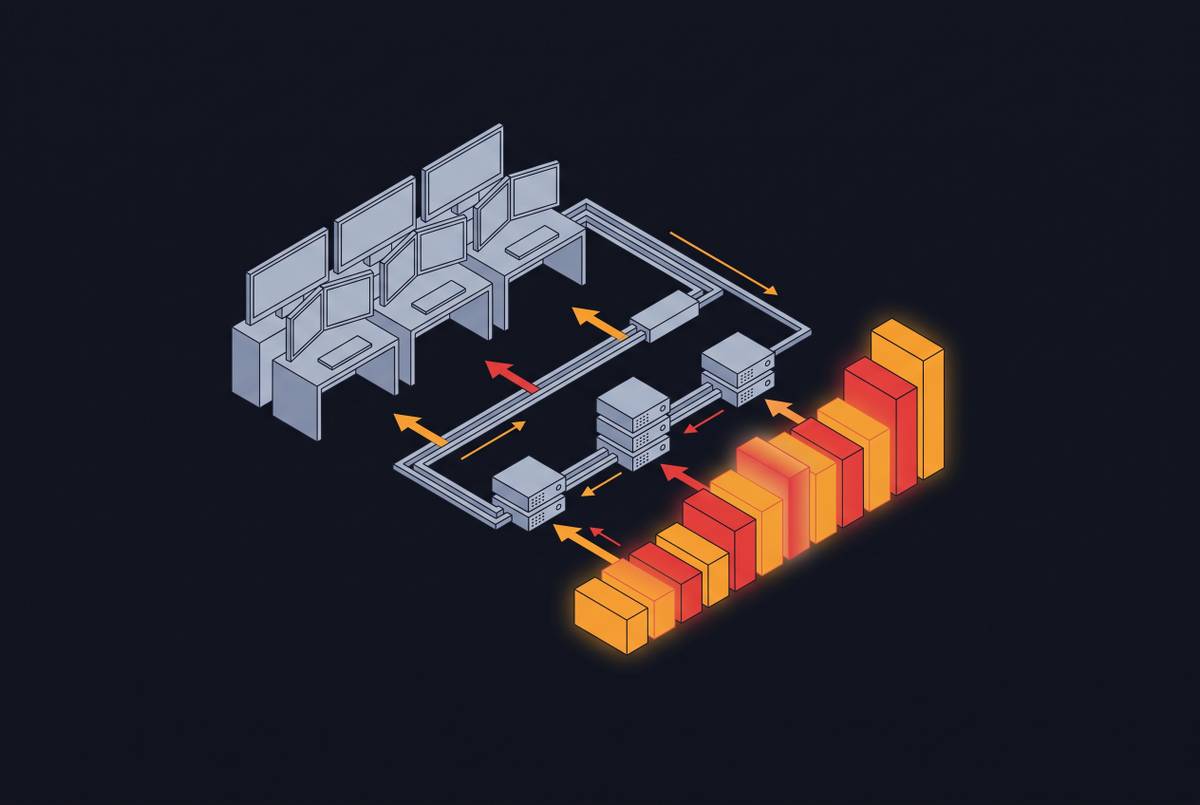
Traditional alarm monitoring follows a relay model in which a sensor trips, a signal reaches the central station, and an operator calls the premises and dispatches police. Motion-based detection sends events into this process that may come from wind, animals, or passing headlights. The operator must separate those events from genuine incidents. The queue becomes the point of failure. When hundreds of low-confidence alerts arrive during a shift, operators spend their time getting through the queue.
Alert fatigue is the cognitive consequence of that workload. Response to an individual alarm degrades because the signal-to-noise ratio has collapsed. Muting a noisy zone offers immediate relief by stopping its contribution to the queue. It is a rational short-term response to an unsustainable volume, but it removes the zone while leaving false alarms unresolved.
That makes muting a structural failure. The center has more room to handle other alarms, while the property loses active surveillance in the muted area. Cameras may keep recording, so the change may leave no clear sign that people can see. A property can therefore have cameras and a monitoring contract while some of its highest-noise zones receive no active attention. The legal concern begins where that operating reality diverges from the protection the owner believes is in place.
Where the legal exposure starts for the property owner
Commercial property owners have a duty of care to maintain reasonably safe premises for visitors, customers, and employees. Active monitoring is one way to demonstrate efforts to meet that obligation. If cameras appear to be monitored but are not, the discrepancy can support an allegation of negligent security in a premises liability claim. Liability is not automatic from the equipment's presence. The legal risk depends on how the protection people think they have, the service they get, and what happens during an incident fit together.
Vision Detection Systems warns that broken or dummy cameras can be worse than none because plaintiffs can argue that they created a false sense of security. Muted cameras, which may still record, create an appearance-reality problem related to that of broken cameras. An apparently watched zone may have no response behind it. Plaintiffs can frame that mismatch as a misrepresentation of security posture, even when the owner did not deliberately create it.
State tort law can apply even where there is no law specifically on surveillance. An intrusion-upon-seclusion claim concerning a camera aimed at a protected space and a negligent-security claim concerning an area that was supposed to receive coverage but was not actively watched present distinct legal risks. This discussion is informational. For many owners, the monitoring gap remains invisible because the decision to mute a zone occurs inside the center without disclosure to the client.
The zones most commonly muted and why they are the worst ones to lose
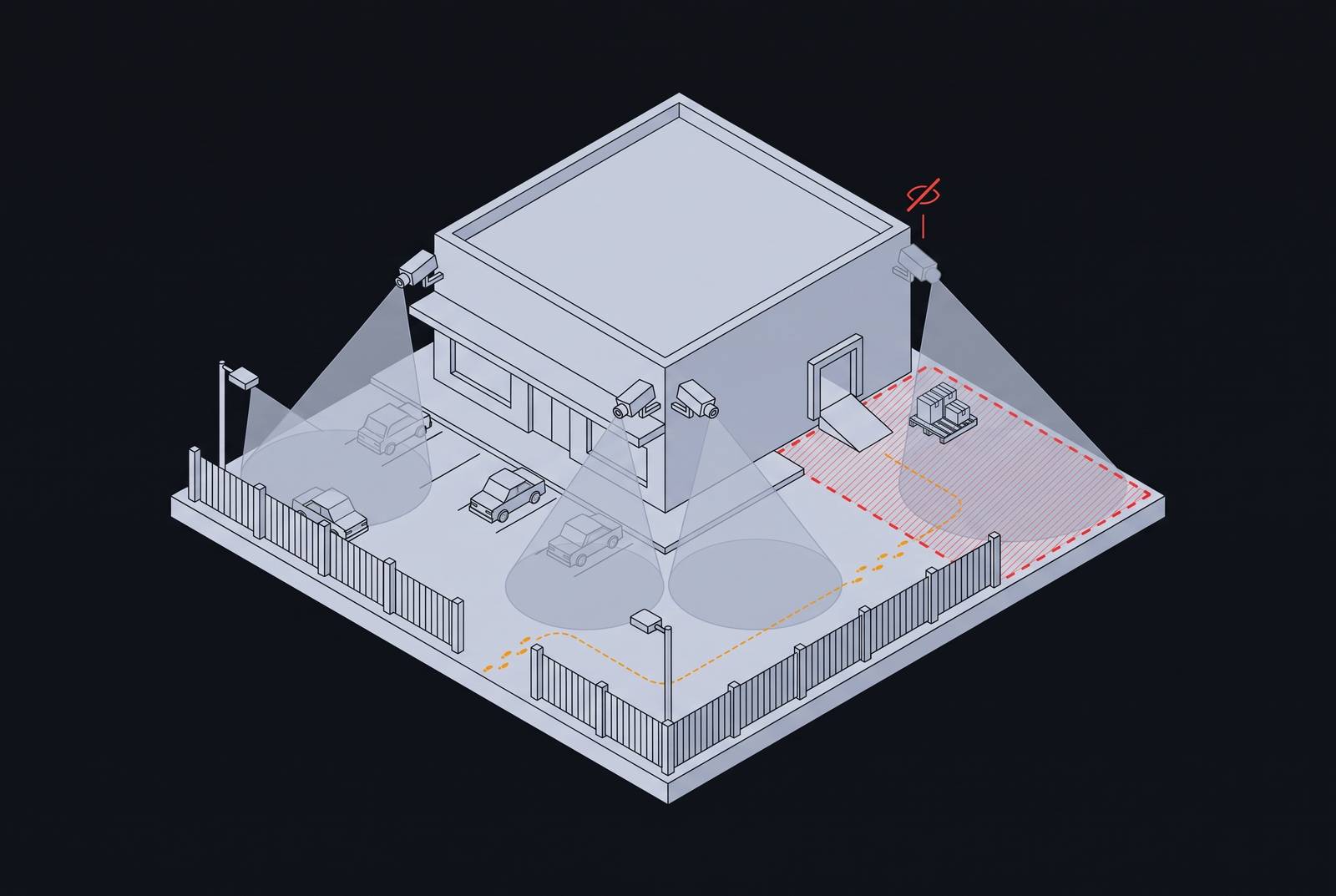
In parking lots and structures, using alarm noise to decide where to stop active coverage can put people and property at risk. Vehicles and people moving through these areas often trigger basic motion detection, so these areas are among the first considered for muting. Yet parking areas are also where theft, assault, and vehicle crimes concentrate for retail and multifamily properties. Noise and risk occupy the same space. Removing those alerts can therefore reduce workload while withdrawing attention from an area that needs it.
Large industrial and warehouse perimeters face the same problem over a larger area. Environmental triggers occur along the boundaries, and traditional detection makes sustained attention difficult without suppressing the noisiest segments. Loading docks and back-of-house transitions also combine operational activity with exposure. Their alarm volume establishes that their activity needs interpretation before an operator can distinguish routine movement from a threat.
At multifamily properties, package areas and garage entries are often considered for muting and are common places for package theft and loitering incidents. These zones have much in common with parking areas and perimeter boundaries. They are permeable, receive less natural surveillance from staff, and offer opportunities for unauthorized activity. The overlap is not coincidental.
Why the forensics-only camera creates a false sense of security that compounds the exposure
A recording camera retains forensic value after an incident, but recording alone provides no active intervention during it. From outside the monitoring center, that limitation can be difficult to see. The device remains installed, and the owner, staff, and visitors may continue to understand it as part of an active security service. The camera's continued operation can therefore conceal the specific function that has stopped.
Signage can reinforce that misunderstanding. A notice stating “video surveillance in use” may accurately describe recording while implying a degree of active monitoring that the muted zone no longer receives. Vision Detection Systems explains that surveillance notices people can see lower their expectations of privacy and help make the case for implied-consent. That privacy function does not establish that an operator is watching.
Deterrence is also vulnerable to the gap. A threat actor who tests a zone and encounters no response can learn that the camera functions only as a recorder, weakening deterrence for repeat or informed actors. Meanwhile, an owner who paid for cameras, posted notices, and signed a contract for monitoring may reasonably believe that this layer of protection is still in place. The owner need not be a bad actor. The evidence that hurts the owner's case may be footage of the whole incident with no sign of a response from the service expected to protect the area.
What the compliance layer requires that muted monitoring cannot satisfy
Surveillance compliance is distinct from premises liability. It concerns lawful placement, recording practices, analytical uses, and, in specific regulatory contexts, whether a system functions as described. A muted zone does not by itself establish a statutory violation. The compliance concern can instead arise from the mismatch between actual monitoring and written policies or notices. That documentation gap can surface in discovery when a property describes active surveillance but suppresses zones without updating its policy or notifying tenants and employees.
Vision Detection Systems identifies reasonable expectation of privacy as the foundational placement rule. Sales floors, loading docks, parking lots, and lobbies generally differ from restrooms, changing rooms, locker rooms, and similar protected spaces. Placement discipline also extends to inadvertent coverage of neighboring properties through wide-angle or PTZ cameras. Audio requires a separate assessment from lawful video. Many commercial cameras ship with microphones enabled by default, and recording without proper consent can create wiretap exposure.
Florida provides a concrete example of the stakes. Unauthorized audio recording is a third-degree felony punishable by up to five years in prison and a fine. Section 877.26 prohibits cameras in dressing rooms, fitting rooms, changing rooms, and restrooms even for loss-prevention purposes, regardless of who owns the space. For multi-state operators, the practical precaution is to disable audio unless counsel approves a specific disclosed use in a specific state.
Rules for biometric and AI analytics changed especially fast in 2025 and 2026. Identification is the important dividing line here. Determining who someone is by scanning their face creates biometric data subject to stricter statutes, and notice for basic video does not automatically cover that new use. These requirements still apply when monitoring technology changes, even if the aim is to improve coverage. This compliance discussion is informational.
Why muting noisy cameras is not a monitoring solution, and AI-first filtering is
Adding operators, moving monitoring offshore, or setting stricter alarm policies leaves the same detection work to be done. Each approach still sends low-confidence events into a queue for a person to review. None eliminates the stream of noise that makes muting attractive. The structural alternative separates filtering from response. AI agents review every alarm first, classify it using what they know about the site, and dismiss environmental noise and authorized activity before sending verified threats to a human operator.
This differs from first-generation analytics that still required a person to review each detection and decide whether to act. Agentic systems make validated detections actionable by default, surfacing confirmed, high-confidence events rather than merely producing another detection stream. Human attention is reserved for the response decision. The filtering layer absorbs the repetitive classification work continuously, so suppressing an entire zone is no longer necessary to protect operator capacity.
Site-specific context is what makes that distinction meaningful. A loading dock may receive deliveries between 6 a.m. and 10 a.m., a particular truck may be authorized, and foot traffic near the dock after midnight may be anomalous. Those conditions allow an AI agent to assess an event against the site's expected activity. The architecture also shortens the route to human attention. Verified threats reach an operator in a fraction of the time they would spend in a traditional alarm queue, reducing the interval in which an incident can unfold without a response.
What property owners should verify in their current monitoring arrangement
Owners need transparency about which zones are active, muted, or suppressed, and the basis for those decisions. That information should be available in real time or on request. A monitoring contract alone does not provide that visibility. Owners need to establish whether the center discloses coverage changes or leaves them inside its operating process.
The agreement should make clear what an operator does when an alarm triggers in each zone, rather than rely on generic procedures that permit undisclosed muting. Timing needs an equally concrete definition. An SLA should specify a measurable interval from alarm to verified-threat escalation in place of promises of “best effort” or action “as soon as possible. Owners should also establish what happens when the service misses that threshold.
Written coverage confirmation provides a way to compare the agreement with actual monitoring. Owners should verify when they last received documentation identifying which cameras are actively monitored, by whom, under what protocol, and at what times. That account should match the signage on the property. The shift from forensics-only recording to active surveillance depends not on adding cameras, but on a system that can keep the installed zones under active monitoring without silencing them to remain functional.