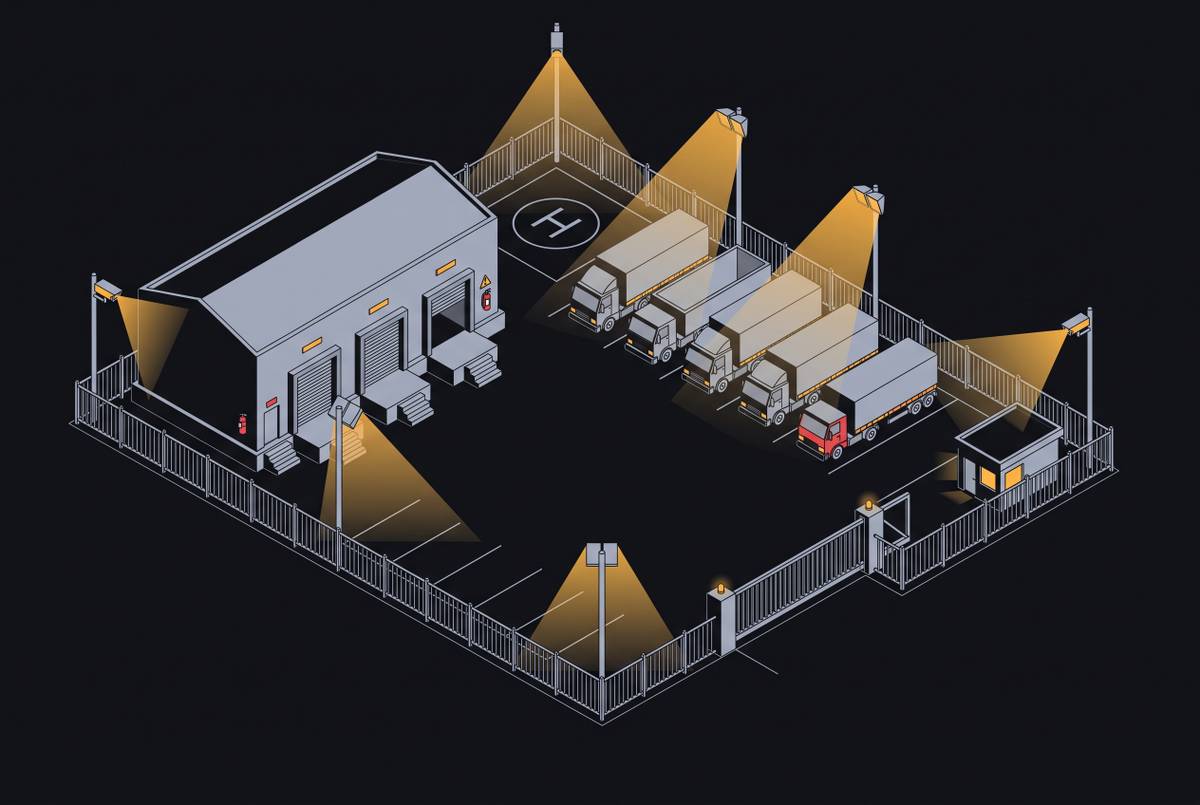
Industrial Facility Perimeter Monitoring and Intrusion Detection
AI-driven triage and context turn perimeter alerts into actionable intelligence.
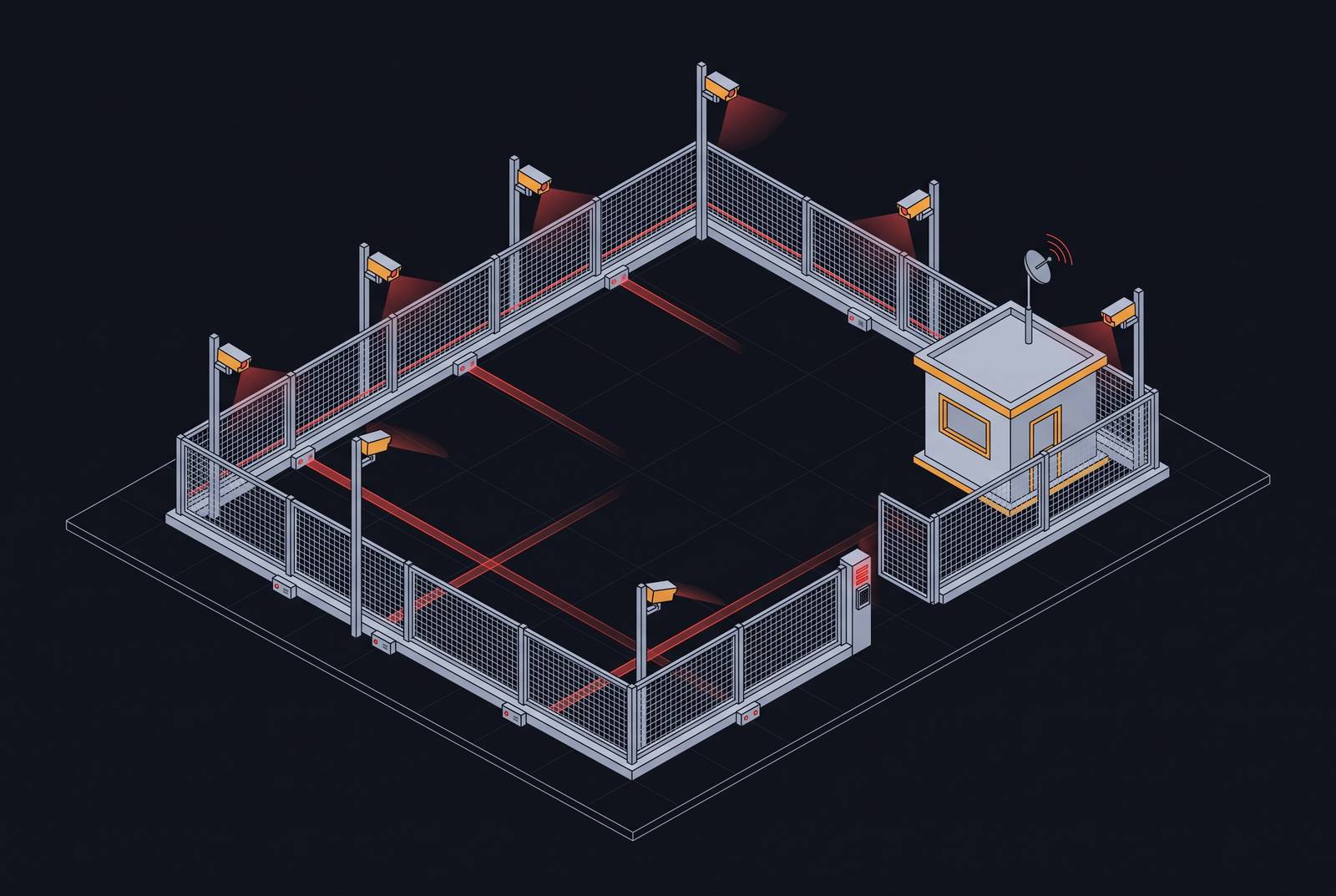
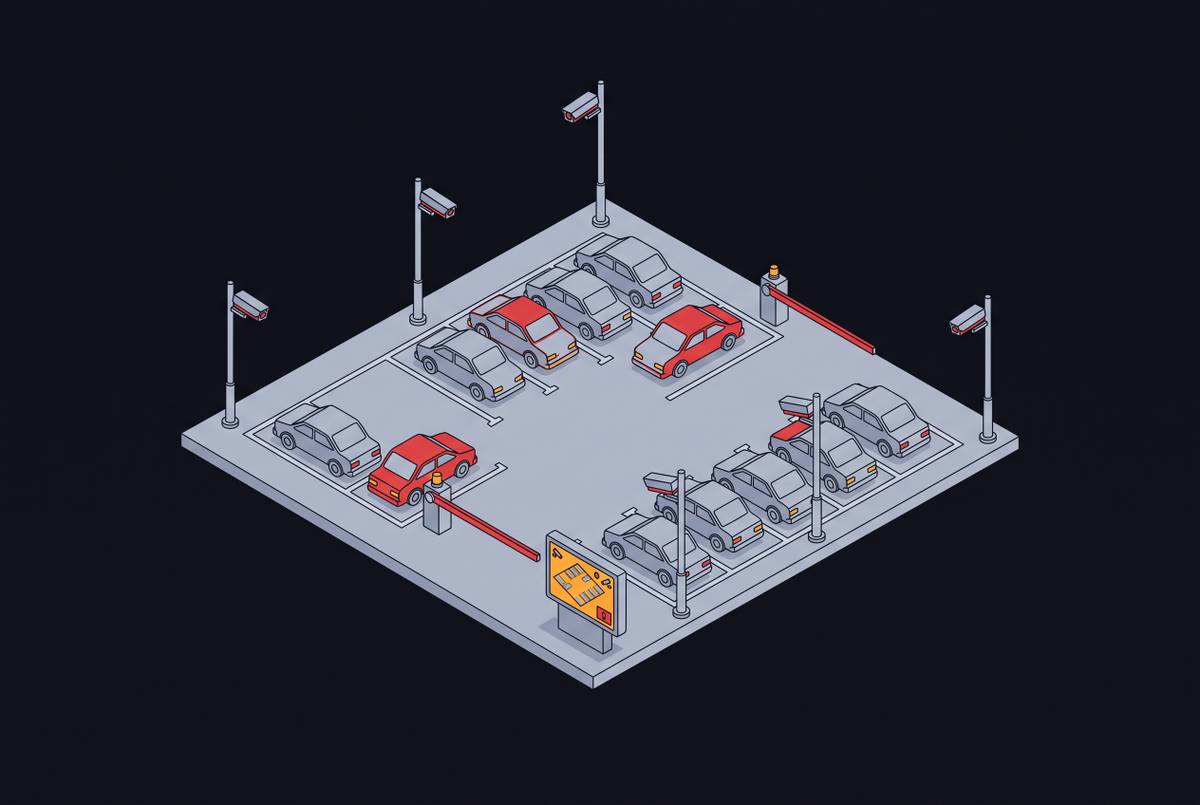
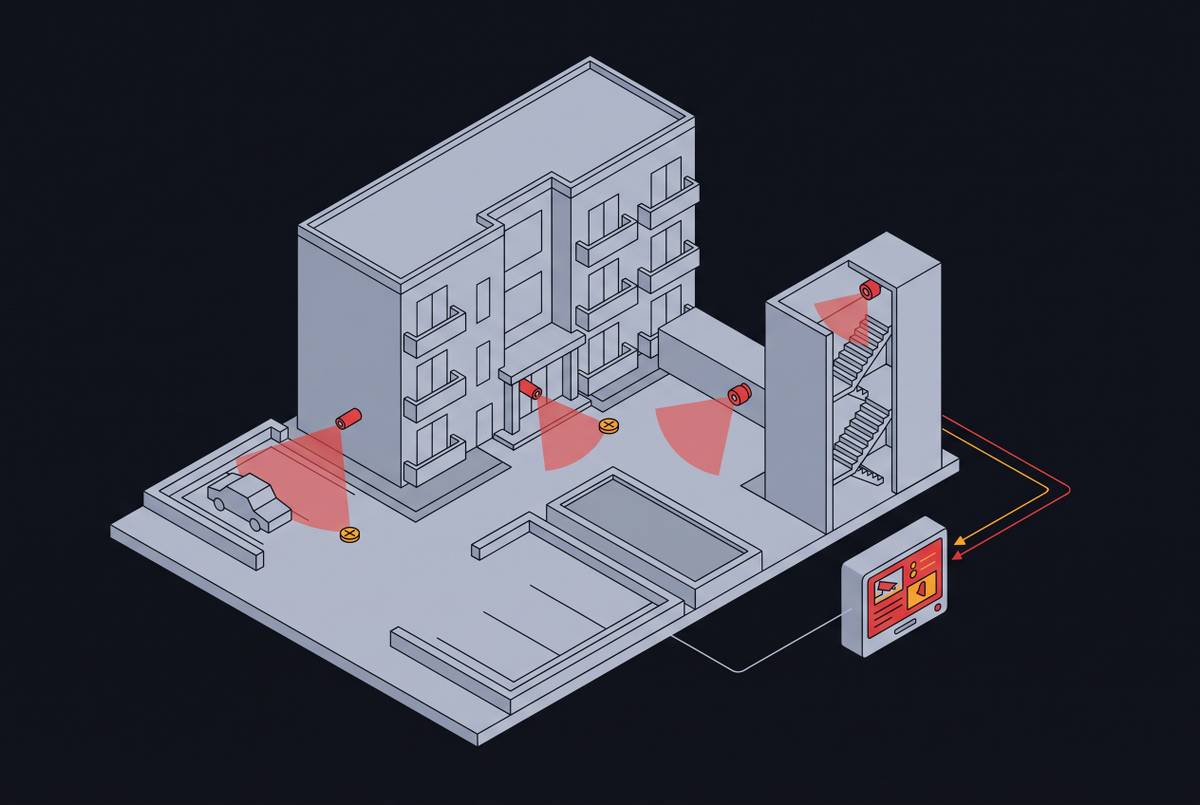
Industrial facility perimeter monitoring and intrusion detection need to turn sensor activity into verified action, going beyond a record of a boundary breach. AI-driven triage and site-specific protocols close that gap by separating routine activity from threats before human operators respond. The same distinction applies to remote video monitoring for multifamily and employee parking lots, where cameras alone cannot provide the talk-down, dispatch, and notification that turn detection into intervention.
Why industrial perimeter detection produces alerts faster than anyone can act on them
A perimeter detection system promises that a boundary breach will receive attention while a response can still change the outcome. In practice, its immediate product is an alert. To get from an alert to an intervention, a human operator has to divide limited attention among events in a queue. The boundary may be fully instrumented while that queue prevents anyone from seeing a genuine intrusion in time. Coverage does not establish that someone can act.
Large camera arrays generate more activity than a person can continuously assess, especially when ordinary movement becomes an alarm. Adding operators to the same feeds costs more in staffing, but each alert still takes the same work. Adding cameras can show more of the perimeter and add more video to review. The monitoring operation therefore has to be judged by its ability to process detections.
False alarms make this mismatch more damaging. Shadows, headlights, animals, and weather repeatedly demand attention without requiring a response, so operators learn that an alarm usually signals nothing urgent. That skepticism is an adaptation to the work, but a real intrusion enters the same queue under the same presumption. The delay in reviewing footage comes with a loss of confidence in the mechanism intended to direct attention, leaving a site with recorded evidence of an event that nobody assessed when intervention was possible.
How fragmented workflows turn a detected event into a delayed response
Even a correct detection must pass through a workflow before it becomes actionable. An operator may need to watch video, check access control, and compare information from environmental sensors, using a separate console and login for each. Each separate interface adds work before the operator can judge what happened. The operator becomes the integration layer between systems that detect activity but do not explain it together.
This manual correlation consumes attention that is unavailable to the next event. When several alarms arrive close together, every investigation inherits both its own processing burden and the waiting time created by earlier investigations. A new perimeter camera can therefore lengthen the response queue even as it improves visibility. Better coverage of the boundary does not necessarily produce faster assessment of a breach.
A possible intrusion and a benign activation can look roughly equivalent until someone has completed the same cross-console investigation for each. Under that pressure, an operation can overreact by shutting down zones or scrambling response teams for harmless activity. It can also underreact by leaving events unverified until a later review reveals the breach. Neither outcome requires a careless operator. Both follow from an architecture that makes a person assemble the evidence for every event before knowing which events deserve that effort, so the underlying problem is not one that staffing or training alone can repair.
Why rule-based detection cannot distinguish a forklift from an intruder
A rule-based detector tests an event against a static condition, such as entry into a zone, motion above a threshold, or a broken beam. It establishes that the condition occurred. It does not establish why it occurred or whether the activity was authorized. A detector can therefore operate exactly as configured while producing an alarm that has no security value.
Industrial activity exposes this limitation throughout the day. An authorized forklift at shift change, a deer at the fence line, and a person entering a restricted zone at 2 a.m. can all satisfy a detection condition. Multiple shifts, contractor access, delivery windows, and equipment movement further complicate the baseline. Legitimate activity is neither rare nor constant. A static motion rule has no basis for deciding when familiar movement becomes an unauthorized approach.
Sensitivity adjustment cannot supply that missing context. Tightening a threshold can suppress harmless activations, but it can also exclude threats that no longer meet the condition. Loosening it restores sensitivity while admitting the noise that undermines confidence in the queue. The choice remains between false positives and false negatives because neither setting explains the event.
The downstream consequence is an erosion of trust. When operators keep checking events that need no action, it becomes easier to dismiss later alarms without a close look. More reviewers can process more of those events, but they cannot make the detector's output more informative. The system still asks people to recover meaning that its detection layer never supplied.
What AI reasoning agents do differently at the perimeter detection layer
AI reasoning agents change the unit of work from a sensor activation to an assessed event. Instead of treating a zone breach as sufficient reason to alert a person, an agent classifies the cause, distinguishes a person from a vehicle or an animal, and compares the activity with site-specific baselines. It then assigns a confidence-weighted priority before human review. Speed is only part of the difference. The architectural change is that interpretation precedes entry into the operator's queue.
That interpretation can remove weather artifacts, animals, and authorized equipment movement from the class of events requiring human attention. The output is a classified detection with relevant evidence. A video clip, location, and timestamp let an operator work with the event without having to find each piece on its own. Services such as Verdun use AI agents to sort environmental triggers and authorized activity from real threats after detection and before a person reviews them.
Sensor fusion uses the same approach with more than one camera. Acoustic detection can direct visual systems toward an event, while radar can establish a virtual boundary. Radar, acoustic sensors, and cameras may all pick up an unauthorized vehicle approach at the same time. Bringing those detections into one classification saves a person from having to piece them together.
The resulting queue is organized around interpreted events. This does not mean that AI classification is infallible or that every identifiable object constitutes a threat. It means the system has performed the classification and contextual assessment before requesting human attention. Whether that assessment is operationally valid depends on the site information against which it was made.
Why site-specific context determines whether an AI classification is operationally valid
Identifying a person crossing a perimeter line answers only the first question. Whether that crossing requires intervention depends on who may enter, when entry is permitted, which access point is authorized, and what conditions apply. Object identity is not authorization. Without those distinctions, even a correct classification can set off an alarm that is unwarranted or hide an event that needs action.
At an industrial facility, schedules and movement patterns define much of this distinction. Shift changes, contractor access windows, delivery routes, and equipment operations make the same visible activity routine at one time and suspicious at another. Assessing a person who approaches a fence line requires those conditions to be taken into account. Effective verification therefore requires facility-specific schedule and authorization data. Context is an architectural requirement.
The protocol layer translates that context into response criteria. It defines what counts as a threat, who receives notification, in what order, and what evidence is sufficient before dispatch. A chemical refinery weights unauthorized approaches to restricted process areas, while a logistics warehouse weights overnight perimeter breaches and unauthorized vehicles. A multifamily housing complex gives weight to patterns in how people behave in common areas. Applying one verification protocol across these settings would ignore the different reasons an event warrants intervention.
Industrial perimeter intrusion detection systems combine fences, sensors, infrared beams, and AI video analytics because no single modality provides every necessary distinction. The protocol must synthesize their evidence while accounting for its limits. With low light, occlusion, and bad weather, the model is less accurate than it is with footage taken in good conditions. Degraded-condition scenarios and explicit false-positive targets therefore belong in protocol design before a service-level agreement is committed to. Otherwise, the response promise rests on a classification standard that may not hold under the conditions in which the perimeter must operate.
Where human operators belong in an AI-first perimeter monitoring workflow
Once an event has been classified and validated against the site's protocol, the human task changes. The operator receives a verified threat with visual evidence and decides how to execute the required response. That can involve escalation, dispatch, notification, or talk-down under the site's procedures. Human judgment remains part of the system. It is directed toward what to do about a threat rather than repeated first-pass review of raw activations.
Verdun implements this division through AI agents that review alarms and trained operators who respond to verified threats under site-specific protocols. This differs from both pure automation and traditional review that relies heavily on people. Removing routine triage places accountability for intervention after the evidence has been assembled.
The time saved comes from eliminating work and waiting before that decision. AI classification executes in seconds, whereas a manual workflow must allocate an operator, retrieve the relevant evidence, and reconcile it before acting. At a logistics yard or refinery, an intrusion can unfold while that work is still underway. The advantage is therefore not merely a faster review of the same queue. It is a different path from detection to a response decision.
That division also affects continuity of service. Sustained high-volume, low-context alerting degrades performance and contributes to turnover, taking site knowledge out of the monitoring operation. Reducing routine triage protects the attention and knowledge needed for difficult response decisions. For an industrial buyer, the resulting commitment rests on an architecture that limits dependence on people continuously keeping pace with raw activity, rather than on headcount that can become exhausted or leave.
What should an industrial buyer require from a verified-threat response SLA?
Begin by specifying what starts the response-time clock. With reactive central-station monitoring, the clock starts when a sensor is activated, even if the event later proves harmless. AI-filtered remote monitoring starts after a first-pass filter, but the remaining event may still be only a probable threat. With AI-classified, site-context-validated monitoring, the clock starts when a detection has been checked against the site's verification protocol. These are different commitments, even when their quoted response times look similar.
For a verified-threat SLA, ask how the provider accounts for the work before that trigger. A short response commitment does not, by itself, explain how long classification takes or whether events wait before verification. Ask what happens when alarms arrive during peak activity and whether they queue or the architecture scales to handle them without delay. The trigger must be explicit. Otherwise, a buyer cannot tell which part of the detection-to-response path the promise actually covers.
Next, require the provider to state its false-alarm rate and explain how it is measured. Ask how schedules, authorized access, and equipment movement are encoded into the verification protocol, including how degraded viewing conditions affect the assessment. These questions distinguish motion filtering from threat verification. For buyers securing apartment complex parking lots after hours, the corresponding test is whether the service connects verified activity to a defined human response.
Verification also affects dispatch decisions. Salt Lake City's experience with verified alarm response produced an immediate, sharp reduction in alarm-driven police dispatches, but adoption of such policies across U.S. law enforcement agencies has been limited and some agencies later reversed them. Buyers therefore cannot assume that local policy will enforce alarm quality upstream. The monitoring provider must supply that verification layer before dispatch. In a model such as Verdun's, the separation between AI verification and human response makes the architecture explicit, giving the buyer a concrete basis for judging whether the SLA is credible.