Mixed-Use Development Security Monitoring Across Tenant Types
Smart filtering by tenant type prevents alert overload in shared spaces.
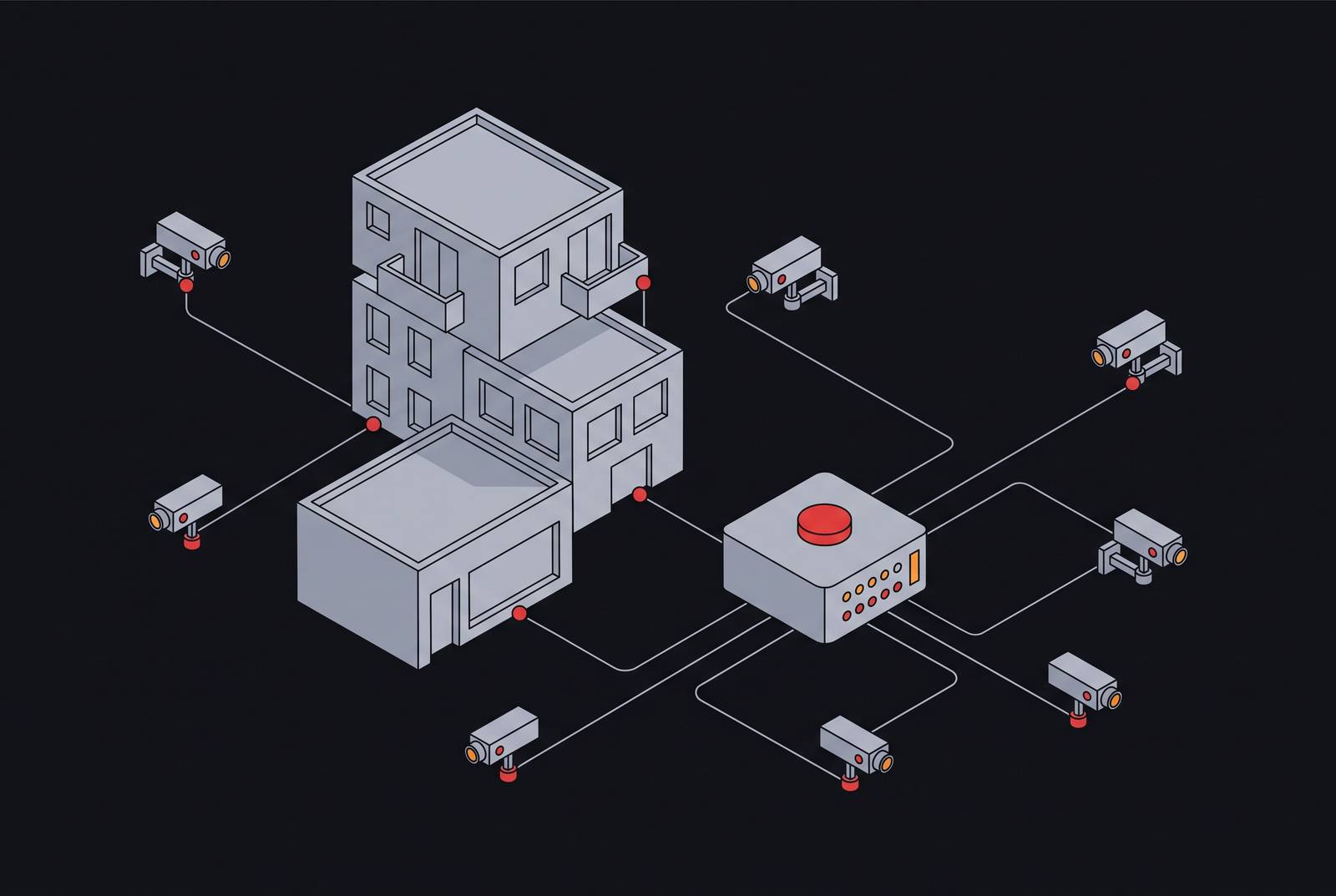
Remote video monitoring for multifamily and employee parking lots requires more than cameras recording movement. For mixed-use development security monitoring to work well, it must filter alarms by tenant zone, authorized activity, and time before sending them to an operator. Moving beyond recording to a security response depends on connecting that context to verified alerts and clear escalation protocols.
Why mixed-use developments break the monitoring logic built for single-tenant sites
A single camera covers a mixed-use lobby at 11 p.m. A resident returning home, an office executive with badge credentials, and a scheduled cleaning worker may all legitimately enter. An unauthorized visitor heading toward a restricted residential floor may appear in the same view. Movement alone cannot distinguish these cases reliably. The security decision depends on which population each person belongs to, where they are going, and whether that access is authorized at that hour.
Those distinctions make mixed-use security a structurally different problem from single-tenant monitoring. A retail tenant’s busy late evening can coincide with a residential floor’s expectation of quiet. An office may let cleaning crews in after hours while a storage tenant treats movement near stored goods as a reason to check what is happening and possibly dispatch help. Their operating assumptions do not line up. Because lobbies, elevators, parking decks, and loading docks connect these environments, a monitoring rule appropriate for one tenant can misclassify activity belonging to another.
How pixel-change detection produces noise that is indistinguishable across tenant types
Legacy video management system motion detection counts changes in pixels between frames and triggers when enough change accumulates. It has no model of the scene. A person crossing a perimeter fence, a cloud shadow, and a delivery cart moving through a loading bay can each satisfy the same detection condition. The resulting alert reports only that something changed, leaving who moved, what they were doing, and whether they belonged there unresolved. In a mixed-use property, resident headlights, retail restocking, and an intruder therefore enter the monitoring workflow without the distinctions needed to assess them.
Raising thresholds can hide genuine activity along with nuisance triggers, while shrinking detection zones leaves less space to watch. Time-based schedules are equally blunt when different tenants authorize activity at different hours. The missing information still has to come from elsewhere. When video, access control, environmental sensors, and a legacy panel occupy separate interfaces, the operator must assemble the scene from disconnected sources. Without shared tenant context, that manual integration cannot reliably scale across the property.
What alert fatigue looks like when tenant environments collide in a single operator queue
For the operator, this detection problem arrives as a queue of alerts that look equally urgent but have very different meanings. A clip may show a person entering a corridor without explaining which tenant controls it or whether a crew is scheduled there. The operator must leave the queue to reconstruct authorization. Each time they check an alert, operators must also keep tenant schedules and rules about who can enter in mind. When routine activity repeatedly demands this effort, the queue loses credibility, and deprioritizing low-signal alerts becomes a rational response to how the work is organized.
That response creates a dangerous coverage gap. Increasing thresholds to relieve the workload may suppress residential movement at 2 a.m. rather than routine retail loading activity at 8 p.m. When operators leave, they take with them what they have learned about delivery crews, tenant routines, and irregular residential schedules, which makes the problem worse. Cameras and a monitoring contract can remain in place while meaningful assessment deteriorates. The real threat then waits behind ordinary activity from several tenant types, raising the architectural question of what the system must know before an alert deserves an operator’s attention.
What context-aware alarm filtering actually requires in a multi-tenant environment
An adequate filtering approach must identify the tenant zone, establish what authorized behavior looks like there at that time, and compare the observed activity with those conditions before human review. Object-level classification is the first requirement. Instead of counting changed pixels, computer vision must distinguish people, vehicles, animals, and environmental artifacts and track relevant objects over time. Rain on a lens, wildlife, headlights, and sensor noise can then be separated from activity requiring assessment without simply reducing sensitivity. Classification alone, however, cannot tell whether a person is authorized.
That decision requires behavioral rules tied to site-specific inputs, including schedules, authorized populations, credentialed entry points, and escalation contacts. A forklift moving through an industrial warehouse need not trigger the same treatment as a person crossing a residential corridor perimeter at 2 a.m. The approach must also assess zone interiors, rather than relying exclusively on perimeter crossings. Polygon zones around server rooms, cashier stations, residential common areas, and storage bays allow alerts to depend on entry outside authorized conditions while excluding people merely passing the corridor outside.
How threat profiles and authorized behaviors differ across retail, residential, commercial, and industrial tenants
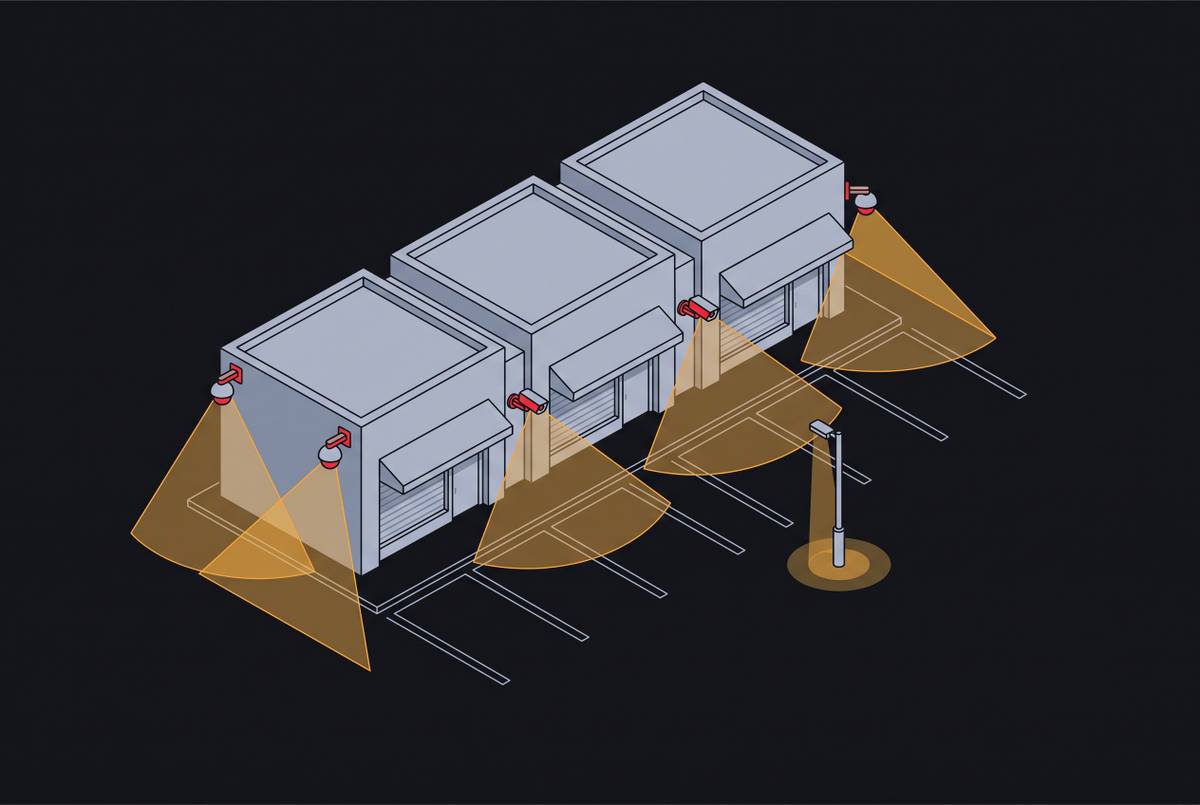
Retail monitoring must distinguish busy evening trade from the threat window around cash-handling areas, stockrooms, and point-of-sale zones after closing. The system needs schedules and credentials for restocking crews and cleaning staff so that their authorized overnight work does not trigger dispatch. An unmanned cashier station is an operational concern, while an unauthorized person at that station after closing calls for security escalation.
Multifamily residential monitoring starts from a different baseline because residents and authorized guests may be present at any hour. A late arrival is not inherently suspicious. The monitoring focus is confined to common areas, including lobbies, parking, laundry facilities, and mailrooms. Distinguishing authorized visitors from unauthorized people requires behavioral baselines as well as access information, since credential matching alone does not resolve every shared-space encounter. Residential response protocols must also identify the appropriate notification chain for an incident at 3 a.m., which may differ from the chain for a retail break-in.
In commercial offices, executives, cleaning crews, and IT staff may also be authorized to work after hours. A valid credential is only part of authorization. The monitoring approach must interpret access by floor, time of day, and credential type, rather than treating entry to the building as permission to enter every office zone. Server rooms, executive floors, and records storage require their own intrusion rules.
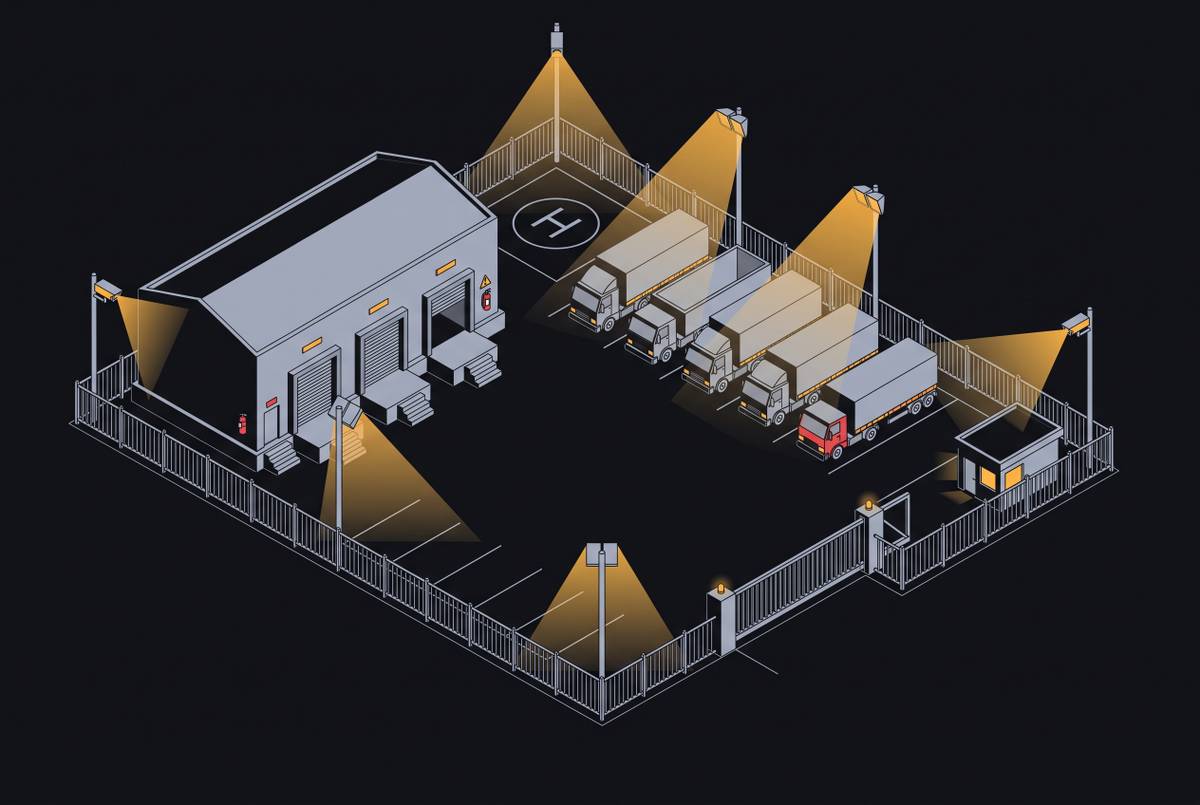
For industrial, self-storage, and logistics tenants, movement near stored materials after hours needs a close look. The system must check whether the activity appears authorized before escalating, because dispatching on every unverified movement is operationally unsustainable at scale. Reduced on-site staffing also changes the monitoring role. Where fewer people are present to interpret activity locally, the remote monitoring layer must compensate for that absence rather than merely supplement an existing human presence.
Why shared spaces — lobbies, parking, loading docks — are where multi-tenant monitoring fails most often
The distinctions between tenant profiles become hardest to apply where their populations share the same space. An operator receiving a parking-deck alert may see a person on foot but lack the information needed to interpret their presence. Time changes the assessment, but does not settle it. Residents may use the deck overnight, office employees during business hours, and retail customers in the evening. A person near retail-reserved spaces at 11 p.m. therefore requires a different assessment from the same person there at 7 p.m., with destination and authorization still relevant.
A shared lobby adds the problem of onward movement after entry. Access control may record a valid credential without showing whether the person who used it went to an authorized floor or entered another tenant’s restricted zone. Loading docks intensify this ambiguity because delivery crews, restocking vendors, and maintenance workers from multiple tenants converge in one camera zone after hours. To interpret an alert there, the operator needs confirmation that a person is present along with the active tenant schedule and vendor roster.
Line-cross and intrusion rules in these spaces therefore need the full set of tenant schedules overlaid. A cleaning crew entering a retail service corridor at 1 a.m. cannot receive the same escalation as an unidentified person there at 3 a.m. when no access is scheduled. Without that overlay, shared zones produce a flood of nuisance alerts. Operators learn to discount it, and those zones become candidates for reduced sensitivity or less attention. This leaves weak spots at the very boundaries where the system must detect unauthorized movement from one tenant’s space to another.
What an AI-first monitoring architecture looks like when tenant context is built in from the start
An AI-first architecture places alarm assessment before the human queue, with tenant context supplied as an input. AI agents review each alarm against the schedule, authorized population, and property protocol for the zone that generated it. Environmental noise and authorized activity are filtered before escalation. The distinction from legacy detection is the operation being performed, since flagging movement is not the same as assessing it against authorized conditions. Adding cameras or operators does not, by itself, introduce that reasoning layer.
The intended output is an alert already assessed as warranting human judgment. Human operators still assess alerts and decide when to escalate them. They follow the protocol that applies to decide whether to call police, property management, or on-site personnel. Their attention shifts from reconstructing routine activity to deciding what a potentially serious event requires.
The architecture remains dependent on the quality of its context. For each tenant zone, the system must be given schedules, authorized vendors, escalation contacts, and response priorities. Object classification can improve signal quality over pixel counting, but without site-specific protocols it cannot distinguish authorized from unauthorized activity within a zone. Faster detection helps speed up the response only when the context layer correctly picks out the events that need attention and the tenant’s response rules that apply.
What should buyers require from monitoring for multifamily and employee parking lots across tenant types
For property owners and security buyers, the practical test is whether the monitoring agreement documents the distinctions the property requires. Require site-specific protocols for each tenant zone, including authorized activity windows, escalation contacts, and response priorities. A property-wide plan is not specific enough. The agreement should also explain how protocols change when tenants, operating hours, or vendor rosters change, because stale context recreates the same false alarms and missed threats as missing context. Ask which tenant-context inputs the classification layer uses in shared spaces and how those inputs are maintained.
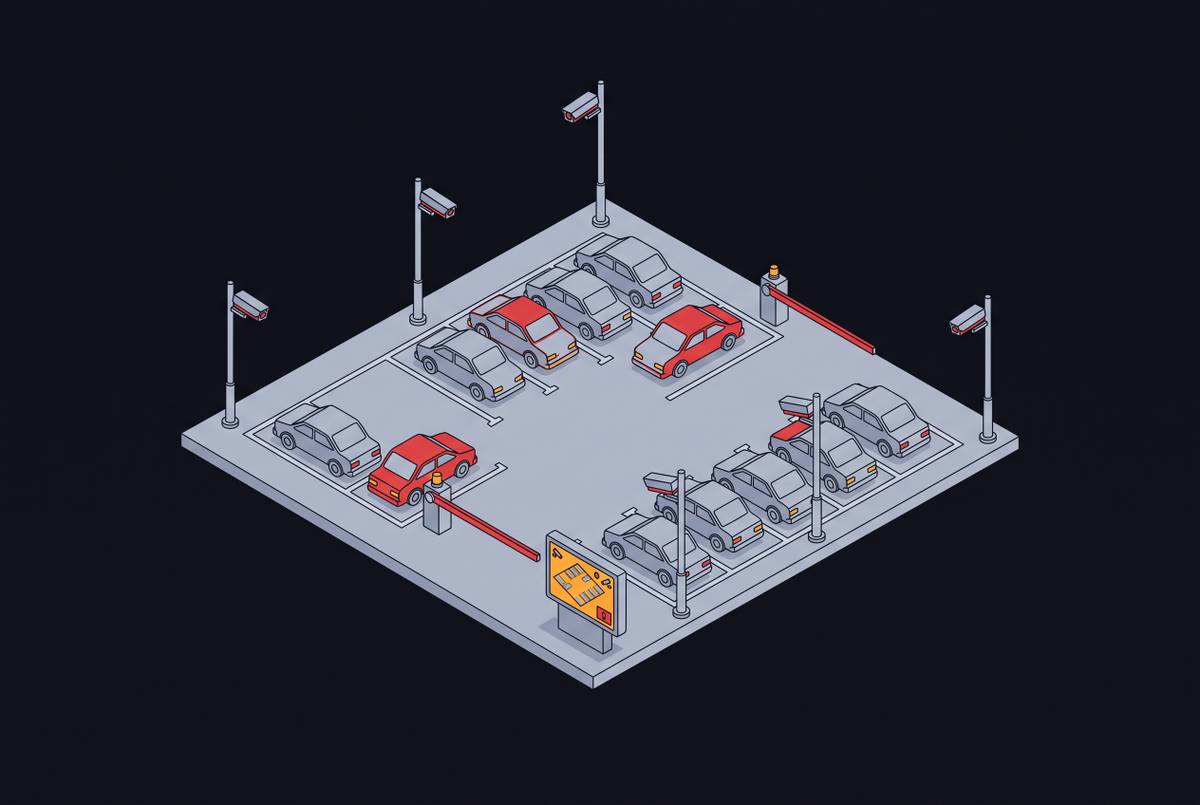
Require a verified alert to include a video clip, a precise location tag identifying the tenant zone, and a timestamp. Those elements make the event actionable without forcing the operator to reconstruct its basic setting. A notification badge or log entry alone shifts that burden downstream. For apartment parking lots and garages after hours, the distinction between recording and an active security response is whether a meaningful alert reaches a human with the location, evidence, and escalation protocol needed to act.
Require a verified-threat response target in addition to an alarm-acknowledgment target, and ask how filtering prevents routine tenant activity from congesting the queue. Confirm that peaks such as retail closing or residential weekend activity do not degrade coverage for other tenant types. The right monitoring agreement treats tenant context as a first-class input to detection, assessment, and response.