Employee Parking Lot Security Monitoring Best Practices
Verified video monitoring and site protocols reduce false alarms in parking lots.
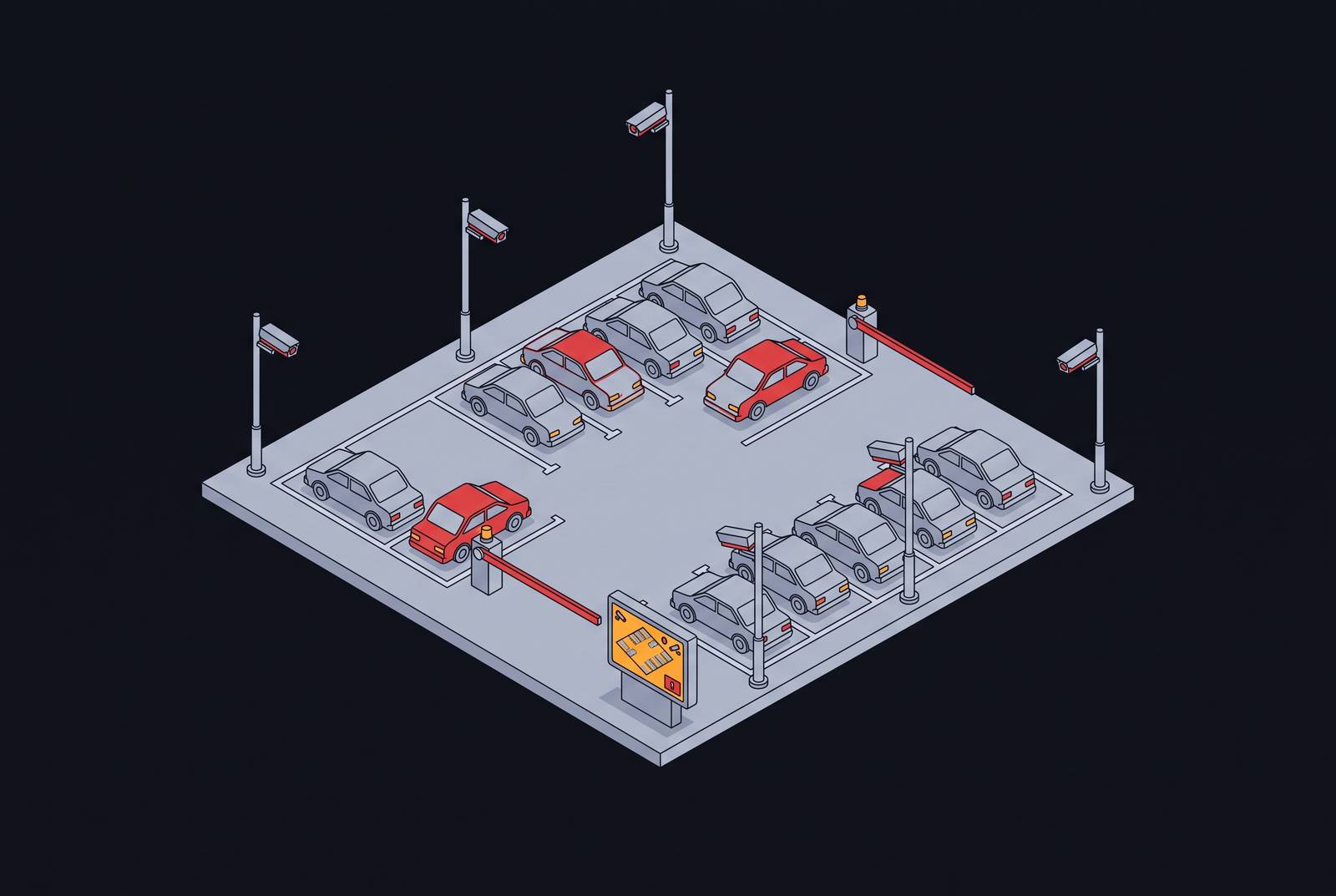
For remote video monitoring to work in multifamily and employee parking lots, it must tell authorized activity from real threats and get verified events to human operators fast enough for them to act. Employee parking lot security monitoring best practices therefore need protocols for each site as well as decisions about where cameras go and how many alarms they send. Cameras provide visibility, but context, verification, and a defined response turn that visibility into protection.
Why employee parking lots are harder to monitor than they look
Parking lots concentrate vehicle break-ins, catalytic converter theft, after-hours trespassing, and illegal dumping across a large, irregular footprint. Unlike a building interior, a lot has no natural chokepoints, such as a single entry door or stairwell, that concentrate movement. Activity can occur across the full space. Monitoring must therefore account for where people and vehicles move, including after they have crossed an entrance.
Timing makes that spatial problem harder. Lots are busiest at shift changes and lowest-light hours, when distinguishing authorized from unauthorized activity is especially difficult. An employee walking to a vehicle is expected activity, yet that movement may occur near vehicles exposed to theft. A person being there is therefore too little to go on when deciding whether an operator needs to review an alarm. The meaning of that presence depends on what the person is doing and whether the activity belongs there.
The same space that serves employees at 8 a.m. becomes a dark, largely unwatched perimeter at 2 a.m. Monitoring has to work at both times without swamping operators when normal activity is taking place or missing real threats after hours. The system needs to recognize employees and identify threats, and most legacy systems cannot do so.
How traditional alarm monitoring fails in an outdoor lot environment
Traditional alarm monitoring passes signals along in a relay built for indoor sensors. A sensor trips, a signal reaches a central station, and an operator calls the premises before dispatching police. In an outdoor lot, the weakness appears at the first step because basic pixel-based motion detection responds to HVAC airflow, passing animals, headlight sweep, shifting shadows, and weather. At the monitoring center, those signals do not establish whether the event is an intrusion or ordinary outdoor movement.
When every small movement sets off an alarm, events that may be harmless fill the queue. Operators must review a volume of events they cannot process in sequence quickly enough. Real threats then wait behind dozens of noise events, even when someone may need to act at once. The failure is architectural rather than simply a matter of detector sensitivity or operator effort.
Unverified dispatches carry that weakness beyond the monitoring center. Police departments that get large numbers of false alarms put unverified calls behind calls that have visual confirmation. UL-listed central station standards require trained operators around the clock and a response to every signal, but they measure a different duty. Time to acknowledge a signal does not establish time to confirm a threat or how long police take once dispatched. A service can therefore meet an acknowledgment standard without demonstrating that it can support timely intervention in a lot.
What AI-assisted monitoring actually does differently in a lot environment
A person walking to a car and a person crouching under vehicles in the same row can produce similar pixel changes. Their behavior, however, has a different meaning. AI-assisted review uses that distinction to assess the activity rather than treating movement alone as evidence of danger. The operator receives an event that has already been examined.
When Verdun's AI agents review every alarm as it fires, verified threats reach operators without waiting behind routine events for a person to review them one by one. This approach can bring the interval between an event and a human seeing a verified clip toward near-real-time. The improvement comes from changing the review architecture.
Filtering matters as much as detection because it preserves attention for events that require judgment. An employee arriving early, a contractor at a scheduled dock, or a delivery driver can be dismissed when the activity matches the site's protocol. One verification layer labels alert clips as confirmed, rejected, or unverified before human review. AI and operators thus serve complementary roles, with automated review sorting activity and trained people investigating and responding to escalated threats.
Audio can pick up threatening sounds beyond a camera's field of view, while video helps show what caused them. Together, they give operators more context than either channel alone. A verified alarm is an event in which a monitoring professional uses audio evidence, video evidence, or both to establish that a genuine threat is present before calling emergency services. That distinction matters because police departments increasingly require verification for priority response.
Why site-specific protocol is the variable that determines whether any of this works
Behavior alone does not establish authorization. An employee who always arrives at 5:30 a.m. and someone with no authority to enter can both generate movement in the dark. Without site context, a monitoring system has too little to go on to tell those situations apart. The review process gets that missing context from scheduled shifts, the times when contractors are authorized to be there, access control integration, and known vehicle patterns. Site-specific protocol is the mechanism that turns operational knowledge into monitoring logic.
Detection zones translate that knowledge into spatial rules. A contractor vehicle at a loading dock at noon has a different significance from the same vehicle there at 2 a.m. A configured system can let the authorized daytime arrival pass while routing the after-hours event to immediate human review. In AI-augmented services such as Verdun, this contextual filtering separates routine employee and contractor activity from threats before escalation. The value comes from applying the site's rules.
Access control integration links video with gates and badge systems to help verify who has entered. It provides visual context for after-hours entries, tailgating, and unauthorized vehicle access. It also creates a timestamped audit trail with value in HR investigations, vendor disputes, and premises-liability claims. Once an event escalates, the standard operating procedure appears so the operator has instructions on how to respond. That removes improvisation where consistent action matters most.
A site profile is therefore more than an initial configuration task. The property operator needs to keep shift schedules, authorized plates, contractor calendars, and zone-specific response tiers up to date and have a direct say in them. Most legacy central stations have no workflow for maintaining that operational depth. Without it, new technology can produce the same excessive alarms from routine activity it was intended to reduce. With it, the operator receives both a meaningful escalation and the instructions needed to act without avoidable delay.
How monitoring speed and response SLAs should be evaluated for a parking lot
The useful speed measure for a parking lot is elapsed time from an event to a verified human decision. Time-to-acknowledge measures only whether someone has accepted a signal. It does not show whether the event has been investigated or whether an operator understands what response it requires. Buyers should therefore ask vendors to distinguish acknowledgment, AI triage, verified escalation, and full human investigation. A generic response-time claim leaves too much of that sequence undefined.
AI-assisted filtering shortens the sequence by keeping noise events out of the human review queue. However, a measure that starts only when a verified event reaches an operator does not describe the whole delay. The evaluation needs to include the interval before that handoff as well as the investigation afterward. This matters because a vehicle prowl or catalytic converter theft can finish in minutes. A system that takes 20-plus minutes to surface a verified event reaches the operator after the opportunity to interrupt it has passed.
Fast verification becomes useful when the operator has tools for intervention. Two-way audio, PTZ camera control, and siren or intercom integration can support a voice-down warning, siren activation, or dispatch call while an incident is in progress. A well-structured service-level agreement should specify AI initial triage time, time to full human investigation of a verified event, platform uptime, and defined service credits for misses. Those terms make the service measurable without confusing the monitoring provider's performance with police arrival time.
How monitoring requirements differ across commercial, multifamily, and industrial lots
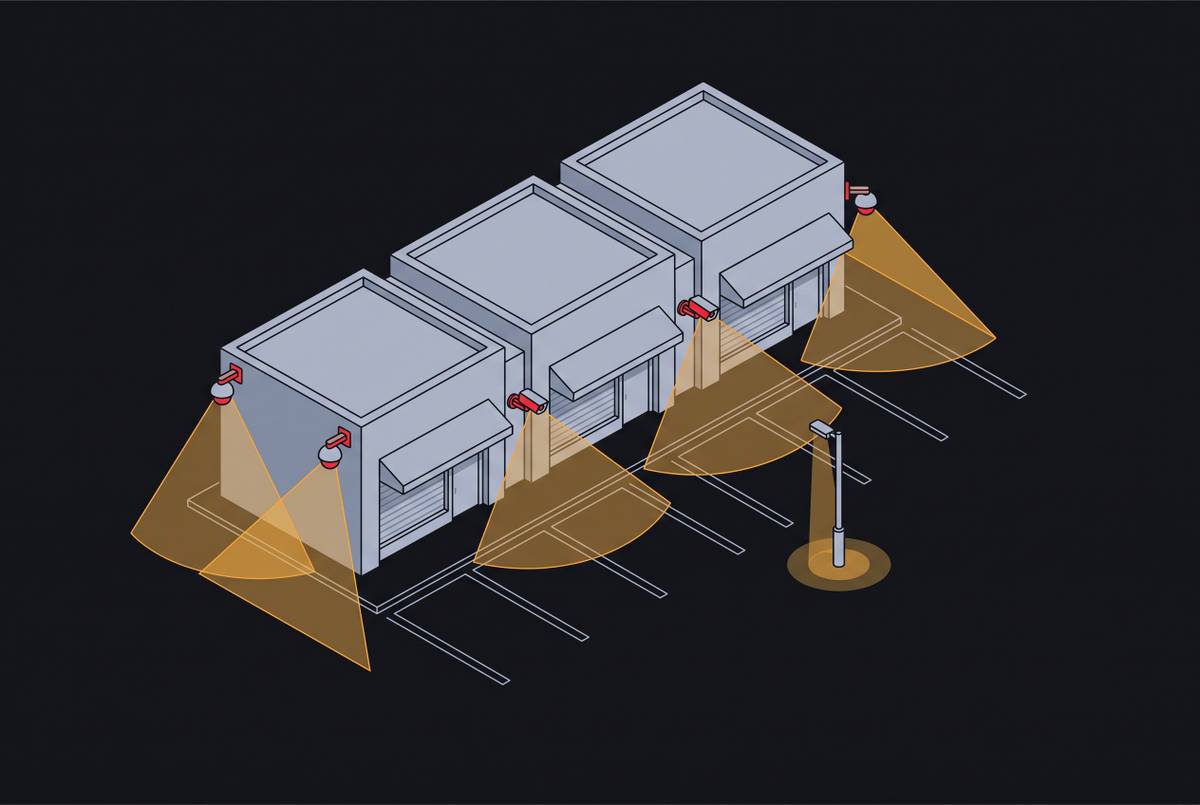
The core threats recur across property types, but authorization and response work differently in each setting. Across most commercial property portfolios, commercial office and campus parking structures have the most incidents per square foot. Loitering detection and unauthorized access alerts are especially important during shift changes and low-traffic hours, when commuting employees are most exposed. Sending alerts to parking structure intercoms, shuttle dispatch, and security escort workflows links what the system detects to a response on the ground. Cross-referencing badge data against vehicle presence also creates an audit layer for parking policy enforcement.
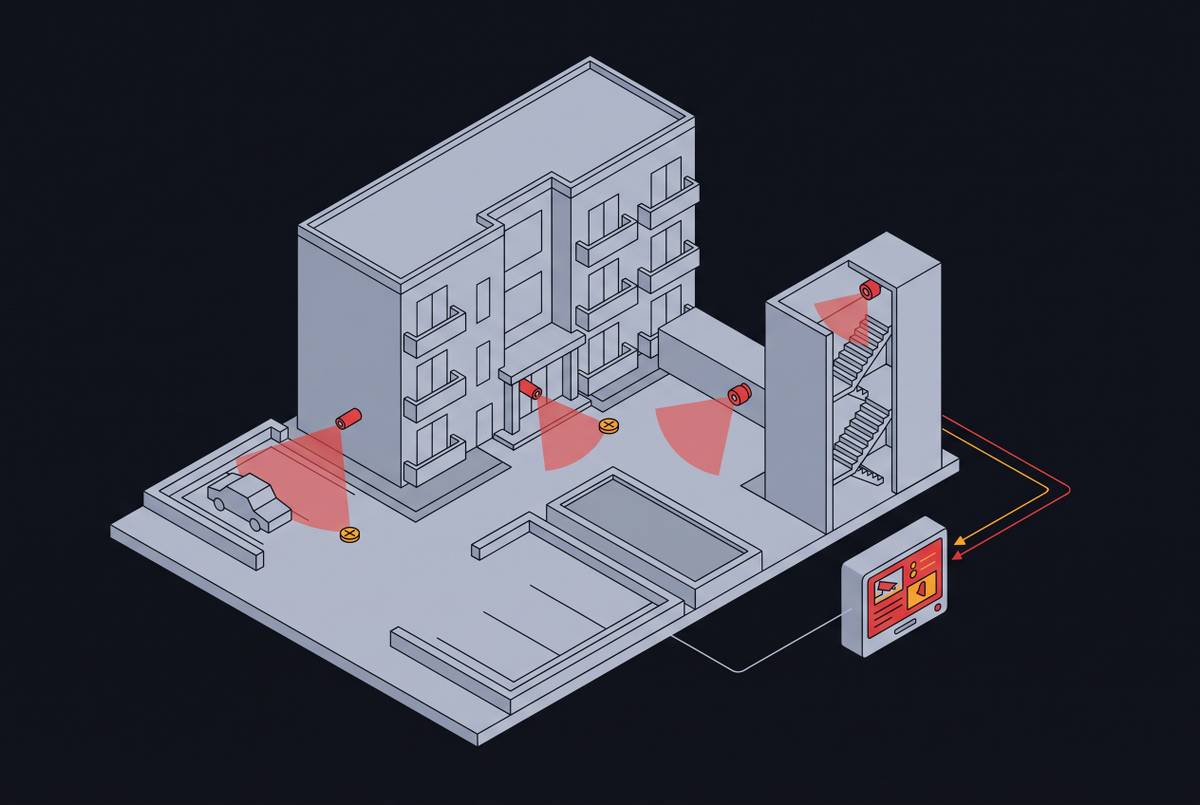
At multifamily properties, deciding who is allowed to be there is harder because so much of what residents do is legitimate activity. Vehicle crime and trespassing remain primary threats, but presence after hours is not enough to identify either. Keeping apartment complex parking lots safe therefore takes cameras and remote review that can tell when activity is authorized and help someone act on a threat. Most multifamily properties cannot justify dedicated on-site security staff, so AI-backed remote monitoring is a workable way to staff security where there is little coverage to build on. Coverage must link the separate camera views of parking areas, building entrances, and shared exterior spaces so they work as one perimeter.
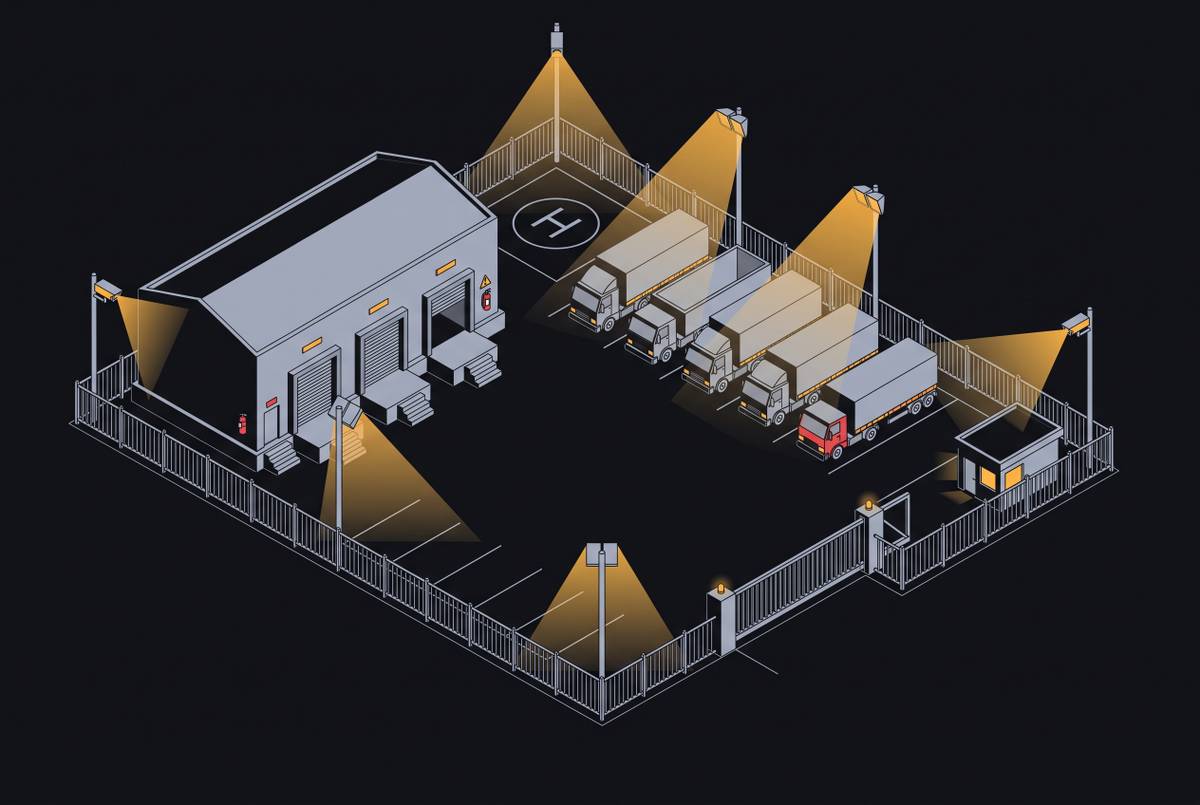
Industrial, logistics, and distribution lots place large volumes of goods and vehicles across open-air spaces. Having so much in one place draws organized theft, including organized retail crime (ORC) staging activity. Behavioral AI can spot loitering patterns that fit pre-theft staging, so operators have a chance to act before a breach. Voice-down warnings are especially useful in open industrial lots where a visible guard presence is not feasible. Surveillance trailers and pole cameras extend coverage where fixed infrastructure is unavailable or impractical, but their alerts still need the site's authorization rules and response protocol.
What a protocol-driven monitoring program looks like in practice
A protocol-driven program is defined by whether it can act correctly on what it sees. Its rules link authorized activity, detection zones, verification, and human response while there is still time to act. Camera count and technology specifications do not establish that connection on their own. Buyers should ask what site information the system uses to distinguish authorized from unauthorized activity and what the vendor means by a verified event. The answer should make clear both the evidence behind an escalation and the measured time required to get it to an operator.
That operating picture also needs an owner. Buyers should establish how schedules, contractors, and access rules are updated, who maintains those protocols, and what the operator can do immediately after confirming a threat. Peak alarm volume deserves the same scrutiny as routine performance because it exposes whether verified threats still wait behind noise. The test of any monitoring program is whether it can distinguish an employee arriving early from a theft in progress, and act accordingly fast enough to matter.