Construction Site After-Hours Video Monitoring Requirements
Effective after-hours protection requires live monitoring, not just cameras and alarms.
Construction site after-hours video monitoring requirements must connect camera coverage, reliable connectivity, fast alarm verification, site-specific protocols, and a documented response chain. Cameras and passive alarms alone cannot provide that protection because recording an intrusion is not the same as intervening. A defensible plan treats these requirements as one operating system, designed to change with the project.
Why construction sites are structurally harder to monitor after hours than finished commercial properties
A construction site changes the boundaries that a monitoring plan depends on. Temporary fencing moves, laydown yards relocate, and new work zones open as construction progresses. A camera angle that worked yesterday may miss what matters today. This instability makes construction a different class of monitored property.
The people using the property also change. Subcontractors, vendors, delivery drivers, and inspectors work on different schedules, so a face or badge alone cannot establish whether someone belongs in a particular area after hours. That decision requires a live access record. Meanwhile, equipment, copper wiring, and finish materials are exposed because crews need to reach them to do the work. When power and network infrastructure are limited, especially early in a project, it is harder to keep watch as these security boundaries move.
Why recording-only cameras and passive alarms cannot satisfy an after-hours monitoring requirement
A recording-only camera preserves an event for later review but does not initiate intervention while it unfolds. Vision Detection Systems distinguishes that function from live monitoring, in which trained operators review alerts when the site is closed and can act. Footage reviewed on Monday morning may explain a loss, but it cannot provide the response that was needed during the intrusion.
Passive alarms leave a different gap because they show that something moved without showing what caused it. Submittal Link identifies wind-blown debris, animals, shifting shadows, and normal after-hours activity as sources of false alarms that can produce alarm fatigue. On construction sites, temporary tarps, debris, and nearby traffic cause a lot of environmental motion. An alert alone therefore leaves the operator with uncertainty. Vitalis describes the value of combining alarms and video as the ability to verify activity and respond.
A camera installation and an alarm monitoring contract do not, by themselves, resolve either limitation. The contract must support verification and action. A service that mutes noisy channels or leaves alerts waiting behind unverified triggers from other sites cannot give the site verified coverage just because the equipment is still there. Active monitoring is consequently a requirement of the response model.
What camera coverage actually means on a site that changes weekly
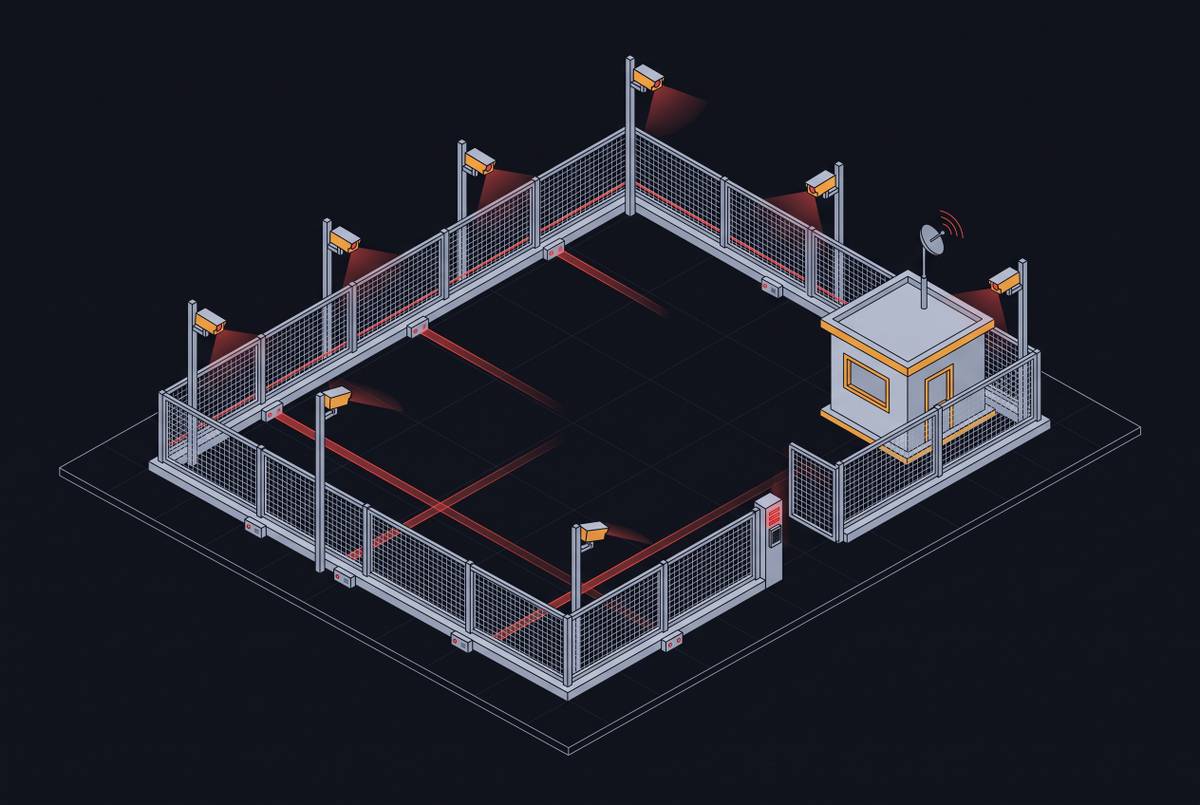
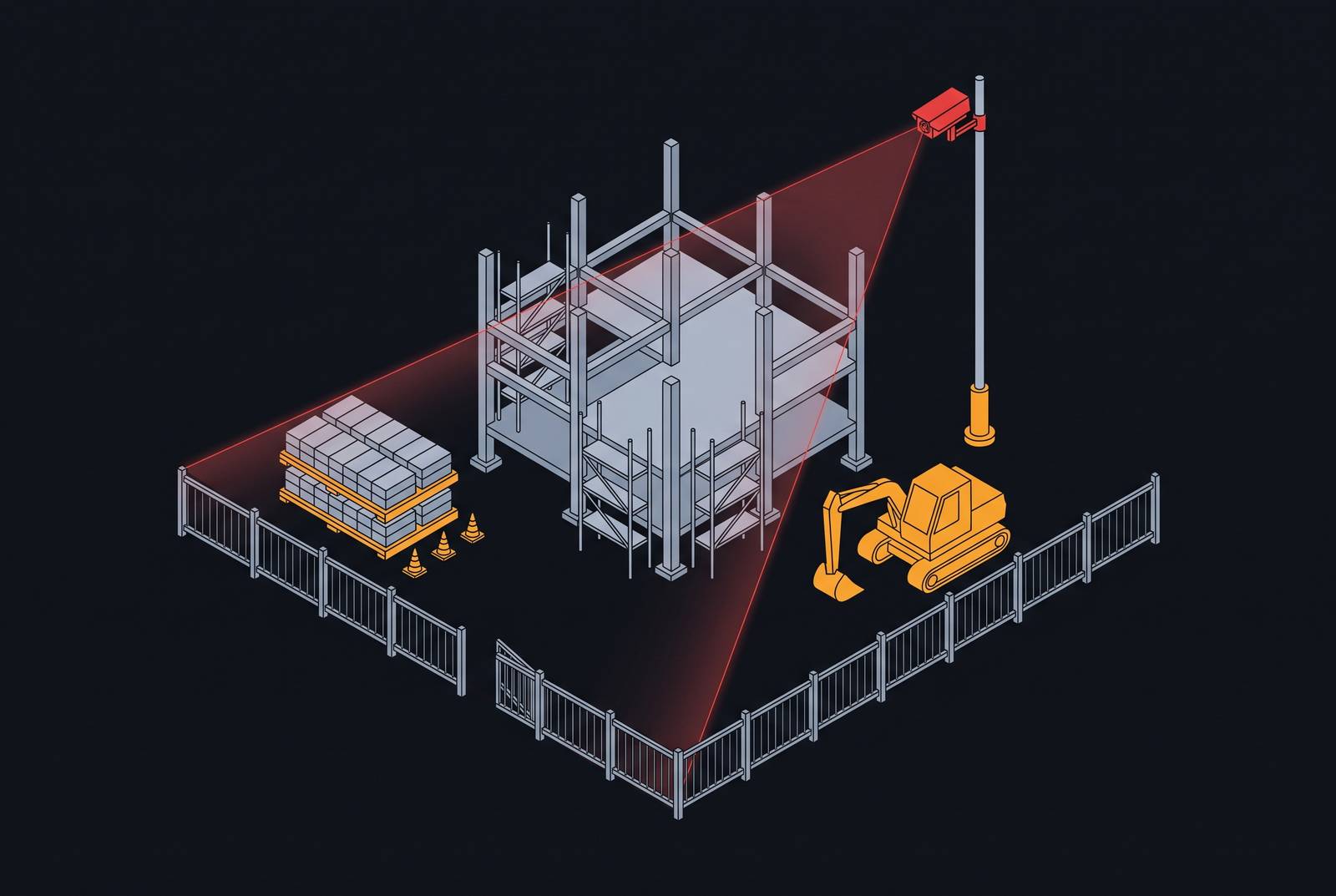
Coverage starts with a clear plan for which zones to watch and how many cameras they need. Vision Detection Systems identifies three priorities, which are the gate for vehicle entry and exit, the staging and equipment area where value concentrates, and the fence line where intruders may cut in. A wide view is not necessarily useful coverage. Placement must let operators assess activity in those zones, and the plan must be revalidated when their locations or boundaries change.
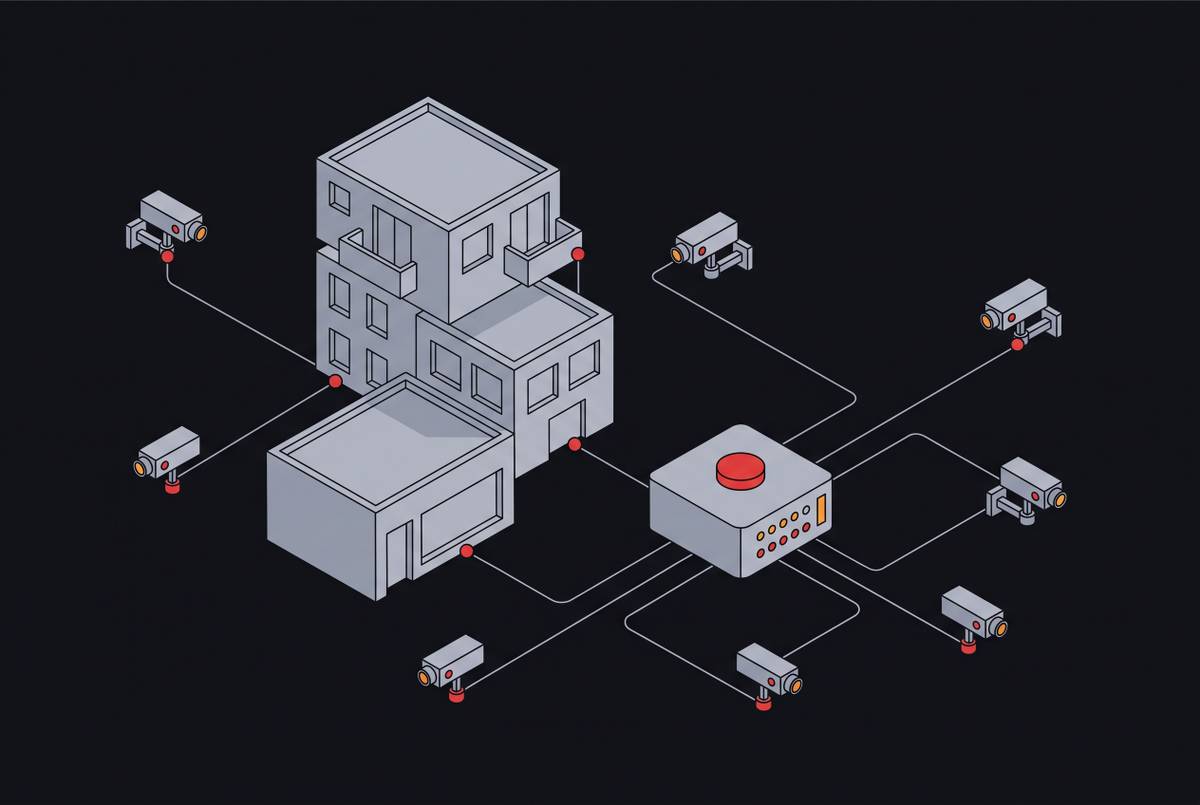
Fixed cameras suit stable entrances, trailers, long-term storage areas, and defined perimeters, while mobile units suit changing work zones, temporary boundaries, and equipment areas. Neither approach fits every phase equally well. Vitalis recommends using fixed coverage for points that stay in place and redeployable units for the areas that change fastest. Solar or wireless units can work where infrastructure is limited, but how well they work depends on where they are placed, their connectivity, and the conditions around them.
The hardware still has to make the scene legible. Eyrus identifies durability, outdoor weatherproofing, high-definition resolution, and night vision as construction-site camera requirements. Those capabilities support placement. Vision Detection Systems recommends checking coverage at every phase change because framing creates different gaps from grading. A plan that specifies suitable cameras but never revisits their positions leaves the central construction-site problem unresolved.
How connectivity and power constraints shape what monitoring is actually possible
Even a camera in the right place needs steady power and a way to send video from the site for live verification. Most temporary construction cameras transmit through 4G LTE or 5G cellular, with hardwired ethernet a less common transmission option. That distinction belongs in the monitoring agreement. The provider must account for the reliability of the available link instead of assuming the uptime associated with stable wired infrastructure. Power and network checks must cover conditions when the cameras are installed and at each project phase.
The monitoring provider and connectivity solution therefore need to be selected together. A workflow that depends on low-latency video streaming may not fit a cellular connection with variable signal. Eyrus identifies cloud storage as a backstop that preserves footage if on-site hardware is compromised. That preservation function addresses a different need from the live connection required to verify an event.
Lighting belongs in the same infrastructure plan because operators need readable images. Vision Detection Systems recommends lighting the gate, containers, staging area, and equipment park without directing fixtures into camera lenses and causing glare. Power planning must account for that visibility requirement. A service-level agreement, or SLA, is feasible only if the site’s actual power, lighting, and transmission conditions support the verification workflow it promises.
Why alarm verification speed determines whether monitoring can prevent loss or only document it
Intervention requires a prompt verified human response after detection. At 2 a.m., a construction site without on-site staff has no one present to slow an intruder between the alarm trigger and police arrival. Verification and escalation must happen in minutes. Coverage and connectivity provide the opportunity to respond, but they do not help if a real event waits until the operator’s queue clears.
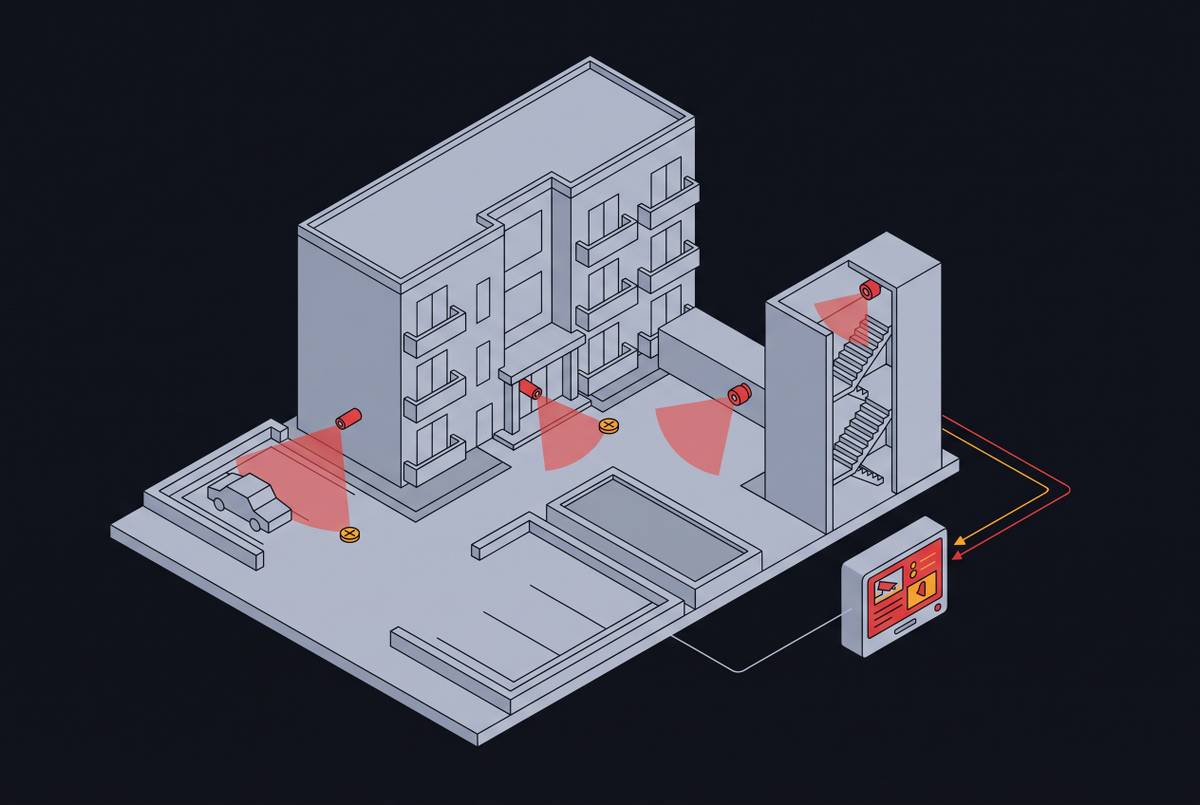
That queue is where environmental motion becomes an operational risk. If operators must check every pixel-level trigger from a windy site, real intrusions have to compete for their attention with debris, tarps, and other harmless movement. Filtering must precede the human review step. Submittal Link identifies motion filtering, AI-based analytics, and human verification before dispatch as the approach to reducing false alarms and notification fatigue. AI agents can review and filter activity first, escalating events that pass that screening so operators can assess the threat.
Submittal Link describes live talk-down warnings as a construction-site deterrent and reports that most potential thieves leave without taking anything after hearing one. Timing makes that capability useful. A warning that comes after someone has taken the targeted material is too late to stop that theft. The service’s documented performance must therefore address the interval from alarm trigger to verified human decision and escalation.
What site-specific protocols must define and why generic monitoring contracts don’t cover them
For fast verification, operators need a written record of what activity is allowed. Without it, a permitted concrete pour, late delivery, night-shift crew, or inspector can look like an intrusion. Site context gives the image its meaning. Vitalis identifies the access-control questions that need answers, including who may enter each area, when they may enter, how permissions change as crews rotate, and what audit trail remains for review. Video shows the activity, while access records establish who should be there.
The monitoring protocol must tell operators how to act based on those permissions. TrueLook identifies the monitoring schedule, alert-triggering events, and escalation chain as construction-specific protocol elements. These determine who verifies an alert, who calls law enforcement, and who notifies the project owner. Who does what must be clear before an event occurs. Arming windows must match crew hours rather than impose a fixed overnight schedule that disregards authorized work.
The same document must spell out which response tools can be used and what evidence must be kept. These include live talk-down through on-site speakers, police dispatch supported by verified video, and evidence-ready footage with managed retention for insurance and liability documentation. A generic contract may omit these details. To test the contract, a buyer must check for a written site-specific protocol and a requirement to revalidate it at phase changes. As work areas, permissions, and crew schedules change, the protocol must change with them.
How the incident response chain closes the loop from verified alert to documented outcome
Every upstream requirement is only as valuable as the response it enables. A verified threat still needs a destination, an authorized action, and an accountable person to carry that action through. The workflow cannot be improvised during the intrusion. Vitalis defines the sequence as detection in a defined zone, filtering, live verification, the appropriate response, and preservation of incident footage and activity records. The response may be an audio warning, alarm escalation, or the dispatch process, according to the site protocol.
Vision Detection Systems calls for an escalation chain naming the people responsible for verification, authorized to dispatch police, and assigned to notify the project owner or general contractor, along with what triggers each step. Verified evidence also changes the substance of a dispatch call. Departments receiving high volumes of unverified construction-site alarms may deprioritize them, while video confirmation supplies evidence of an active intrusion. Monitoring must support that handoff.
Documentation develops in parallel with the response. Vitalis identifies video, alarms, and access logs as parts of the operating record contractors need for follow-up. Timestamps and operator notes fill out the account of what happened for use in insurance claims, liability defense, and law enforcement. A monitoring SLA that governs detection but leaves escalation time and documentation output undefined covers only part of the service the contractor needs.
What a complete after-hours monitoring plan covers and how to evaluate whether a monitoring service actually delivers it
A buyer or project manager should evaluate the plan through the dependencies between its five requirements. Coverage is the first test, but not the last. The plan should define the gate, staging area, and fence line, match camera types to project phases, and require coverage review when the layout changes. Its infrastructure assumptions should then show how those views will reach operators under the site’s actual power and cellular conditions. Cloud storage should address footage preservation without being presented as a substitute for a workable live connection.
The next test is whether the provider can state its verification commitment in writing. AI-assisted filtering before human review should cut environmental noise, while the written record of time from alarm trigger to a verified human decision should show how quickly the service can act. A vague promise of monitoring is insufficient. The contract should also contain the site-specific protocol, including authorized activity windows, arming schedules, named escalation contacts, talk-down, and verified dispatch. Required phase-change updates connect that protocol to the changing property it governs.
The final test concerns what happens after the decision. Every verified incident should produce a usable record of video, logs, timestamps, and operator notes, with responsibilities for response and documentation defined in advance. This is where the commitments become measurable. If a theft begins at 2 a.m. on a Friday, the provider should be able to identify the point at which a trained human with verified video initiates a response and state the documented maximum time for that to happen.