How to Write Response Time Requirements Into a Monitoring Contract
Specific language transforms vague promises into enforceable obligations that actually protect you.
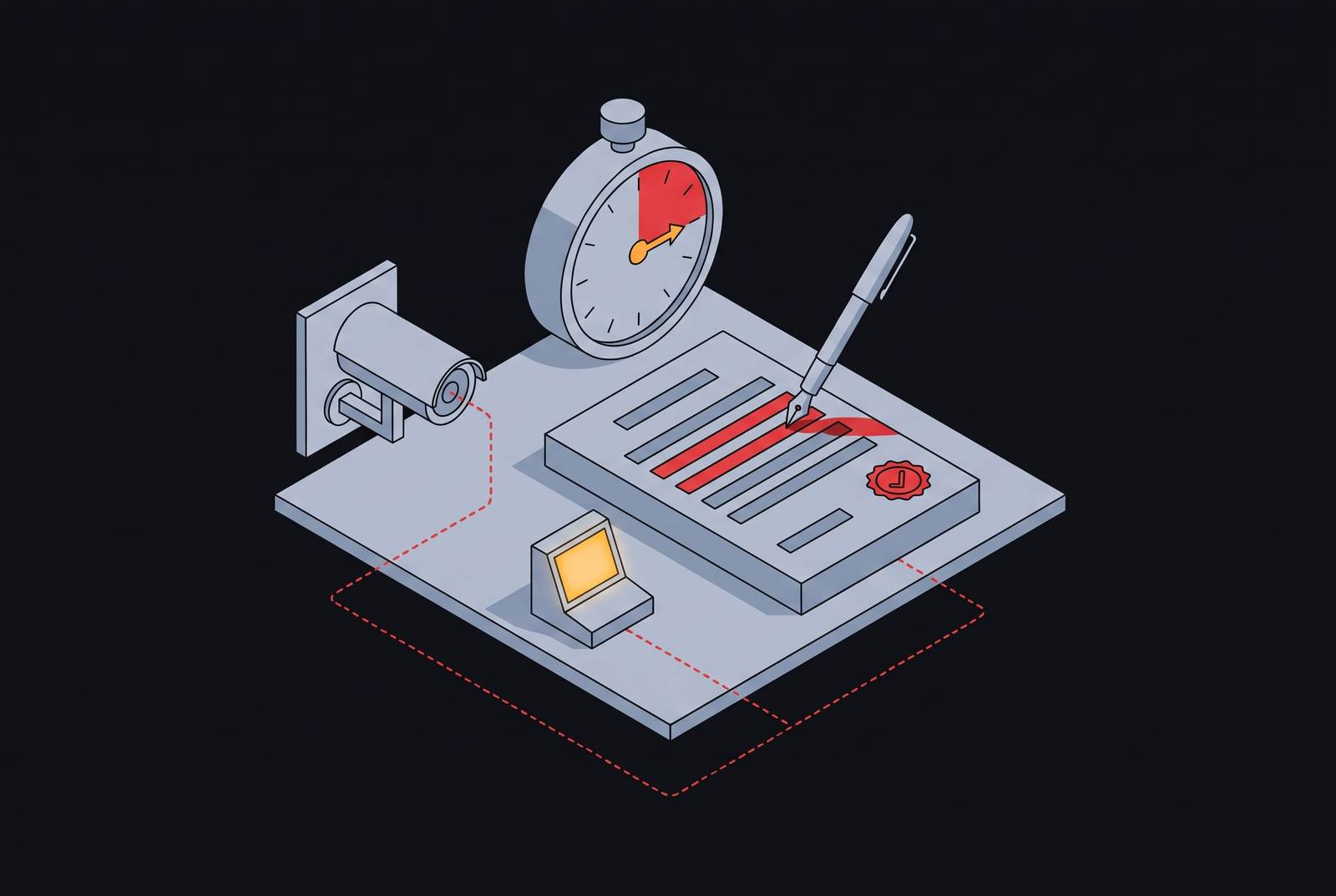
Alarm response time starts to fail in traditional video monitoring centers when real threats wait behind false positives in a queue for human review. Vague contracts leave that delay unmeasured and unaccountable. Writing enforceable response time requirements means defining each clock, the events it covers, the evidence of performance, and the remedy when the provider misses its obligation.
Why do traditional video monitoring centers fall behind on alarms without breaching the contract?
Buyers may think that having monitored cameras means someone will look at a threat as soon as it appears. The agreement may require much less than that. Phrases such as “real-time response” and “rapid intervention” express an intention but establish no measurable obligation. A provider can take 20-plus minutes to reach a verified threat and still argue that it complied if the contract specifies no clock start, clock stop, or threshold.
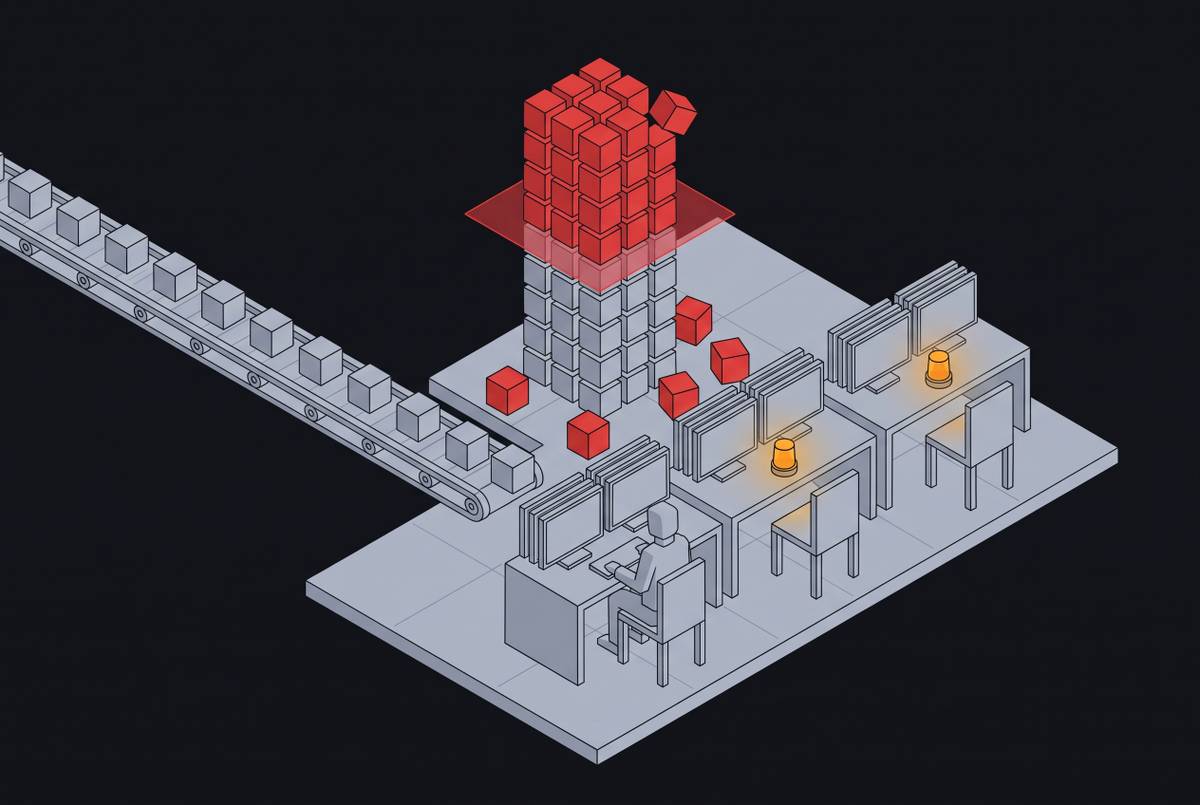
The exposure begins in the monitoring workflow itself. Legacy monitoring centers were built for signal relay, so a real threat can wait behind dozens of false positives. When many alarms arrive at once, that queue adds time between alarm receipt and human review. Yet contracts rarely acknowledge the delay between those events. Without a requirement governing that interval, cameras can appear to be monitored while the buyer has no contractual assurance about when a qualified person will examine an alarm.
What monitoring SLA language actually needs to define before anything else can be measured
A service-level agreement must attach its timer to a defined event, with an explicit start and end. Signal receipt at the monitoring center is the earliest available start in that workflow. It includes automated triage time when triage precedes human review. Human acknowledgment starts later and isolates the operator’s subsequent performance, but it leaves the preceding wait outside that particular measurement.
The clock can also start when an event is classified as a potential threat. It measures how long a known risk waits without escalation, making it especially useful for assessing the treatment of an identified threat. These clocks answer different questions about the service. The contract must identify which one governs each obligation rather than allow the provider to select whichever produces the most favorable result.
The endpoint needs equally precise wording because “response” describes several different outcomes. It can mean acknowledgment, a first outbound call attempt, successful contact with a designated person, or law-enforcement dispatch. Those events are not interchangeable measures of intervention. A call that reaches voicemail does not establish successful contact, so the applicable response obligation must end at successful contact or a documented escalation.
The event being timed also needs a contractual definition. “Verified threat” cannot remain a label governed solely by the provider’s internal judgment. Where automated suppression is used, the agreement must say whether suppressed events count in SLA calculations and require a log of suppression decisions that can be audited. That definition must also spell out how standard event handling differs from site-specific exceptions, so it is clear when the same clock measures different obligations.
The baseline standards that exist and what they actually require
TAPA FSR 2025 Class A requires monitored intrusion detection with central-station response under 5 minutes for logistics and manufacturing. It also requires continuous on-site security presence for high-value loads and defined video retention. These requirements provide a baseline for the service being purchased. They do not, by themselves, define every interval between an event occurring, its classification, human review, and completed escalation.
A minimum standard is not a complete performance specification. A buyer negotiating only a response threshold still needs to identify the event that starts that interval and the action that ends it. Otherwise, a numerical commitment can retain the ambiguity of a promise to respond rapidly. The contract should use the applicable standard as its foundation, then define the additional measurements needed to expose delays within the actual monitoring workflow.
The specific metrics a monitoring SLA should require, and why each one closes a different loophole
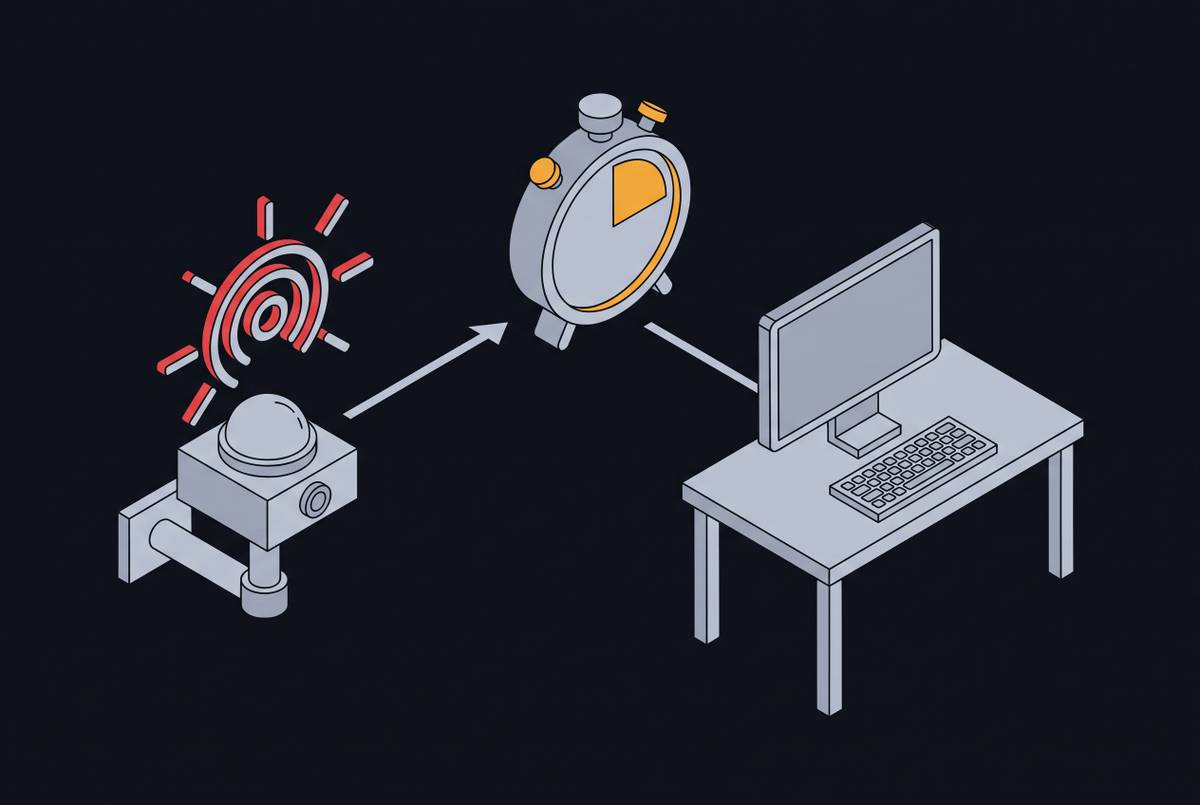
Mean Time to Acknowledge, or MTTA, measures the interval between alarm receipt and a qualified human confirming the event. It is the earliest proof of human attention. Acknowledgment should come almost at once, but a mean alone can hide slow responses at the busiest times. The contract should therefore require a distribution of acknowledgment times alongside the average, so slow cases are visible in the distribution even when the average looks good.
Mean Time to Detect, or MTTD, measures the interval between a perimeter event occurring and an AI-augmented system classifying it. This clock precedes the human response obligation. Including it prevents detection latency from being dismissed as a hardware issue outside operational performance. Without that separate measure, a provider can report prompt handling after classification while leaving the time taken to recognize the event unexamined.
Callback success rate measures the percentage of incidents in which a designated site contact is successfully reached within the required window. Voicemail does not satisfy that success condition. Escalation completion rate must accompany it and measure whether the full notification chain, with named backups, executes when the primary contact is unavailable.
False positive rate needs a contractual threshold and quarterly documentation. Otherwise, noise remains an expense the buyer absorbs. A defined limit makes claims about false alarms in marketing materials part of service performance. It also makes the handling of noisy cameras accountable, instead of allowing the provider to treat persistent false alarms or muted cameras as an acceptable operational workaround.
Availability and response each need their own commitments and reports. An active connection is not proof of intervention. Sensors can show a healthy status even when classification is wrong or escalation never starts. Combining those outcomes into one uptime number hides the distinction between a system that is connected and a monitoring service that acts correctly.
How site-specific protocols shape what "verified threat" means — and why generic SLAs break in practice
A verified threat must be defined by assessing motion against the site’s authorized activity. At a commercial site, occupancy schedules and approved vendor lists help show whether access is allowed or an event needs escalation. A truck entering a yard at 3 a.m. may be a scheduled delivery or an intrusion. Without the relevant context, operators may escalate authorized activity or suppress an ambiguous event that proves to be a real threat.
The contract must therefore specify occupancy schedules and after-hours windows by zone, known maintenance windows, and recurring authorized activities. It must also name the approved personnel lists or the points where access control connects to the system. Zone priority is a separate part of that definition. A perimeter breach at a loading dock is in a different risk tier from motion in an interior corridor, while changes in lighting, weather patterns, and repeated mechanical movement can cause false positives that can be predicted.
Multifamily properties expose a different weakness in generic rules. Broad analytics settings generate routine alerts from residents, visitors, delivery workers, and contractors, while narrow settings can miss the behavior the system is intended to identify. Calibration is therefore part of the service obligation. The contract must specify how scene-specific settings are calibrated and who owns that work as site conditions change, rather than treating initial configuration as a permanent answer.
Industrial protocols must also connect event classifications to safety workflows. Depending on the type of verified event, an operator may need to give an audio warning, send an internal notification, or contact law enforcement. The contract must map each classification to the required action so that a fast but inappropriate escalation does not count as successful performance.
Site context also shapes what an AI agent can reasonably classify before it brings in an operator. Schedules, authorized activity, and zone priority can cut the number of false positives before they reach the human queue. Those inputs need contractual definition as well. The agreement should state which contextual information the system uses and require a documented update process when conditions change, preserving a standard architecture without erasing local exceptions.
How AI-augmented monitoring changes what the SLA should measure — and what the audit trail must capture
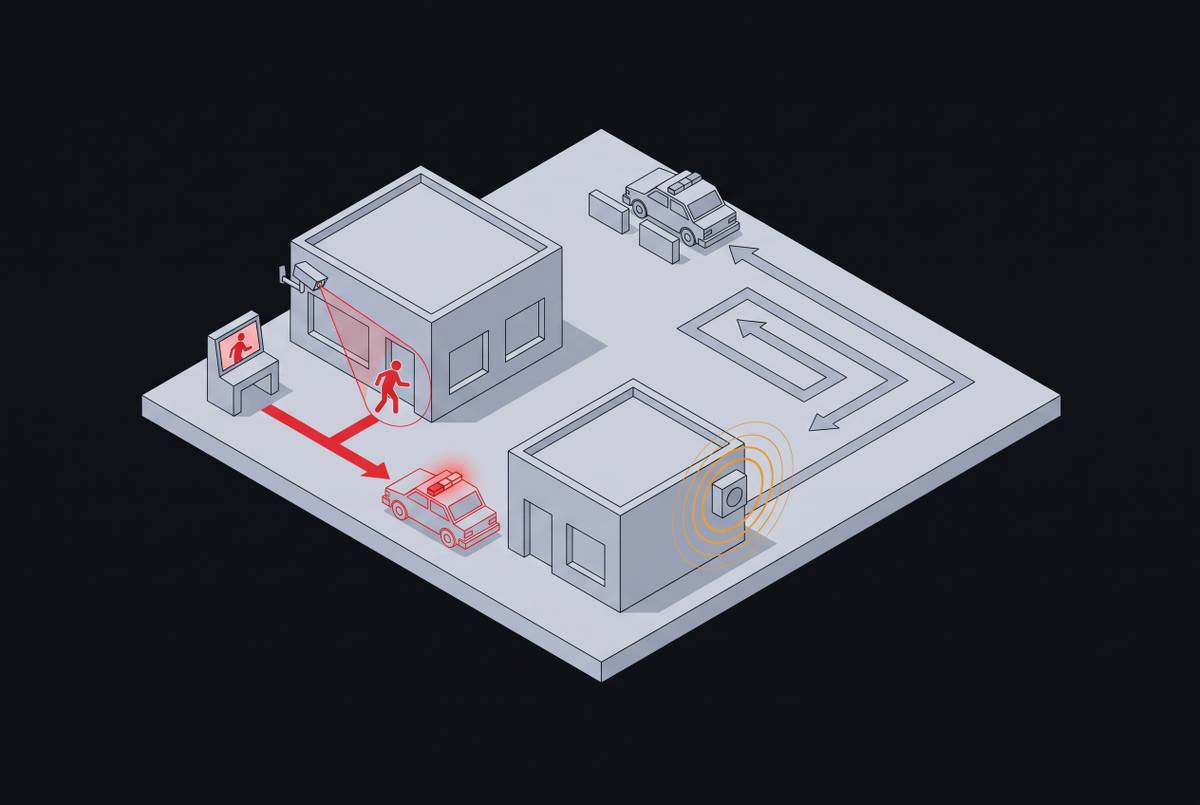
AI-assisted review changes the contract only if it changes the workflow. A system that flags every motion event sends human operators much the same number of alerts. It retains the underlying queue problem despite the AI label. A system that classifies events by context, suppresses noise, and escalates only verified threats changes which events require human attention and therefore needs measurements that expose that handoff.
For the latter architecture, the contract must measure both when the original signal arrives at the center and when a verified threat reaches a human operator. AI-to-human handoff time belongs beside detection time and subsequent human response time. These separate obligations should cover all the time between them. An architecture that routes only verified threats can make the time from detection to human review much shorter, so the window in its contract should fit that shorter interval.
Every suppressed event must have a timestamp, a classification reason, and the confidence score or rule that triggered suppression. The record must identify which decisions were AI-generated and why the event did not reach an operator. This is the evidence needed to distinguish selective noise reduction from simply muting a camera.
The buyer must be able to inspect that evidence independently. Access limited to the provider’s own reporting interface is insufficient because it leaves the provider controlling the available view of its decisions. Time-stamped, exportable suppression records should be a condition of service.
Operator-level false positive rate is another way to test how the architecture works. If the AI layer filters noise as it should, fewer false positives should reach human operators than in a legacy workflow. The contract should set a threshold at that point. That measure tests whether triage reduces the human workload, while the suppression log exposes what was removed before the handoff.
Remedies, reporting, and the verification rights that make SLA terms enforceable rather than decorative
Service credits are the most common remedy, but they should trigger on a missed SLA rather than depend on the buyer discovering the failure and filing a claim. Repeated failure needs a stronger contractual response. Termination without penalty should apply when the same SLA tier is missed repeatedly within a defined window, because consecutive months of missed targets indicate more than an isolated exception.
Automatic monthly reporting gives those remedies an evidence base. Reports must contain time-stamped event logs, operator actions, callback attempts, confirmation notes, escalation records, and resolution status. They must arrive without a request from the buyer. Machine-readable exports and independent audit rights let the buyer check how the service performed outside a dashboard the provider controls and use the evidence for regulatory compliance, insurance reviews, and post-incident root-cause analysis.
Exclusions need limits as precise as the service obligations. Broad wording around scheduled maintenance, customer equipment failure, or force majeure can remove failures from the calculation and weaken the agreed target. The contract must cap how frequently exclusions can be claimed and require pre-approved documentation for each one. Scheduled maintenance should be reported separately and excluded from availability calculations only when the buyer receives advance notice within the defined window.
The contract must also bind the provider to follow the escalation chain. Each level needs named contacts, named deputies, and defined reachability windows to assign responsibility clearly. Priority tiers, exclusion criteria, and escalation matrices belong in the main contract body. Placing them in an annex that can be amended without renegotiating the main agreement leaves the performance specification open to unilateral change.
When negotiating, the buyer should rely on evidence it can check independently and consequences that apply automatically rather than the summary of performance the provider chooses to show. A provider that resists exportable reporting, automatic remedies, or audit rights is resisting the means of testing its promises. That resistance is information about how it expects to perform. It should be treated as part of the buying decision.