Police Response Priority for Verified vs Unverified Security Alarms
Verified alarms get police response priority; unverified ones languish in the queue.
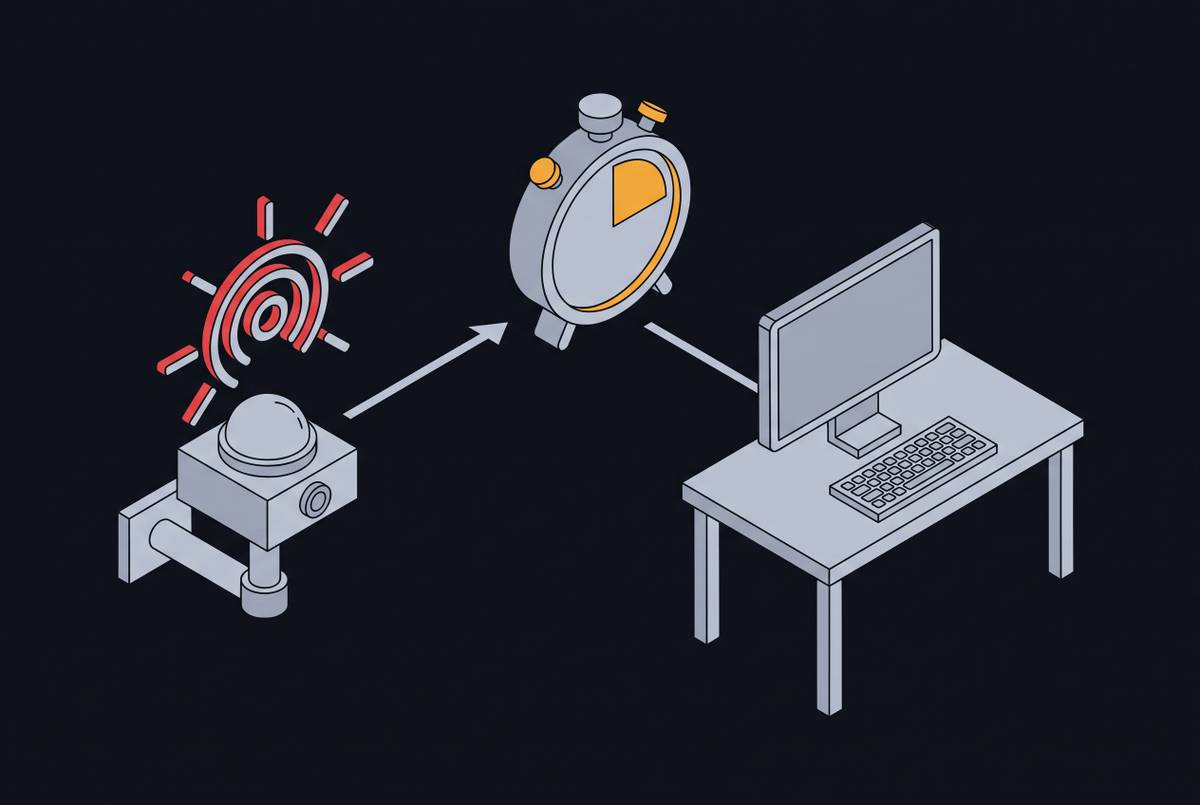
Alarm response time failure in traditional video monitoring centers begins when raw alerts outpace human review and reach police without verified evidence. For commercial and multifamily sites, verified intrusion alarms receive priority consideration, while unverified alarms wait in the unverified queue. Effective monitoring therefore depends on producing credible evidence quickly.
Why the verified/unverified distinction is the controlling variable in police dispatch
At 2 a.m., a sensor trips at a commercial property, but the decisive event is what appears on the dispatcher’s screen. Computer-aided dispatch systems give each call a priority as it comes in. An unverified burglar alarm almost never reaches Priority 1. It waits behind confirmed crimes in progress, shots fired, and domestic violence calls because the signal establishes only an activation. Neither the monitoring contract nor the sophistication of the sensor resolves that distinction.
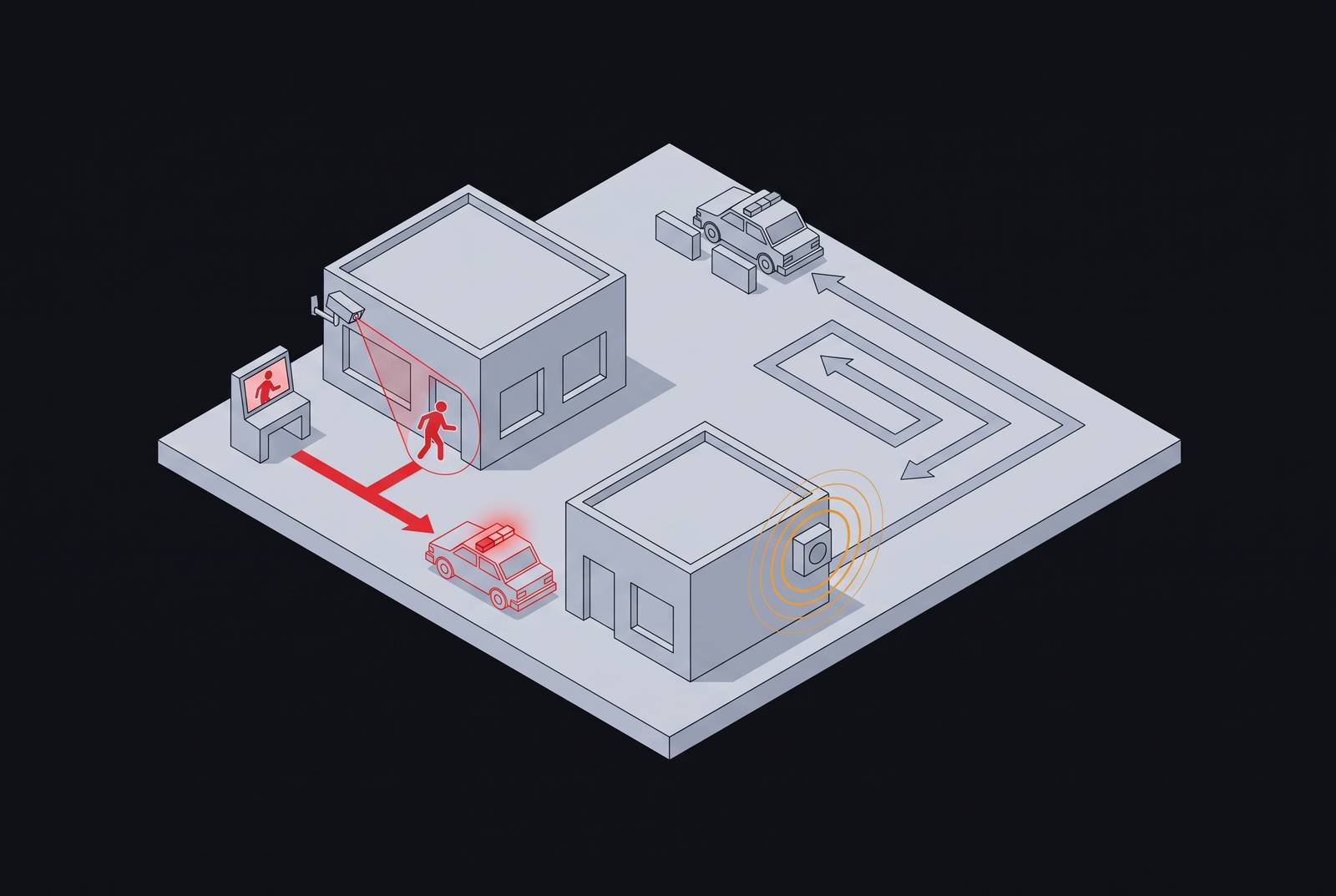
Evidence changes how dispatch treats the call. Audio of breaking glass or voices, video confirming an unknown person, and a second activation in another zone can strengthen the basis for response. Completed Enhanced Call Verification can also move an alarm forward where local policy accepts it. These routes are not interchangeable across jurisdictions. Panic and holdup signals generally receive unconditional dispatch, while ordinary intrusion alarms must pass through the applicable verification process before receiving priority treatment.
How false alarm volume eroded police trust and produced the two-tier response system
The alarm industry’s chronic false-alarm volume trained dispatchers to regard unverified activations as low-urgency events. Repeated requests without evidence consumed police resources while rarely establishing a genuine threat. Over time, that operational judgment became formal policy, separating evidence-backed calls from signals that merely indicated something had triggered a device.
Depending on the alarm, two units respond so that officers can back each other up if the threat proves real. Industry estimates put a false dispatch at roughly 20 minutes of two officers’ time. Municipalities responded with permit programs, escalating fines, and, in some cases, refusal to attend unverified alarms. That progression was resource triage.
Customers who face repeated fines may stop arming their systems, so the systems lose even their intended power to deter crime. The failure therefore reaches beyond the dispatch queue.
The policy landscape — from permit fines to full non-response, and where the trend is heading
Many cities use the SIAC/IACP Model Alarm Ordinance as a middle ground. It combines permit requirements with escalating fines and a no-response designation for chronic offenders. The framework advises a maximum of two free responses before fines begin. Local schedules nevertheless differ. The City of Houston Burglar Alarm Administration allows the first three false burglar alarms per year without charge, then applies escalating fines, with permit revocation possible at the upper end and faster escalation for false panic or holdup alarms.
Seattle adopted verified response on October 1, 2024. The Seattle Police Department’s policy limits response to alarm-company calls supported by evidence of a crime in progress, including audio, video, panic alarms, or eyewitness evidence of illegal entry or attempted entry. Sensor or motion activations alone do not qualify. For a site operator, the exposure is therefore not limited to a financial penalty. A functioning alarm can become ineffective as a route to police dispatch.
The Security Industry Association identifies agencies that adopted verified response and later rejected it, including South Salt Lake City, Dallas, Madison, Henderson, and San Jose. Those reversals show that the policy path varies, and the broader pressure created by false alarms and constrained police resources remains. The trend is toward requiring evidence before dispatch, which puts buyers at risk if their monitoring procedure still treats activation alone as enough.
What verification actually requires — the three tiers and what each one gets you at dispatch
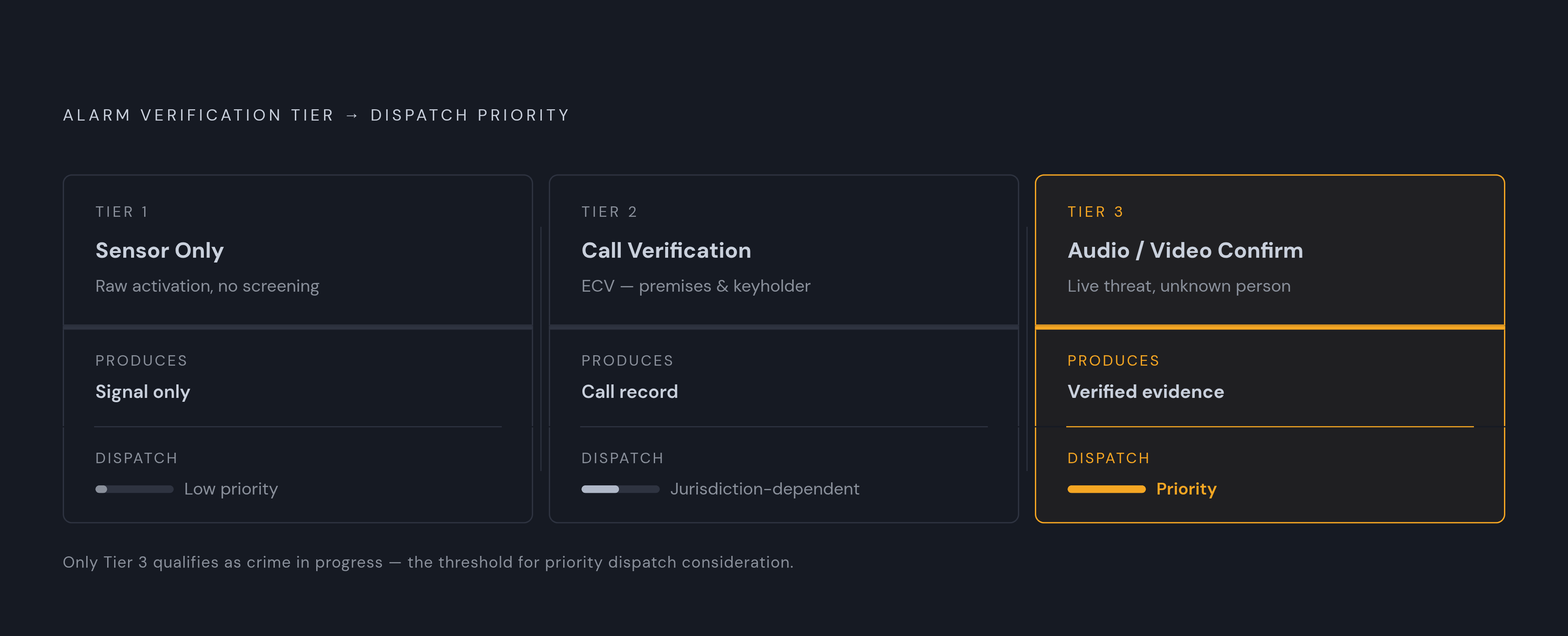
The three-tier framework distinguishes detection, call-based screening, and evidence-backed assessment. Tier 1 has no verification at all. A raw sensor activation reaches the monitoring center and may become a dispatch request without confirmation. This approach produces the highest false-alarm rates and places the call at the lowest end of the dispatch queue.
The middle tier uses call-based verification, including Enhanced Call Verification. Its value depends on the jurisdiction’s rules. Making all the required calls may meet local dispatch rules, but the calls alone do not show that a crime is in progress. A buyer therefore cannot treat every service described as “verified” as providing the same evidentiary standard.
Tier 3 establishes a genuine threat through real-time or near-real-time audio, video, or both before emergency services are called. Audio extends assessment beyond a camera’s field of view. Analytics can pick out threatening sounds, while operators listen to learn what is happening across large commercial or warehouse spaces. Video provides visual confirmation of an unknown person on the property and commonly supports a crime-in-progress designation. This is the tier increasingly required by verified-response jurisdictions and preferred for faster, prioritized police response.
Why do traditional video monitoring centers fall behind on alerts during high-volume periods?
Traditional monitoring centers fall behind because their workflow combines sequential call handling with a large manual review burden. A sensor activation reaches an operator, who calls the premises, then a keyholder, before requesting police. Multiple minutes can pass through that sequence. Yet the final request may still be unverified, so the time spent processing the alarm has not improved its dispatch standing.
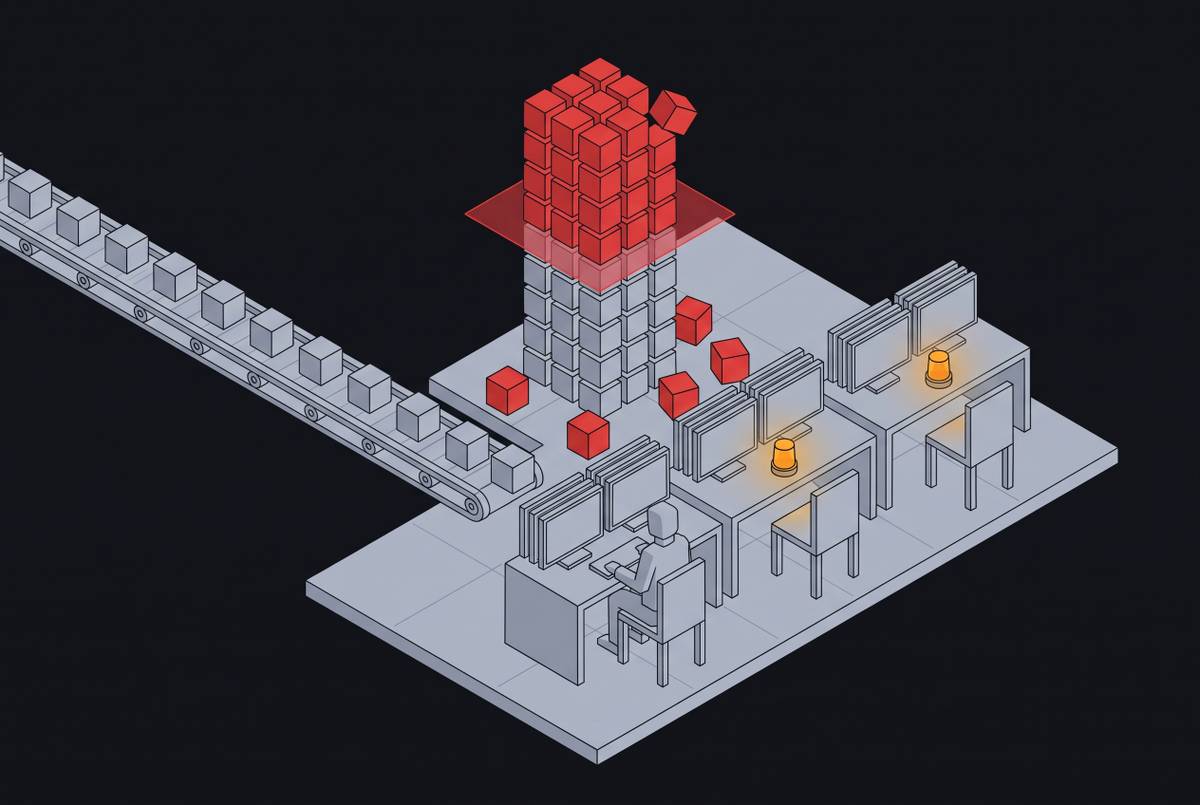
Industry figures put 99.5 percent of video streams received by remote monitoring centers in the false-positive category. Without pre-filtering, operators must review that volume to find events requiring intervention. Real threats wait behind routine activations. With so much to take in, operators take longer to verify alarms and miss signals even when cameras have captured evidence of a threat.
Missing site context compounds the review burden. An operator who does not know delivery schedules, authorized vehicles, or normal after-hours lighting must spend longer interpreting unfamiliar activity or make a lower-confidence assessment. Poor camera placement and disconnected sensors can prevent confirmation altogether. These are architectural limits. The center functions as a relay when it needs to function as an assessment operation, and police receive another signal of the kind their dispatch policies already discount.
How AI-assisted alarm review changes what reaches police and how fast it gets there
AI-assisted review changes the workflow by placing assessment before human handling. Basic analytics classify a person, animal, or vehicle. Emerging AI agents go further by conducting situational analysis, initiating preliminary responses, and presenting findings to an operator instead of passing every raw signal into the same queue.
Always-on analytics can assess video as it is captured, generate metadata, and flag relevant events. Weather and animals can be filtered before they consume operator attention. That leaves fewer nuisance alerts competing with real threats, so people can focus on events that need their judgment.
Authorized schedules, vehicle patterns, and access protocols help distinguish a permitted late-night delivery from an intrusion. Without those details, object detection alone cannot tell whether a person seen at the site belongs there. The operator still makes the consequential judgment. AI changes what reaches that operator, while the human assesses the available evidence for escalation to police.
What monitoring SLAs actually mean for verification speed and dispatch priority
A monitoring service-level agreement must distinguish initial handling from verification and the subsequent dispatch request. These are separate stages of the response process. A prompt acknowledgment does not establish that anyone has assessed the threat, and a prompt call to police does not establish that the call contains verified evidence. The operational standard is whether the provider can produce the required evidence promptly enough to support priority dispatch.
Hub Security and Investigative Group’s alarm response procedures separate the initial call from the dispatch request, with verification occurring between them. That separation exposes a critical measurement question. Buyers should ask their monitoring vendors to define commitments for each stage rather than accepting a general promise of fast response. The verification interval cannot remain hidden between two otherwise satisfactory service metrics.
Industry estimates place unverified commercial alarm response at 30–45 minutes in urban areas and potentially more than an hour in rural locations. Video-verified alarms are typically elevated to crime-in-progress status. Verification takes time, but it can replace a long low-priority wait with priority consideration. Because burglaries can finish quickly, a response measured in tens of minutes may arrive after the event.
An SLA measures the monitoring work that makes a priority request possible, while local policy determines how dispatch handles that request. Handling an alarm fast without evidence falls short of that goal. Strong evidence that comes too late for police to act also falls short.
How local dispatch policy overrides monitoring procedure — and what buyers must confirm before finalizing any security plan
The operational conclusion is to calibrate the security plan to the local communications center’s requirements before finalizing it. A procedure built around Enhanced Call Verification may work where completed calls satisfy dispatch rules and fail where direct evidence is mandatory. The monitoring contract cannot override that distinction. Buyers should confirm whether the jurisdiction uses ECV, verified response, or a hybrid, then compare those requirements with the provider’s actual procedure.
Alarm categories also need separate treatment. In most jurisdictions, panic, holdup, fire, and carbon monoxide alarms require immediate dispatch without a verification delay, while intrusion alarms follow the applicable verification chain. Permit status is another prerequisite. Most jurisdictions require a permit on file before police will respond, and operating without one can increase false-alarm fines or accelerate a no-response designation.
Hub’s guidance makes the documentation task explicit, directing operators to “confirm permit requirements, fine schedules, and verified-response rules with your local communications center before finalizing any procedure”. For commercial and multifamily operators, that means recording those requirements, confirming that the monitoring SLA supports them, and auditing camera placement for verification gaps. The audit must connect policy to coverage and procedure. It should establish whether a real event at the site can produce the evidence local dispatch requires.
What a monitoring architecture that actually produces verified signals looks like in practice
A workable architecture combines AI pre-filtering, human judgment, and site-specific context within the same assessment process. The AI layer handles volume by screening environmental noise and authorized activity before alerts reach an operator. The human layer handles consequential decisions. A trained operator receiving a pre-filtered, contextualized alert can make a verification decision in seconds and assemble the audio or video evidence needed for a priority request.
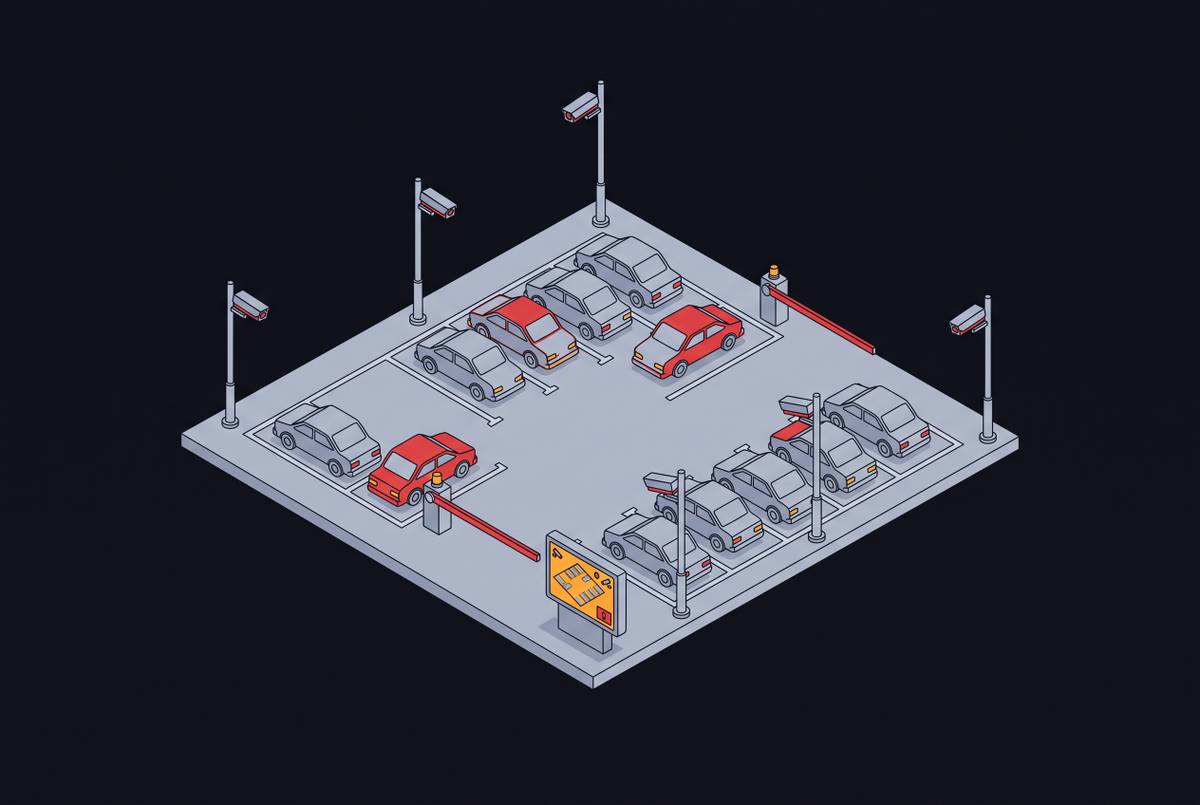
Site protocols give both layers the same rules to work from. Authorized schedules, known vehicles, access patterns, and after-hours norms distinguish expected activity from a departure that requires attention. Without that context, even a fast filter can produce false escalations or miss a genuine threat. Coverage is equally necessary. A camera that cannot show the relevant area leaves the assessment process without the visual evidence it was designed to use.
The practical test is the signal delivered to police. It should show evidence of the threat, arrive within the time the provider has promised, and meet the jurisdiction’s dispatch rules. Together, those steps lower the risk of false dispatches and no-response status and give police evidence they can trust and act on.