Alarm Queue Depth as a Contractual Liability in Legacy Monitoring Agreements
Monitoring contracts promise dispatch but never limit the queue wait.
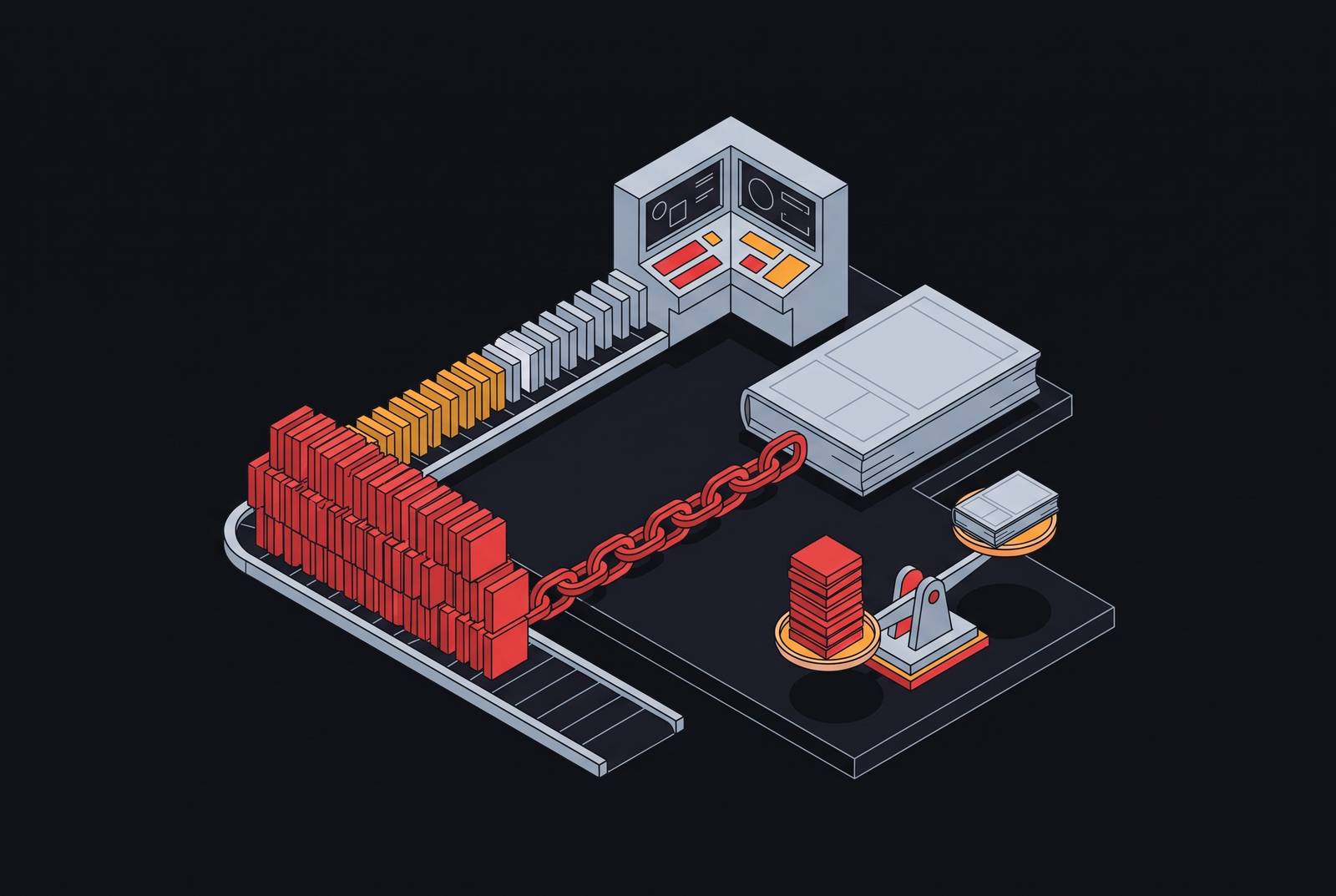
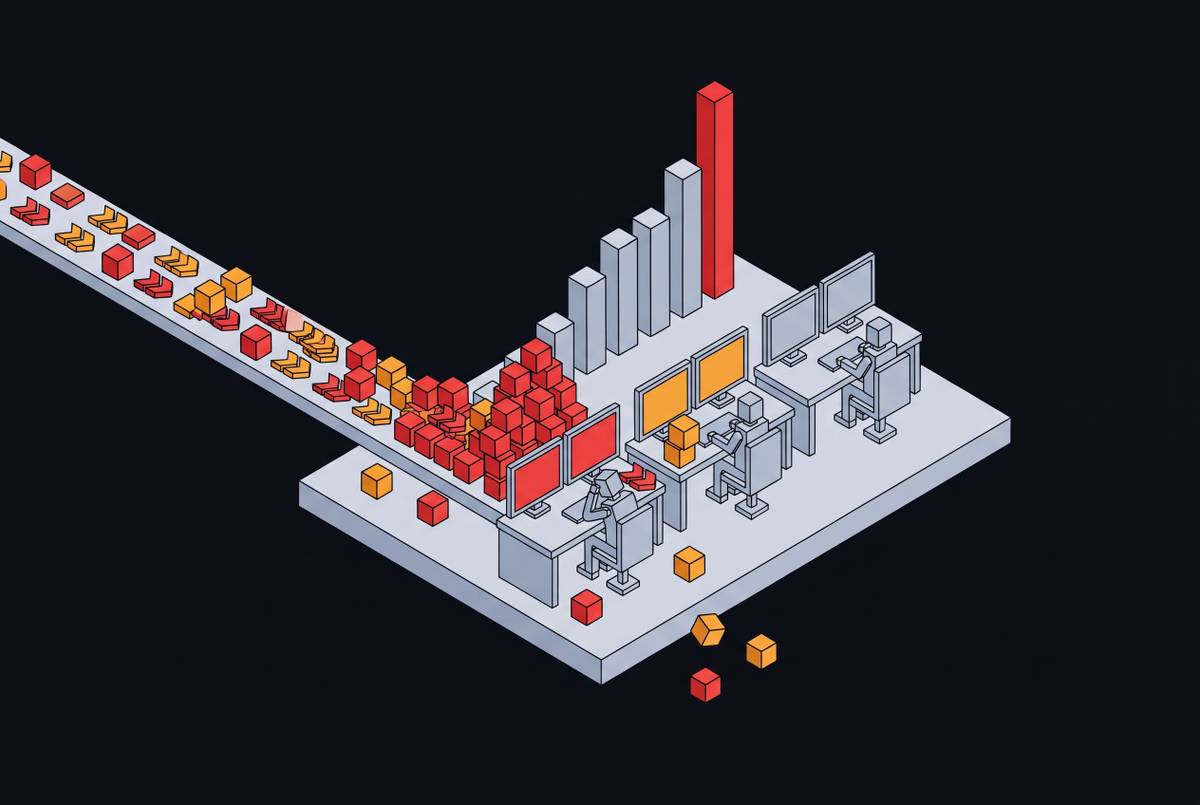
Alarm response time failure in traditional video monitoring centers can occur between signal receipt and human review, as genuine threats wait behind false alerts in an overloaded queue. Legacy monitoring agreements typically promise receipt and dispatch while leaving that wait unlimited. Alarm queue depth is therefore a contractual liability gap, with buyers bearing losses from a delay their agreement may never define as a failure.
What a standard monitoring contract actually promises — and what it leaves out
A security buyer signs a monitoring contract expecting protection against threats going unaddressed. The written obligation is usually narrower than that expectation. Standard alarm service agreements describe a sequence in which the monitoring company receives a signal, attempts to reach the subscriber, and notifies the appropriate authority. They specify the work while leaving the waiting time undefined.
The Lake County Forest Preserve District’s March 2025 contract with Sentry Security follows this approach of setting out the work to be done. The deliverables include monthly monitoring, annual testing, maintenance, and repair, with fees defined by activity category. The resolution and scope contain no queue-time or response-latency standard. Those documents establish what services the buyer purchases, but not how an alarm must progress through a backlog. A defined service schedule is not a defined response interval.
That distinction creates an operational blind spot. The agreement makes no promise about how many alarms precede a buyer’s event, how long those alarms take to clear, or what happens at peak load. Nor does a commitment to notify an authority, by itself, define the time between signal receipt and operator attention. The missing interval sits inside the purchased service. A buyer can therefore have a clear description of monitoring activities while lacking a contractual standard for a delay that can prevent those activities from beginning in time.
Why the queue itself is the point of failure legacy contracts ignore
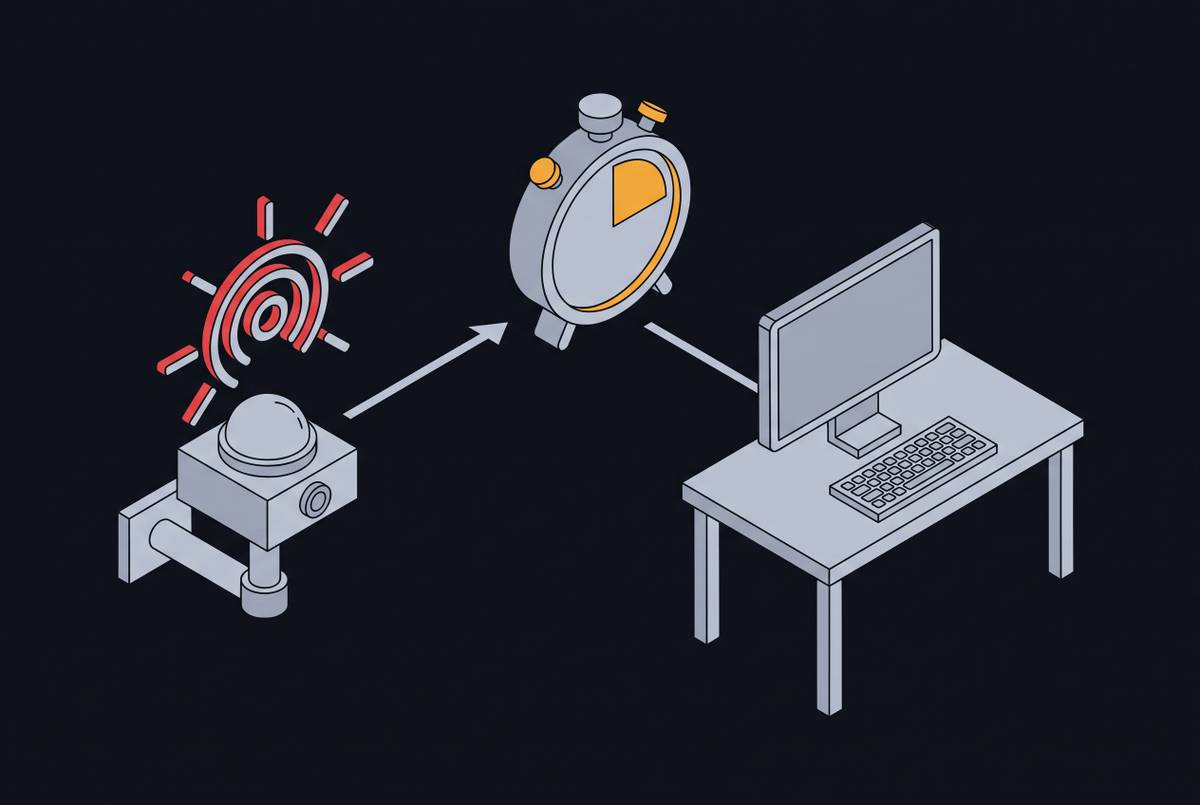
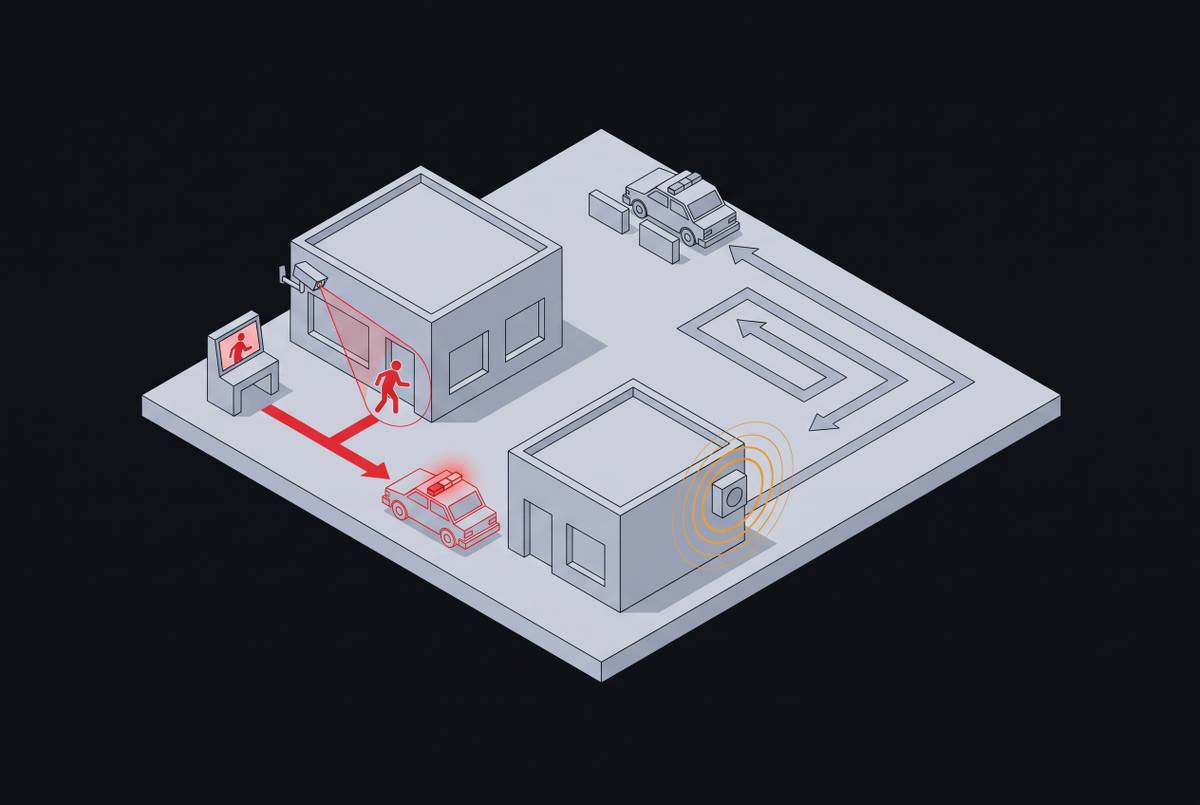
Traditional alarm monitoring operates as a relay. A sensor trips, a signal reaches the central station, an operator calls the premises, and the operator dispatches. That sequence remains the same as the queue grows. How soon an operator can review a real threat, however, depends on the work ahead of it in the queue. A contract that defines only the relay leaves this dependence unaddressed.
Basic motion detection adds to that queue whenever something moves in the camera’s field of view. Wind, shadows, deliveries, and cashiers can all generate clips that operators must review to decide whether dispatch is warranted. Operators must review false alerts just as they review real intrusions. There is no structural distinction in how the two enter the queue, even though their consequences differ sharply. During high-volume periods, the accumulated review work can delay an event that requires action.
A system can detect motion right away while the alert waits behind other clips for someone to review it. An impressive mean-time-to-detect measure measures an earlier part of the chain, before the queue has imposed its delay. When the agreement is silent on the interval to human review, detection performance cannot substitute for a response commitment.
The failure is therefore architectural. Operators must work through alerts before they know which ones signal a threat. The contractual omission becomes dangerous because it concerns precisely that unresolved work. The provider has promised to perform a sequence, but has not necessarily promised how quickly the sequence will clear under load.
How the liability cap insulates providers from the consequences of queue failure
The absence of a queue-time obligation is only the first layer of the problem. Liability limits add a barrier to getting paid for the loss after harm occurs. Even if a buyer can establish a failure under the agreement, the amount recoverable may remain far below the loss. The missing performance standard and the capped remedy address different questions, but together they leave the buyer with little practical recourse for queue delay.
Legacy Alarm’s terms of service illustrate the contractual protection. The terms state that the company is not an insurer and cap its combined liability at a fixed low amount regardless of negligence, failure to perform, or violation of any law. Applicable-law exceptions qualify that limit, including where limits for willful misconduct or gross negligence are prohibited. Those qualifications are important to the clause’s reach. They do not, however, add a promise about queue depth or time to human review.
The insurer disclaimer also separates monitoring from compensation for the underlying loss. Purchasing the service does not make the provider responsible for restoring the full value of property lost during a delayed response. Mandatory arbitration clauses, also standard in these agreements, further limit customers’ chances to set adverse precedent or combine claims with those of other customers in the same position.
The combined effect is a mismatch between operational exposure and contractual remedy. A business can lose a great deal in a burglary while the provider’s liability stays capped at a low fixed amount. Meanwhile, if the contract says nothing about the queue, the buyer has no clear promise to judge that part of the failure against.
Downstream exposures that fall entirely on the buyer when the queue fails
The queue’s effects do not stop at delayed review. The same false-alert volume that creates review work can also generate unnecessary dispatches when verification is poor. Those dispatches expose the property owner to false-alarm fines and restrictions on police response. Municipal false-alarm ordinances in a majority of major U.S. cities provide for suspension or complete revocation of emergency dispatch privileges once a property exceeds a threshold. The resulting loss of response can outlast the backlog that contributed to it.
This connects triage quality to the buyer’s future protection. Poor verification can lead to dispatch requests for signals that pose no threat, while work builds up in the queue and delays real events. If repeated false alarms then cost a property its police-response standing, a later threat faces a further obstacle beyond the monitoring queue. The losses can be substantial. They can include complete loss of police response.
The buyer also risks losing insurance coverage, though a queue delay alone does not show that coverage has failed. Insurance carriers have successfully denied commercial burglary claims where the insured allowed a monitored alarm system or permits to lapse. A monitoring contract’s liability cap does nothing to repair that coverage gap. Nor does the provider’s promise to dispatch establish that the buyer has maintained the conditions of insurance.
These consequences share an upstream weakness when the agreement specifies no verification standard. The provider handles signals according to its queue workload, while the property owner remains exposed to the regulatory and insurance consequences. Standard monitoring agreements do not address the buyer’s permit status, police-response standing, and coverage in the way that this operational connection warrants. The service obligation and the downstream risk sit with different parties.
What contracts updated for current standards now require that legacy agreements omit
Current terms now cover duties that include cyber liability, higher minimum levels of coverage, and meeting verified-response requirements. These provisions reach beyond a basic promise to receive and relay signals. Their presence shows that monitoring contracts can evolve with changes in technology, law, and operating practice. Their absence in an older agreement should not be mistaken for an unavoidable feature of monitoring.
Contract vintage is consequently relevant to the scope of protection. Agreements not reviewed and updated within recent years are unlikely to reflect those changes. A buyer may still pay for a service with the same name under terms that no longer meet what the market expects. The service name does not resolve that discrepancy. The obligations in the operative document do.
A process description says that dispatch will occur. A performance standard addresses what must happen beforehand, including how the alarm is verified, what evidence is required, and how quickly the queue must clear it.
Updated insurance or cyber provisions do not themselves establish how quickly an alarm must clear the queue. Whatever its age, a contract can name the work to be done or also set the conditions for doing it.
How contract compliance tools surface the amendment and version problem in complex monitoring arrangements
It is harder to tell which promises the agreement makes when its terms are spread across a parent contract and several amendments. The buyer may know that verification or response-time language was negotiated without knowing which document now governs it. Version control becomes part of the operational audit. Unless amendments are connected to their parent agreements, a dashboard can report against the original terms even when amendments have changed the live obligation.
An amendment may add terms on response while the system of record still shows the original agreement, which says nothing about it. Conversely, a buyer may rely on language that appears only in a superseded document. A renewal alert tied to the wrong version can prompt a decision based on an obligation that no longer applies or was never part of the operative agreement.
A retail chain, truck yard portfolio, or property management group may have different amendment histories, permit statuses, and police-response standing across its properties. A standard contract dashboard does not surface all those differences. Relationship-aware review maps amendments to their parent agreements and reports on the live obligation. Its role here is specific, which is to establish what each monitoring agreement promises today before the buyer assesses what it leaves out.
What security buyers should audit in their monitoring agreements before the next renewal
The practical response is to audit the live agreement against the interval where queue failure occurs. The buyer should first check whether it defines an obligation for the time between alarm receipt and human review. Police dispatch time is a different measure. If the contract addresses dispatch but says nothing about how long an alarm may wait for operator attention, queue behavior remains unaddressed. At renewal, the buyer should seek terms that cover that wait as well as the steps in the relay.
The agreement should identify an alarm verification standard rather than authorize action on signal alone without a corresponding quality obligation. AVS-01 provides a reference point for that review. Without terms that meet that standard, the contract gives the buyer no verification-quality standard to judge a decision to dispatch or not dispatch against. This is distinct from speed because prompt handling of an unverified signal can still expose the property to false-alarm consequences.
The liability review should then compare the cap with the buyer’s actual exposure. Relevant exposure includes the value of goods at risk, the cost of losing police response, and the gap an insurance denial would create. A low fixed limit may leave the buyer with little money to cover the loss.
Finally, the buyer should establish that the version under review is current and operative for each covered location. That requires connecting amendments to their parent agreements and assessing the resulting terms against current insurance requirements, verification standards, and false-alarm ordinance exposure. A renewal date alone establishes none of this. Before renewal, the buyer needs an identifiable live promise about queue behavior, verification, and recovery, rather than an assumption that purchasing monitoring guarantees timely attention.