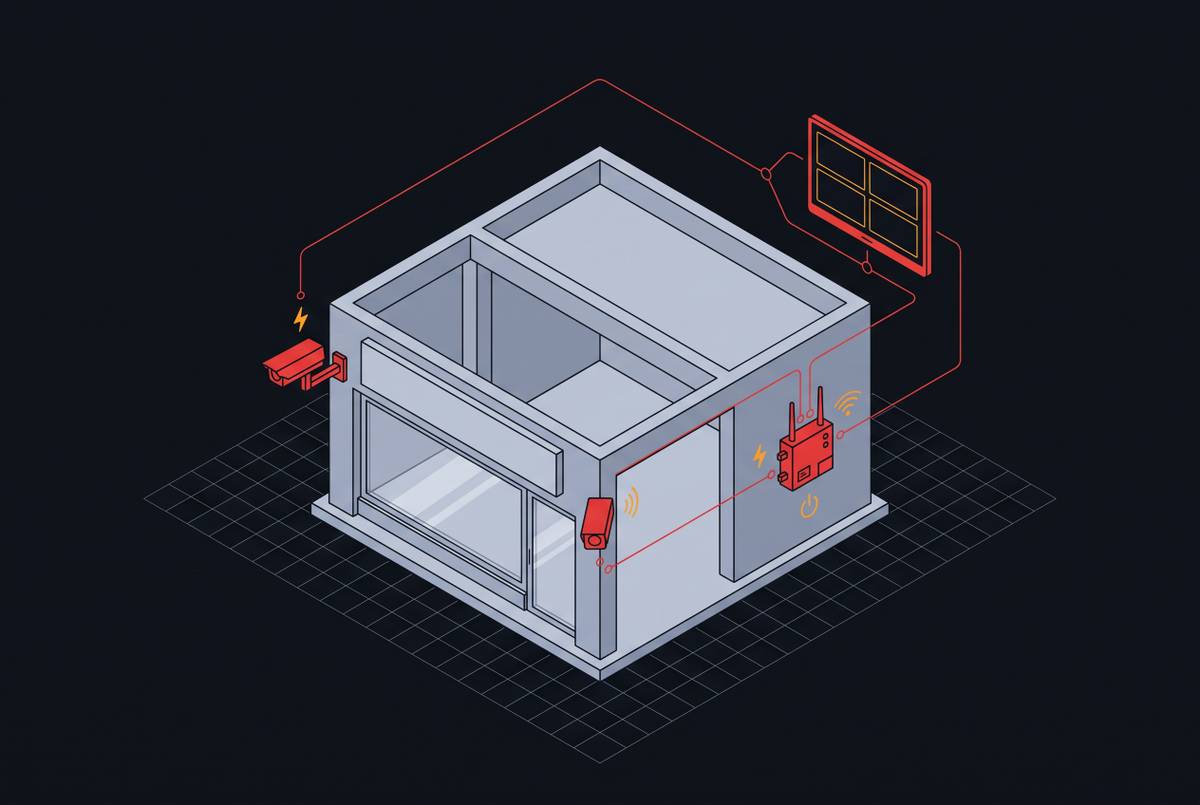
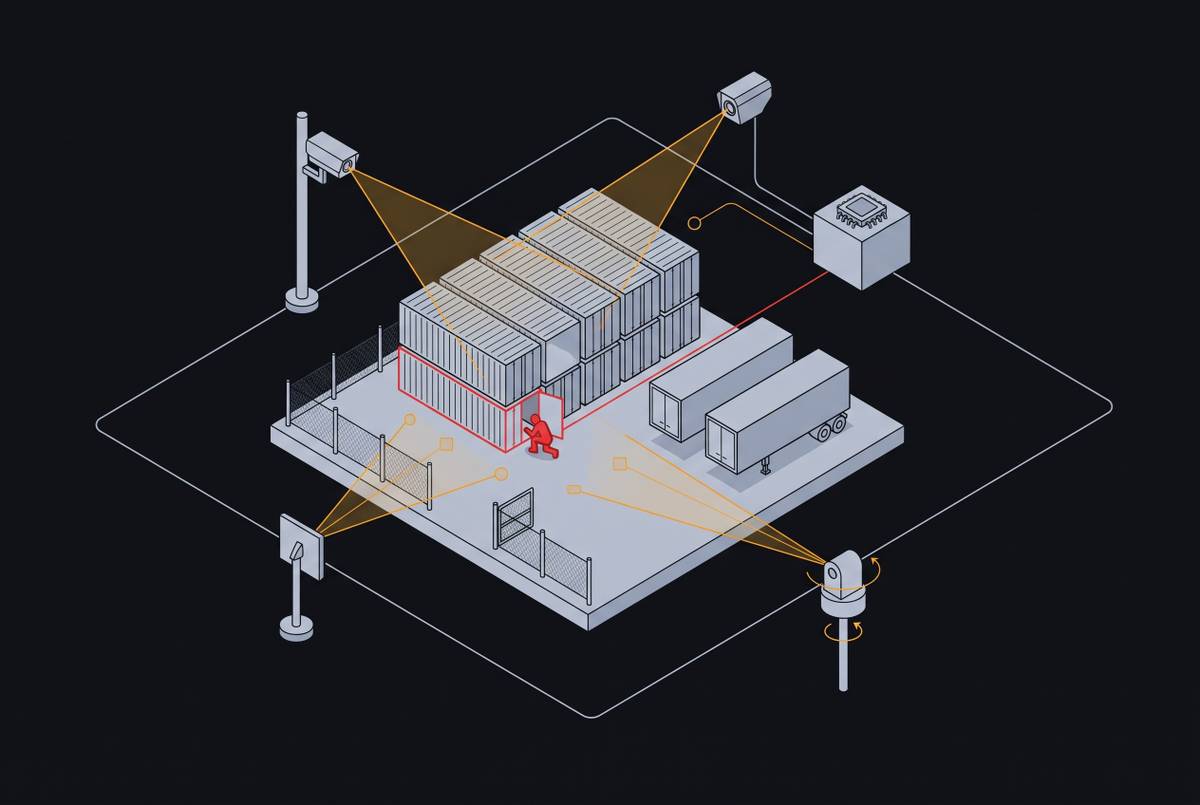
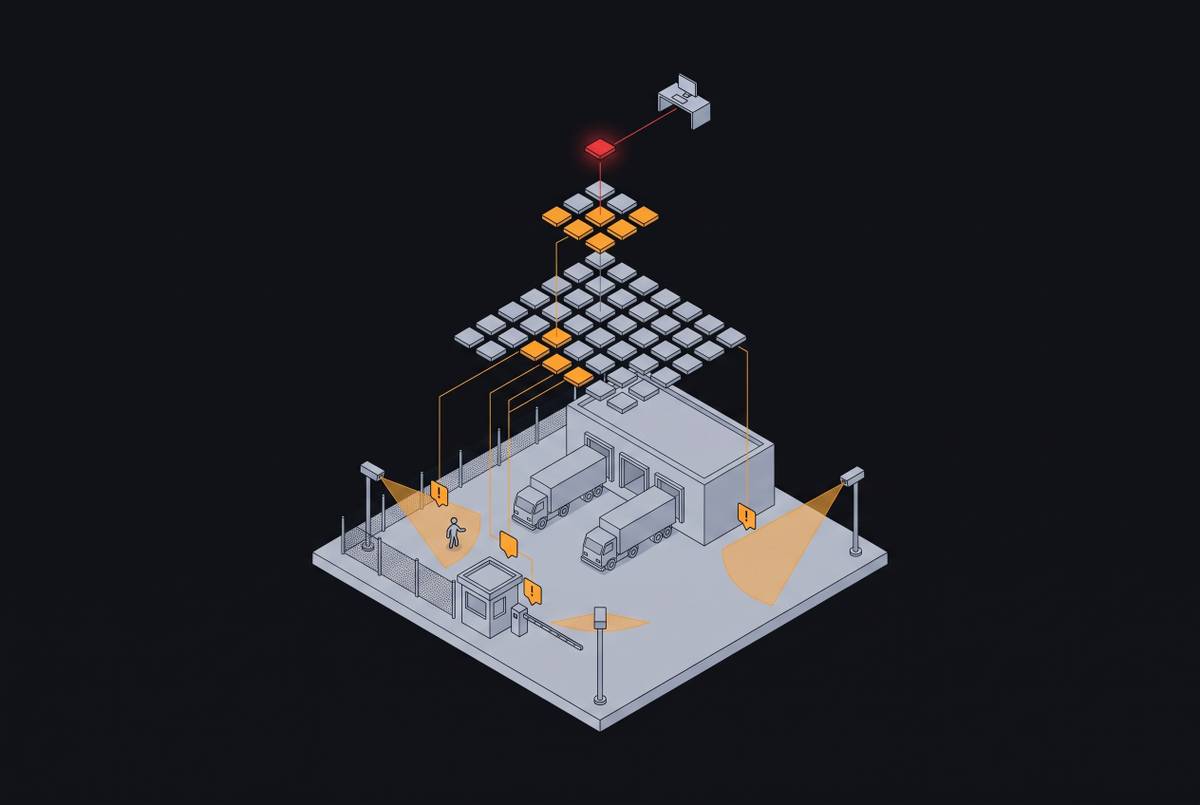
Why Recorded Evidence Fails Multifamily Parking Garage Tenants and What Operators Owe Them Instead
Operators must shift from recording crime to actively detecting and stopping it in real time.
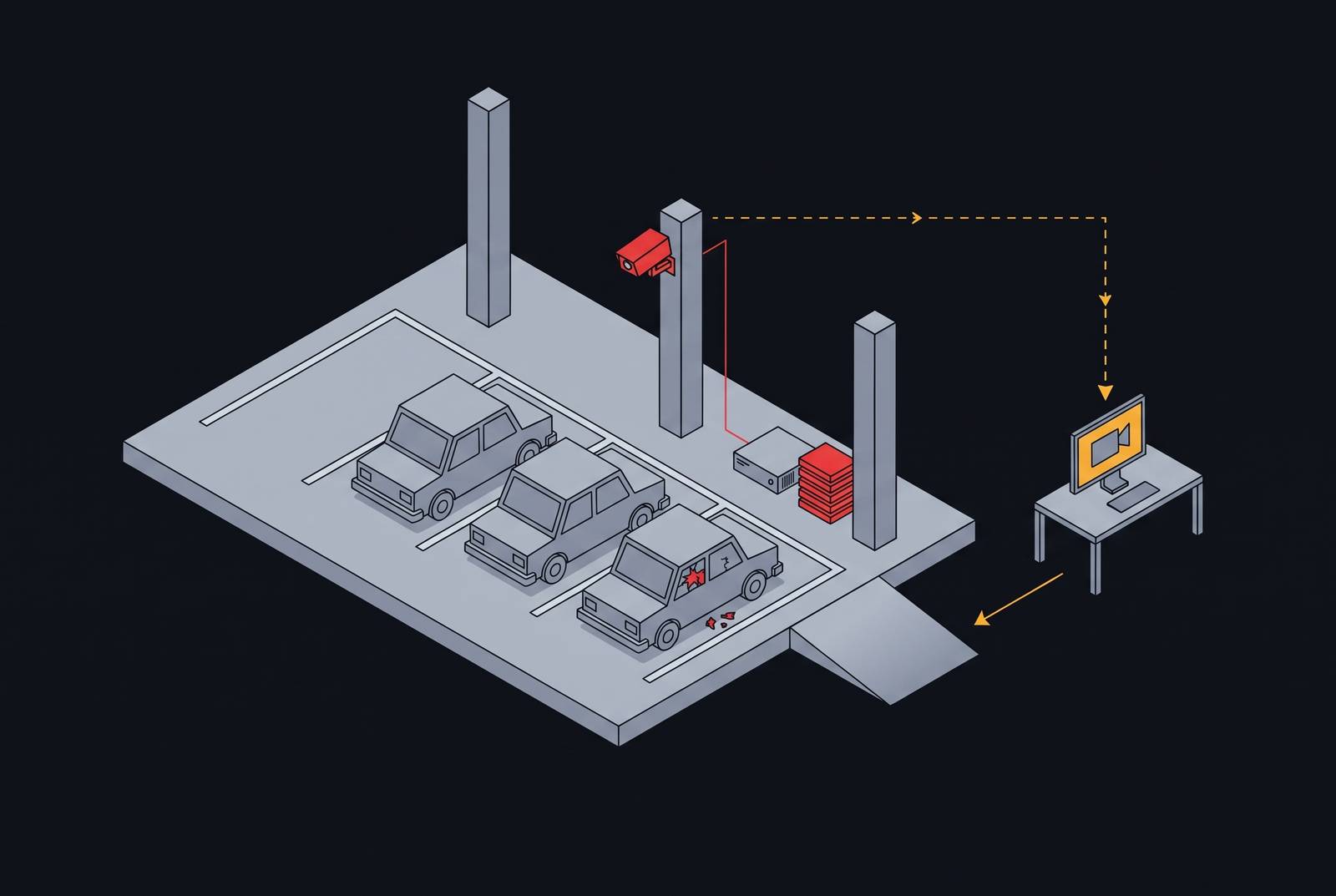
Remote video monitoring for multifamily and employee parking lots should detect threats in progress and put verified alerts in front of people who can respond. Recorded footage alone shows what was lost but does nothing to stop the loss. Operators owe tenants active, real-time attention, delivered through continuous AI detection and trained human judgment.
Why parking garages concentrate crime in ways that expose the limits of recording
Consider the hospital employee, the man who has remained near the stairwell for an extended period, and the two cameras with the scene in frame. Nobody is watching either feed in real time. The cameras can preserve the encounter, but their presence does not bring the waiting man to anyone’s attention. That is the exposure shared by employee parking facilities and multifamily garages. A person can be visible to the equipment while remaining unseen by anyone able to help.
Garage design makes that exposure difficult to avoid. Isolation, poor sightlines, low light, predictable routines, and multiple access points give an offender opportunities to approach people or vehicles without attracting notice. Stairwells and elevator lobbies concentrate risks of assault, robbery, and lingering offenders. Lower and below-grade levels provide opportunities for vehicle theft and ambush, while entry and exit ramps are points for tailgating and barrier breaches. After-hours pedestrian walkways expose people to stalking and trespass.
Vehicle crime poses a separate problem for operators because people can reach parked vehicles while their owners are elsewhere. Smash-and-grabs and catalytic converter theft do not require an encounter with a resident. FBI UCR data show that auto theft surged in 2022–2023 and subsequently declined sharply, but those trends do not remove a garage’s physical vulnerabilities. The same data do not isolate apartment complex parking lots or establish their theft share relative to vehicle inventories. The risks at the garage still need to be assessed on their own. A quiet below-grade level is still as hard to watch when theft totals fall across the country.
What cameras actually do versus what tenants believe they do
A standard recording system captures, stores, and replays video. The visible equipment looks the same whether anyone is monitoring it or not, making the distinction between recording and monitoring easy to miss. A tenant who sees a camera near the stairwell can reasonably think it is there to help keep them safe. The operator may know that its feed goes only to a recorder.
The gap becomes apparent after a loss. Footage may show the offender clearly, with a correct timestamp and enough detail to reconstruct the event. None of that means the system could summon help when the offender first appeared. The recording can help with an investigation even if it did nothing to prevent the loss. Image quality and intervention capability are different properties, even when both are described as security.
For many garages, the missing capability is therefore not a sharper image. The cameras already in place can show behavior that needs to be checked, including someone staying near a stairwell for a long time or moving through a restricted entrance. What is absent is interpretation followed by timely alerting. Better lenses cannot supply that missing function.
Why human operators cannot close the gap through attention alone
Putting a person in front of the feeds does not ensure they will reliably make sense of what they see. A 300-unit apartment complex can have dozens of cameras covering parking structures, entrances, amenity spaces, hallways, and perimeter points. Each additional feed competes for the same person’s attention. Watching is not the same as detecting. A live image provides little operational benefit if the relevant behavior passes unnoticed.
Sustained observation also becomes harder as cognitive fatigue develops. More operators can divide the workload, but staffing alone does not change a workflow built around continuous scrutiny of routine scenes. Higher-resolution video shows more detail but does not decide which details call for action. Someone or something must pick out the rare threat as it develops amid far more everyday activity.
Research from the Arizona State University Center for Problem-Oriented Policing shows that the vast majority of burglar alarms are false activations. An operator facing many low-confidence signals must spend time dismissing noise before reaching the genuine intrusion. Repeated false alerts also encourage response desensitization. A system can appear active while allowing the consequential event to wait.
That queue has consequences beyond the monitoring center. Many jurisdictions de-prioritize unverified alarm calls or impose escalating false-alarm fees, so an alert does not necessarily produce prompt police dispatch. Adding more notifications can therefore reduce the usefulness of monitoring. The limiting factor is the quality and order of the work reaching people. A credible redesign must reduce routine review while bringing actionable threats forward.
How unmonitored footage becomes evidence of operator negligence, not operator diligence
The distinction between recording and responding also changes the legal significance of a camera. In negligent security claims, courts weigh whether a crime was foreseeable and whether the owner took reasonable steps to prevent it. The existence of surveillance equipment does not settle either question. Footage can establish visibility without establishing diligence. What the operator knew and did remains central.
Prior recordings can make that distinction uncomfortable. A history of similar incidents may help establish that further crime was foreseeable, while providing no evidence that the operator changed its response. The archive then supports a different account from the one the owner intended. Instead of showing that the property was protected, it may show repeated warning signs that received no effective attention. This prevents camera ownership from serving as a complete answer.
Even the evidentiary value of footage requires work. Some systems overwrite recordings within days or weeks, sometimes sooner, leaving a narrow preservation window after an incident. A tenant may report a loss after the footage of it is gone. Authentication presents another requirement. Original files, chain of custody, and vendor logs support the recording’s evidentiary weight.
Keeping evidence helps with an investigation or claim, while taking reasonable steps to prevent crime tackles the risk before another incident happens. Active monitoring is not a universal guarantee against liability, and its absence does not automatically establish negligence. Recording is nevertheless a minimum capability. In some cases, the archive can make the operator’s position worse.
How do property managers deter garage crime rather than just record it?
In the first three minutes of a developing incident under passive recording, someone who lingers near a stairwell just adds to the footage unless someone happens to notice. Under active monitoring, a defined risk pattern can produce an alert while the person is still there. A human operator then has an opportunity to assess the scene and initiate a response, whose outcome remains uncertain.
AI video analytics can watch camera feeds at the same time and flag defined patterns across a multilevel structure where a person cannot keep watching them all. Extended presence near a stairwell or movement against normal flow at 2 a.m. can become a prompt for review. Duration helps distinguish brief, purposeful activity from extended pacing without apparent purpose. Context remains necessary. Neither late arrival nor unusual movement alone establishes criminal intent.
At an entrance, someone climbing a barrier or slipping through a gate behind an authorized vehicle can trigger a breach alert. Once a threat is assessed, live two-way audio gives the operator a way to address the person directly. A verbal warning can increase the intruder’s perceived risk and may stop theft, vandalism, or damage before it occurs. Detection now has an intervention attached.
The same distinction applies when no offender is involved. A driver who collapses between vehicles on a quiet level may remain undiscovered under a passive system, whereas active detection can bring the event to an operator’s attention sooner. Across both crime and medical events, a response must be fast enough to change the outcome. Filtering false alarms helps people respond faster because they have less other work to get through. A verified alert also gives dispatch a stronger basis for action than an unverified activation.
Why AI and human operators are complementary layers, not competing choices
AI detection changes where human judgment is spent. The repetitive task is to examine large volumes of activity and separate likely concerns from routine events. The consequential task is to interpret the escalated situation and decide what response is appropriate. Assigning both tasks to the same person creates the bottleneck that active monitoring is supposed to remove.
In a well-structured workflow, AI reviews incoming alarms, filters environmental noise and recognized authorized activity, and escalates threats with relevant context. The human operator receives a more focused task: assessing the escalation and dispatching or initiating a live talk-down. People still need to oversee critical decisions and life-safety events. An AI assessment is not complete knowledge of a person’s intent.
Tenant schedules, authorized vehicle lists, and access protocols help distinguish expected activity from an intrusion. Without those details, someone who is allowed to enter but is unfamiliar to the system can trigger another low-confidence alert. That context must therefore be kept up to date after it is first entered. Otherwise, automation recreates the noise while shifting its source from a conventional sensor to an AI system.
The complementary model addresses both attention and queue design. AI keeps screening without getting tired as people do when they watch for long periods, while trained operators handle events that need their judgment. This does not make camera count or alert volume irrelevant to service delivery. The full workflow still has to handle all the work coming in. Its advantage is that people spend less time clearing routine activity and more time acting on the events for which their judgment is needed.
What operators actually owe tenants and how to evaluate whether a monitoring service delivers it
For operators evaluating remote video monitoring, the practical obligation is to provide a credible path from detection to intervention. That means assessing the service as a response operation rather than as a camera subscription or footage archive. A contract alone cannot demonstrate that path. The relevant service-level question is how quickly a verified, actionable alert reaches a human with authority to act, and what happens between detection and response.
Timing should begin at the alarm trigger and extend to human review of the verified alert. A recorded log entry is not an adequate substitute for that endpoint. Capacity deserves the same scrutiny. For a 40-to-80-camera property, the service should explain what happens to queues when the most alarms come in and whether operators can still get to genuine threats at those times.
Alert quality is the next test. The service should disclose its false positive rate and explain how it prevents alert fatigue from degrading response. It should also identify the site-specific information built into its logic, including tenant schedules, authorized vehicle lists, and access protocols, and explain how that information is maintained. These details connect detection to the actual property. Without them, the operator cannot tell whether automated filtering will cut noise or just create a different kind.
Finally, the response chain needs named responsibilities. A credible service should explain who contacts whom after a verified threat, in what order, and with what authority to dispatch or initiate a live warning. That explanation should cover the interval while a response is being arranged. The standard for active monitoring is whether someone capable of acting learns about the threat while action can still help.